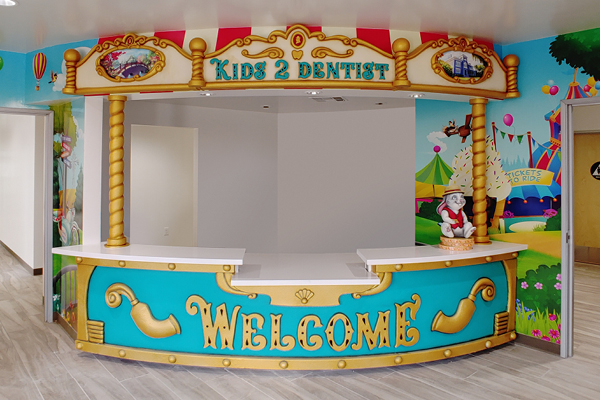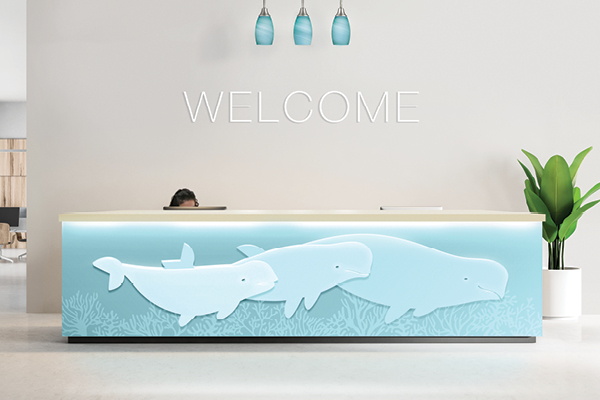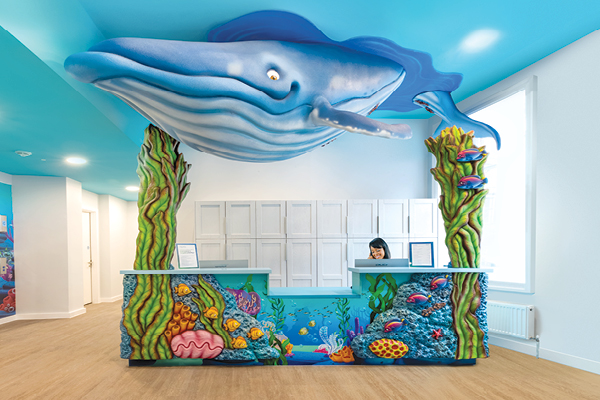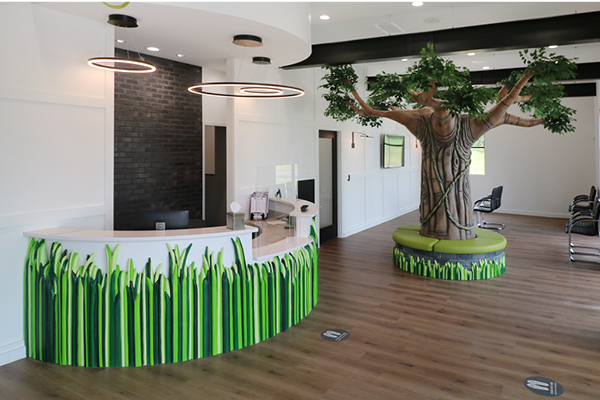
Explore the Best Children’s Murals for Walls to Transform Any Room

The first time a child walks into a clinic can feel overwhelming. Their shoulders tighten, their eyes dart around, and fear shows before a word is spoken. But when the walls around them are filled with color, characters, and stories, something changes. A nervous pause turns into curiosity. A smile replaces worry. That is the difference a mural can make.

That’s the power of well-designed kids’ murals. More than decor, they create emotionally safe, story-driven environments that help little ones feel seen, soothed, and ready to explore. Whether you’re designing a child’s room, a full clinic, or a quiet corner that needs warmth, the right mural becomes part of your care.

With 800+ themed projects across North America, IDS Kids specializes in custom and ready-to-install children’s wall murals made with high-quality materials, built to last, and easy to clean.

In this guide, we’ll explore the most-loved themes, how to choose murals by room type, color psychology tips, and the difference between murals and wallpaper, so you can create a space that welcomes every child with imagination and calm.

LEARN MORE ABOUT MURALS


A Guide to Choosing Children’s Wall Murals That Inspire and Reassure

Why Some Children’s Murals Work Better Than Others

No two spaces feel the same, and neither should their murals. A pediatric dental office needs different energy than a hospital hallway or a school library. At IDS, we design murals that respond to the room itself, its purpose, its light, and the families who use it.

We use high-quality materials, made in Canada and the USA, engineered to withstand daily clinic life. For tight timelines, our IDS Essentials™ Collection delivers ready-made themes with fast and easy installation, but still premium.

Whether you’re designing a magical space for play or a calming backdrop for care, our murals help you create rooms that do more than decorate. They welcome, inspire, and support every child’s journey.


Mural Styles & Themes Kids Love (A Huge Range To Inspire Imagination)


Full-Color Illustrative Murals
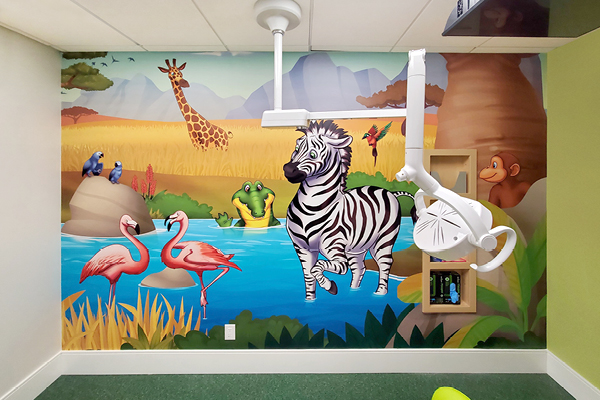
A colorful mural of a savanna scene in a children’s room, featuring a zebra, giraffe, flamingos by a pond, crocodile, birds, and a monkey. Dental equipment hangs from the ceiling in the foreground.

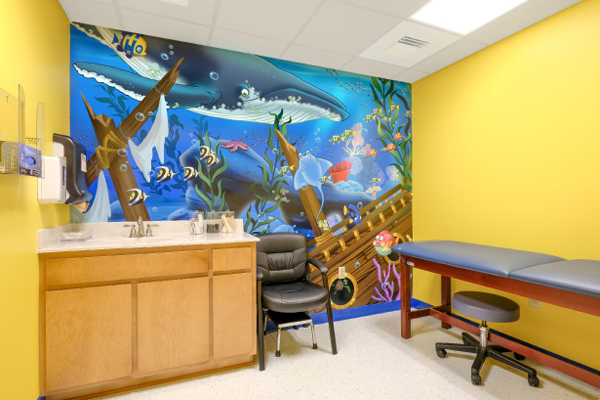
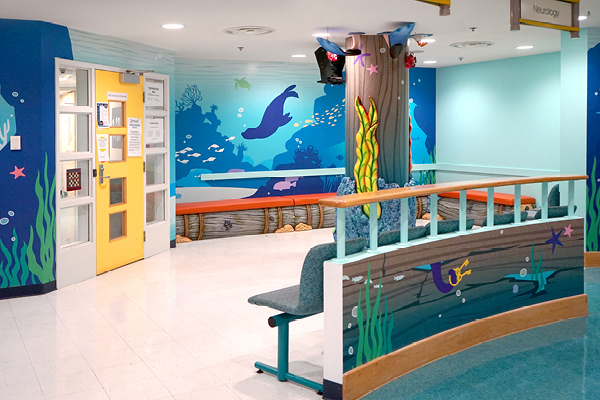
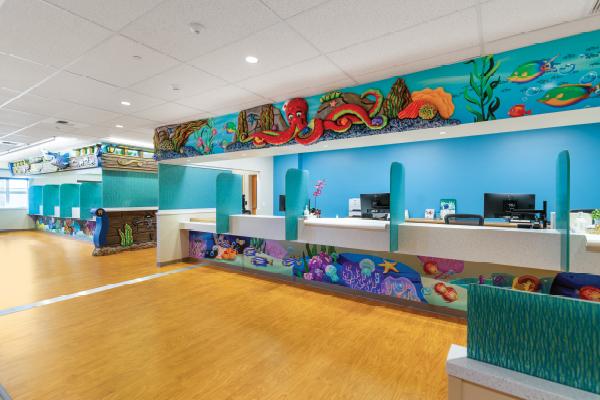
Kids love murals that feel like they’ve stepped into a story. In one of our storybook-inspired clinics, we created a gentle underwater scene that wraps around the room. Complete with sculpted ocean curls and sea creatures kids can point to, name, and follow with their eyes. It sets the tone before a word is spoken.

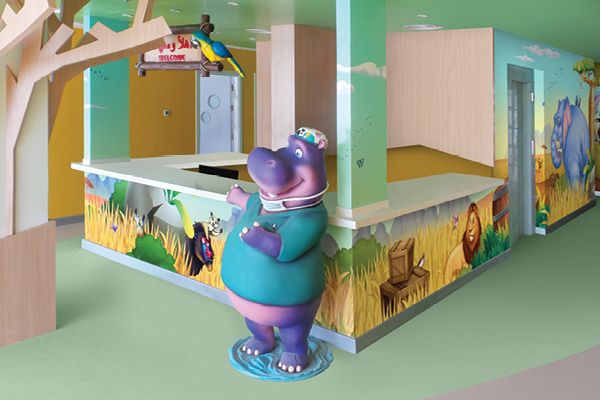
In our safari-themed spaces, soft savannah backdrops and warm animal characters help kids feel safe and curious. And in this hospital project, mural-lined corridors become part of the journey, offering kids something to focus on beyond procedures. These full-color murals don’t just decorate walls; they support calm, imagination, and cooperation.


Calming Silhouette Murals
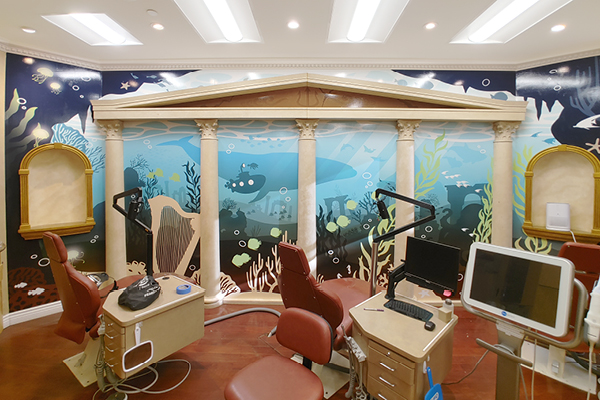
A dental office with red chairs and dental equipment, featuring an underwater-themed mural with sea creatures and plants, and columns resembling an ancient Greek temple.

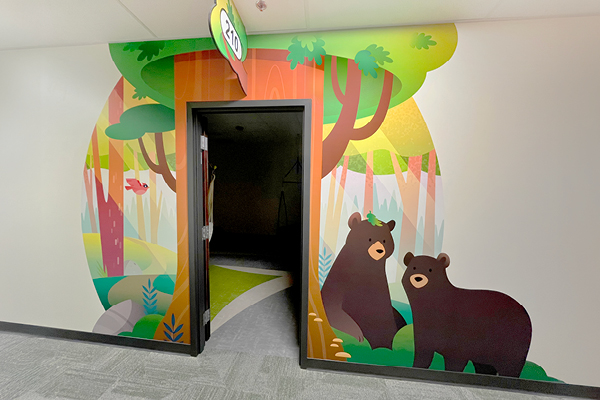
For quieter moments and treatment zones, some children need less color, not more. That’s where our silhouette-style murals shine. In our Woodland dental office, soft greys and gentle shapes create a peaceful backdrop that still feels full of life. Instead of bold characters, kids see flowing treetops and animals, just enough art to stir their imagination without overstimulating.

In our silhouette jungle hospital play area, neutral tones and spacious compositions help little ones feel grounded. These murals are especially helpful in exam rooms or quiet zones, where sensory-friendly visuals can calm nerves.


Contemporary Style Murals
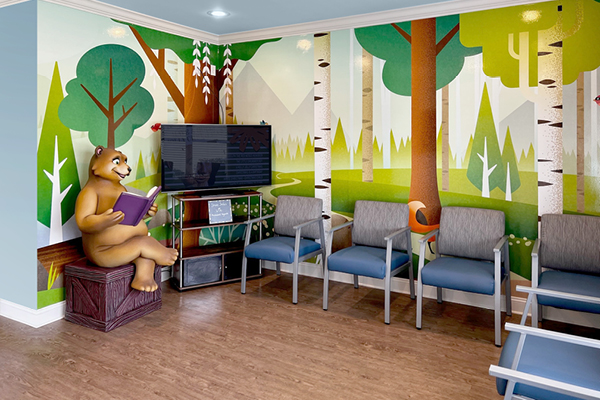
Colorful waiting room with a forest-themed mural, gray chairs, a TV, and a bear statue holding a book, creating a playful and welcoming atmosphere for children.

For older kids and modern spaces, contemporary murals strike a perfect balance: sophisticated, clean-lined, and quietly imaginative. These aren’t cartoonish scenes; they’re thoughtful compositions that pair with natural textures like stone or wood and elevate the sense of the room.

In our contemporary series, each image is designed to fit the flow of your clinic, working beautifully in ortho bays, corridors, or upscale waiting areas. The look is mature but never cold. We can integrate brand cues or local touches to ground it in your world, using high-quality materials that are durable, easy to clean, and crafted for seamless installation.


IDS Essentials™ Theme Murals
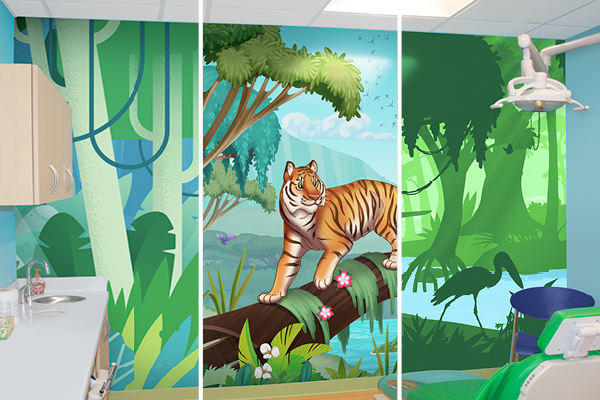
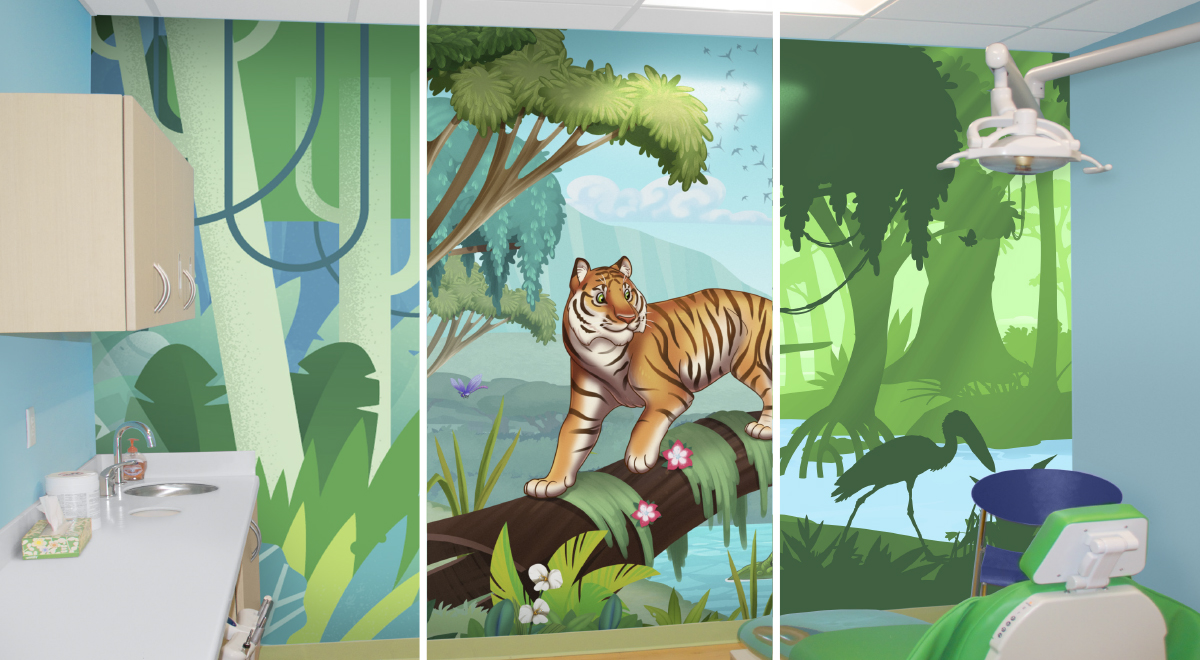
A colorful dental office room decorated with murals of a jungle scene, featuring a tiger on a log, trees, flowers, and a river, along with dental equipment in the foreground.


Need themed kids’ murals fast, without losing craft? Our IDS Essentials™ collection curates six ready-to-go favorites: Underwater, Jungle, Woodland, Beach, Safari, and Space, so you can create a cohesive, kid-first space in days, not months. Each theme feels playful and polished, a reliable backdrop that helps little ones settle while giving your room a clear point of view. It’s simple, joyful, and built to inspire curiosity and fun.

Behind the scenes, you still get high-quality materials and practical choices: wipe-clean surfaces, durable finishes, and easy installation options for teams that want a quick refresh or a phased rollout across multiple sites. Mix pieces to fit your layout, then add your logo or message for a brand-true look that feels like a tiny, magical space kids remember.


Interactive Murals (“I Spy” ) Picture Find Games for Kids

A colorful cartoon scene of African wildlife by a waterhole, featuring an elephant, flamingos, monkeys, cheetahs, butterflies, birds, reptiles, and insects, with a sign listing animals to find in the picture.
Colorful cartoon scene of outer space with astronauts, aliens, spaceships, floating animals, and a “I Spy” sign among asteroids and planets; playful and whimsical atmosphere with many details scattered throughout.
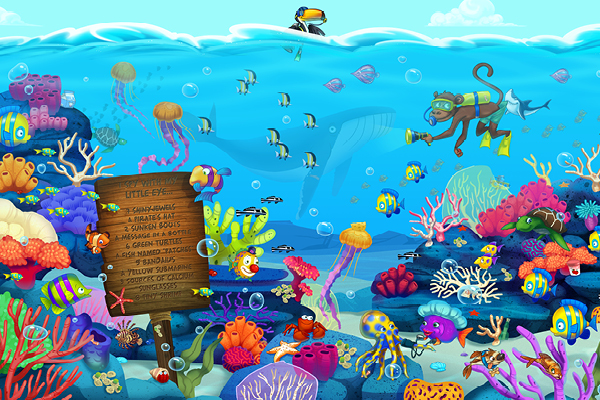
A vibrant underwater scene with colorful fish, corals, a diver, a snorkeler, jellyfish, a hidden shark, and a wooden sign listing sea animals. The ocean floor is teeming with marine life and bubbles.

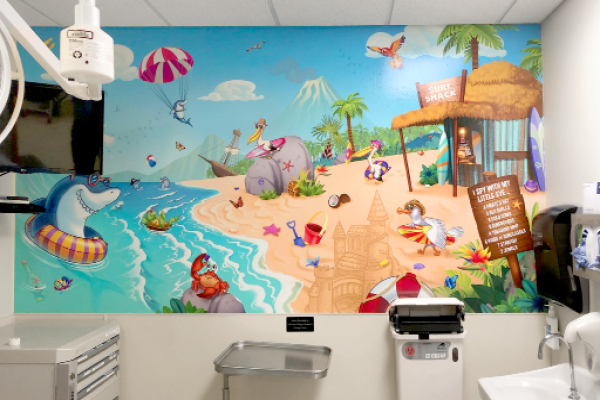
Some murals invite you in. These invite you to look closer. Our interactive I-Spy murals are filled with hidden objects designed to inspire curiosity and keep little ones engaged, especially in waiting areas and play zones where time feels slow. Kids love pointing out animals, shapes, or surprises tucked into the art, turning the wall into a game they can return to again and again.

Each mural is crafted with high-quality materials, scaled to your space, and installed by 3M certified installers so it’s made to last. It’s a smart way to blend fun and function, creating a magical space where imagination and calm coexist. An interactive mural does more than brighten a wall. It turns waiting time into playtime, giving kids something to discover, point out, and share. Over time, it becomes part of the rhythm of the room, something children look forward to every visit.


Add Custom Touches to Your Murals

Caricature illustration for underwater wall murals.

When you want a space to feel unmistakably yours, custom mural touches make all the difference. We can incorporate your logo, brand colors, or even staff portraits right into the artwork, making the wall not just decorative, but deeply personal. In our custom mural offerings, we’ve helped clinics turn mascots into friendly greeters and local landmarks into storytelling scenes.

Whether you’re refreshing a single room or building a full themed collection, these details elevate the experience for families and show care in every corner. It’s not just a kids’ mural, it’s your story, your identity, brought to life on the walls. And yes, it’s still designed with high-quality materials and easy installation in mind.


How to Choose the Right Mural for Each Room

When planning children’s murals for walls, one design doesn’t fit every room. Different areas serve different purposes. And the right mural can elevate each one from ordinary to truly impactful. Here’s how to choose the perfect style for each space in your practice or facility.


Reception & Waiting Areas
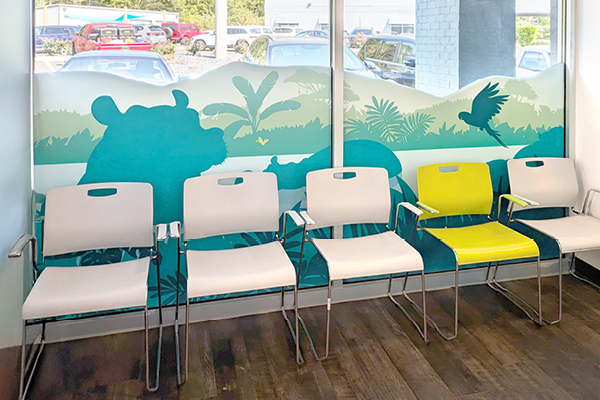
A row of white chairs with one bright yellow chair in a waiting area; behind them is a mural with silhouettes of animals, plants, and a bird, and large windows showing parked cars outside.

First impressions matter. Large, panoramic murals in these spaces set the tone. Themes like underwater reefs, jungle scenes, or soaring skies turn the waiting zone into a magical space full of wonder and warmth. These kids’ murals invite curiosity and comfort the moment families walk in, turning hesitation into engagement.


Treatment & Exam Rooms
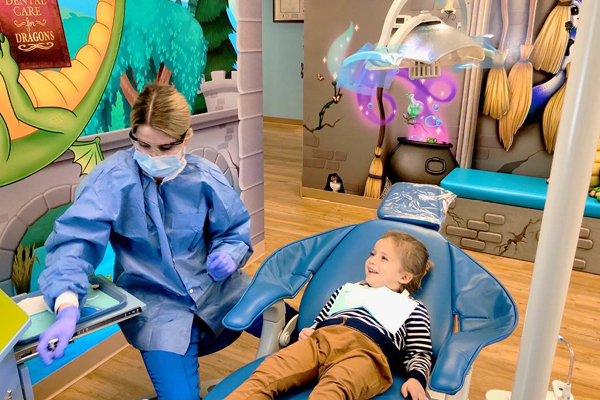
A dentist in blue scrubs and a mask prepares tools while a smiling child lies in a dental chair. The colorful, fantasy-themed office features dragons, castle walls, and floating magical elements on the wall.
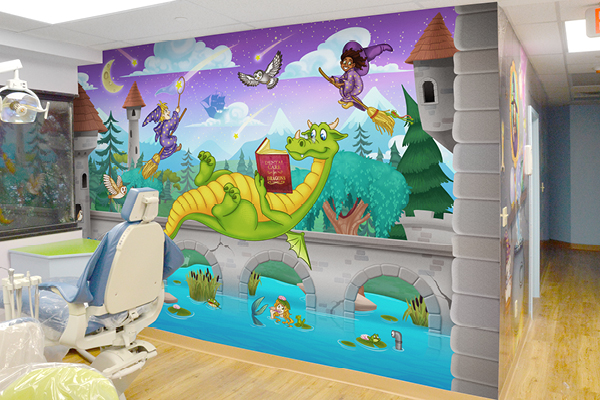
A dentist’s office with a vibrant mural of a green dragon reading a book on a stone bridge, wizards flying on broomsticks, birds, and a river with frogs, set in a whimsical fairytale landscape.

Calm visuals help kids relax during moments that might otherwise feel scary. Gentle color palettes, flowing lines, and silhouette-style wallpaper murals help reduce visual noise while still offering friendly images to focus on. In these rooms, distraction is a comfort tool. Choose murals that feel soft, open, and emotionally safe for all little ones.


Playrooms & Libraries
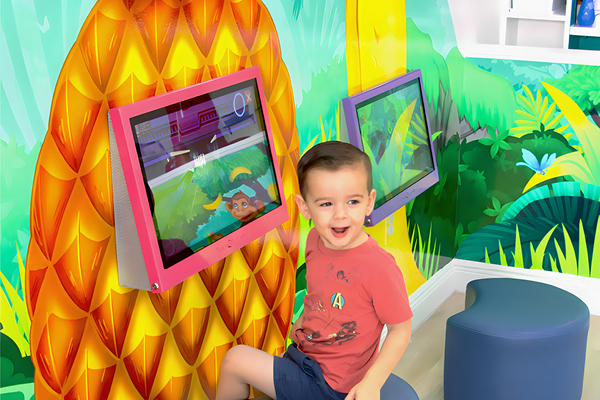
A young boy with short hair and a red shirt smiles while sitting in front of a touchscreen display in a colorful, jungle-themed play area with leafy wall art.
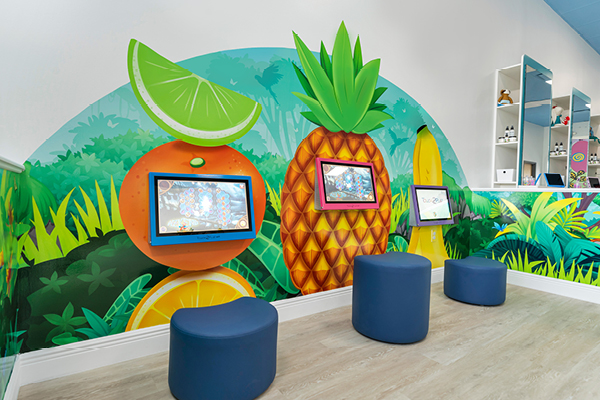
A colorful kids’ area with blue stools, wall-mounted tablets, and a vibrant mural featuring large fruit illustrations, including an orange, lime, and pineapple, set against a jungle-themed background.

Here, murals can be dynamic: part of the fun. Scenes filled with imagination, movement, and even hidden-object games (like I-Spy murals) encourage kids to explore, talk, and play. From dinosaurs to forest creatures, these murals become a core feature of the play environment, supporting development while keeping the room tidy and themed.


Corridors & Hallways
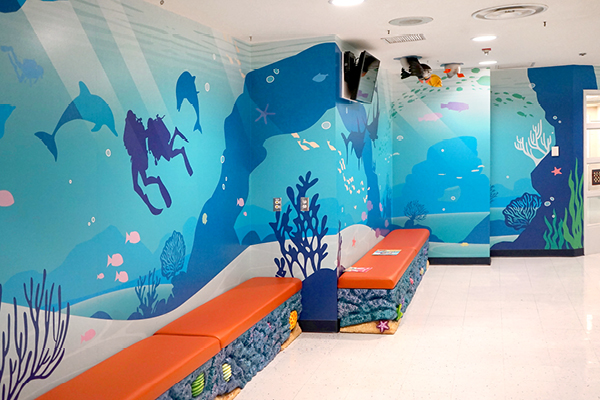
A waiting area with orange benches and walls decorated with a colorful underwater mural featuring dolphins, fish, coral, seaweed, and a scuba diver. The floor is white and the space is brightly lit.

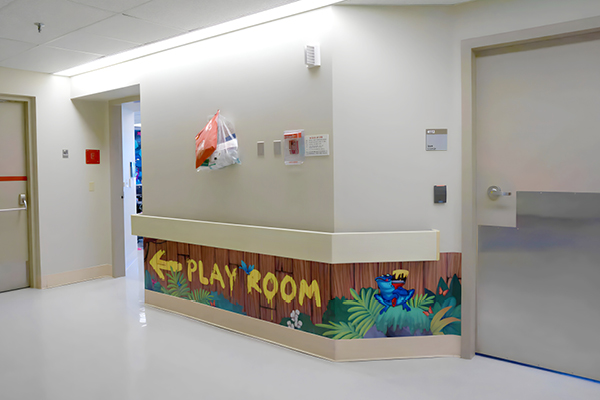
Transitional spaces matter too. Murals in hallways act as visual guides, helping kids move confidently between areas. A journey-themed backdrop adds narrative and flow, like moving from space to earth, or jungle to savannah. These murals entertain, distract, and help kids make sense of the space.


Special Surfaces
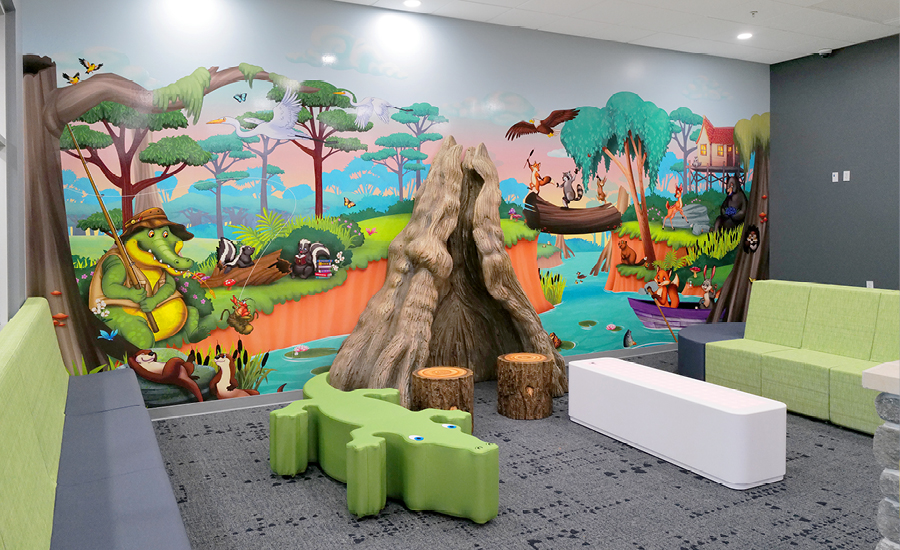
A colorful, bayou-themed pediatric medical health center waiting room with a wall mural of animals by a river, a tree stump play structure, green benches, log stools, cushioned seating, playful decor, and a soft carpeted floor.

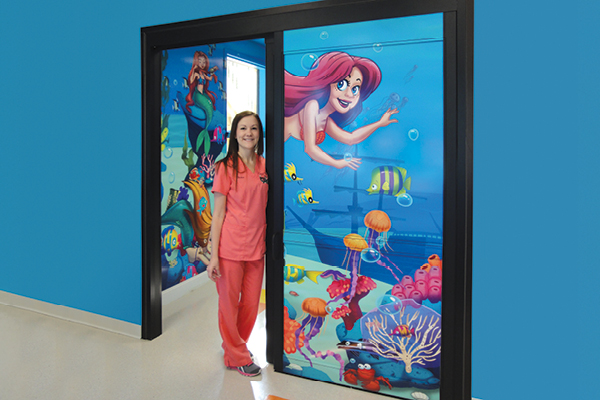
Don’t stop at walls. Doors, cabinetry, and even floors can become part of the theme. Extending your mural across these surfaces helps create a seamless world that feels fully immersive. With high-quality materials and easy installation, even small areas can carry a big visual impact without overwhelming the design.


Most-Searched Themes That Work (And Why They Matter)

Choosing the right theme isn’t just about looks; it’s about how the child feels in the room and how easily the space supports connection, play, and calm. These are the murals families search for most and the ones kids remember long after their visit.

Nature & Animal Murals
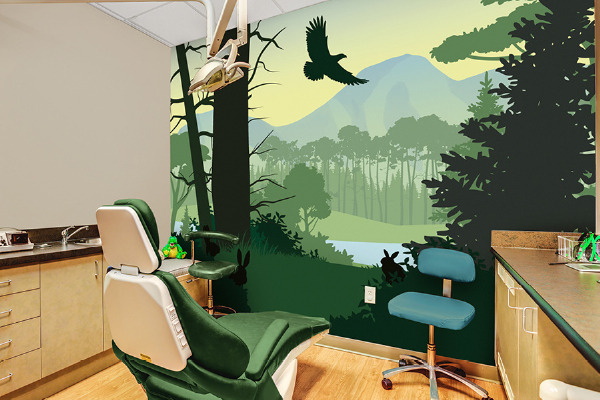
A dental office room with a green dental chair, a blue stool, and a wall mural depicting a forest scene with trees, mountains, a river, and a flying bird under a yellow sky.

Jungle, Safari, Underwater, and Woodland themes are timeless for a reason. They create an instant sense of calm and adventure, soft lighting, familiar creatures, and just enough visual movement to invite exploration.

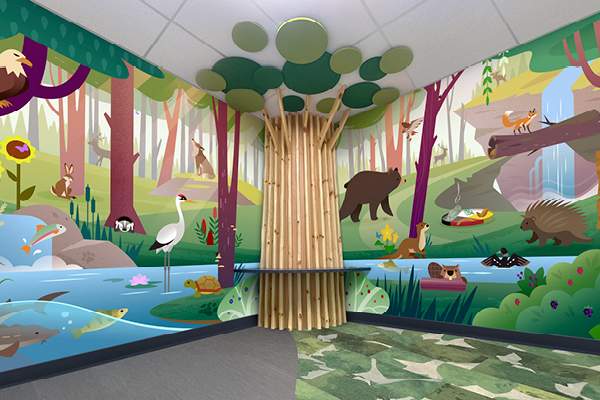
Our Jungle and Safari murals blend warm tones and friendly animals, while Underwater scenes use blues and flowing shapes to ease anxiety. In Woodland settings, soft palettes and forest details bring nature indoors, perfect for grounding sensitive kids.


Fantasy & Adventure Murals
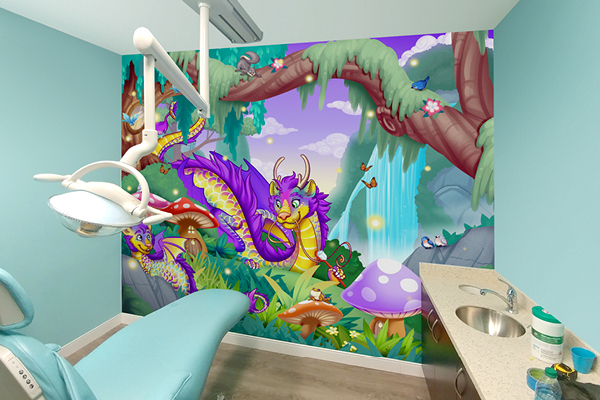
A cheerful pediatric dentist office features a colorful mural with a friendly purple dragon, lush greenery, flowers, a waterfall, and cartoon birds. A dental chair and sink are in the foreground.
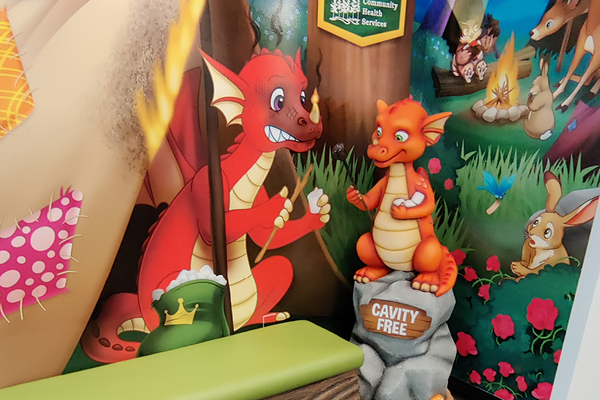
A mural shows a large red dragon helping a smaller orange dragon, who sits on a rock labeled CAVITY FREE. The background includes cartoon animals, colorful plants, and a campfire scene.

For little ones needing a bravery boost, themes like Space, Pirates, and Fairy Tales offer just the right kind of magic. These murals turn a procedure into a quest, helping children imagine themselves as explorers, astronauts, or heroes ready to take on anything.


Playful & Seasonal Murals
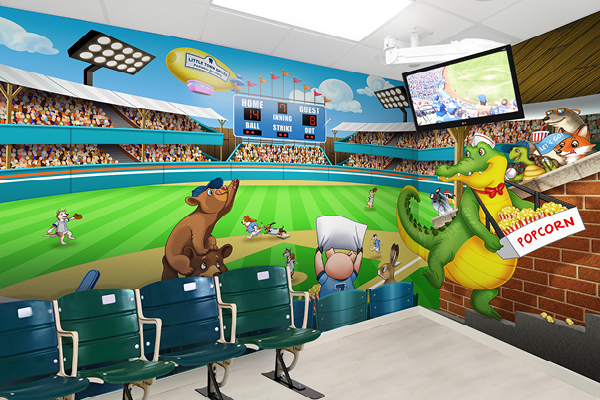
A colorful mural in a waiting room depicts a lively baseball game with cartoon animals, including a bear, alligator selling popcorn, and fans. Stadium chairs face the mural, and a TV displays a real baseball game.
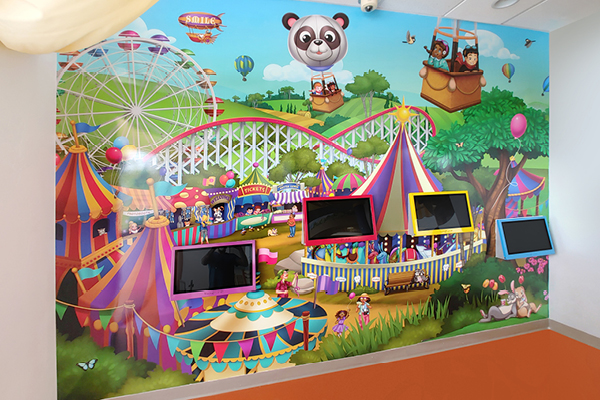
A colorful mural of a cartoon amusement park with a ferris wheel, roller coaster, circus tents, and a panda in a cable car. Four black screens are mounted on the wall in front of the mural.

Looking to bring energy and delight into your child’s room or waiting area? Carnival, Sports, and Candy Land themes add pops of color and playful charm, ideal for celebrating first visits or brightening high-traffic spaces.


Custom Themes and Local Landmark Murals
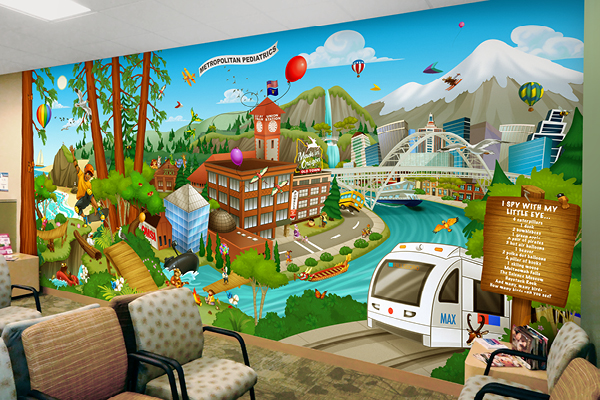
A colorful mural in a waiting room features a whimsical cityscape with a river, bridge, train, trees, mountains, animals, and playful details. Armchairs face the mural, creating a welcoming, child-friendly atmosphere.

No one knows your community like you do. With our custom mural options, we can include school mascots, local landmarks, or familiar scenery to reflect your identity. It’s a thoughtful way to build trust while creating a space that feels one-of-a-kind.


Why Murals Do More Than Brighten a Wall

Murals do more than decorate; they transform how a child feels in the space. Calming visuals reduce anxiety, spark curiosity, and support emotional comfort during visits. Thoughtfully designed wall murals turn blank walls into story-filled scenes that invite little ones to feel safe, seen, and inspired.

The right colors do more than set a mood. Soft blues and greens ease tension, cheerful accents bring life, and together they create an experience that families carry with them. What children remember is not the procedure, but how safe and inspired the room made them feel. That memory brings them back without fear and gives your team the reward of seeing a child walk in with confidence instead of worry.


From Sketch To Easy Installation: The IDS Kids Process
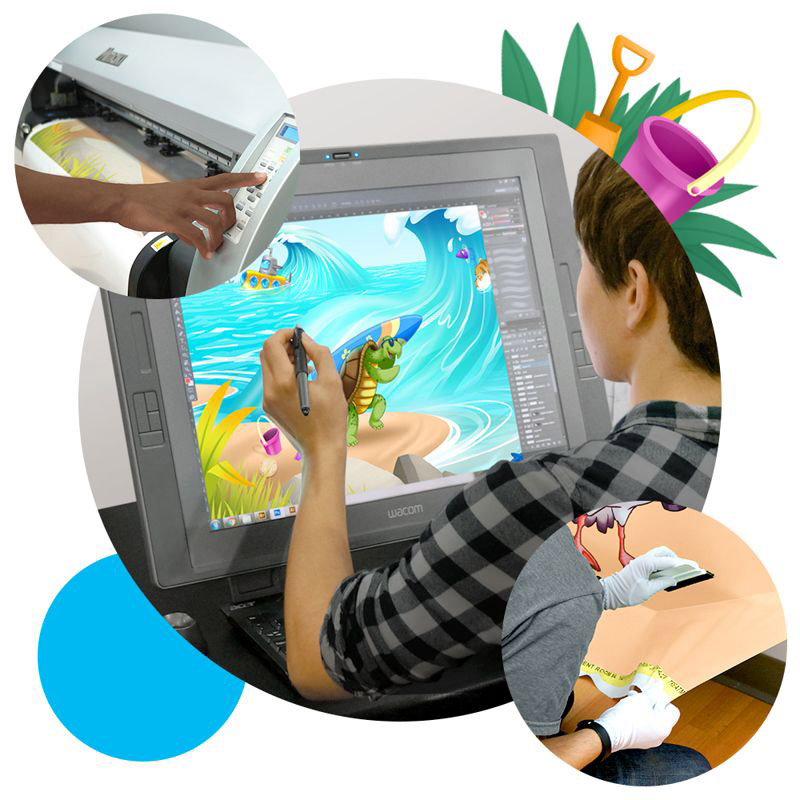
Every unforgettable space starts with an idea, and at IDS Kids, we guide you from vision to installed reality with care, creativity, and clinical know-how. Whether you’re planning a single feature wall or a full themed environment, our process is collaborative, detailed, and entirely in-house.

  • Free consultation: Tell us about your vision, layout, and goals. We’ll help you explore options and theme ideas.
  • Custom concept art: We provide sketches and mockups tailored to your space, with collaborative revisions built in.
  • Expert production: All murals are crafted in-house (Alberta & Florida) using commercial-grade vinyl, not paint, for vibrant color and long-term durability.
  • Flexible install options: Our crew handles complex installations, and our ids Essentials™ collection offers easy installation for general contractors or facilities teams.
  • Built to last: Easy-clean finishes and a limited lifetime warranty ensure that your murals can withstand real-world clinic use.

Whether you need one feature wall or a full space transformation, we make the process seamless and the results unforgettable.


Inspiration From Real Kids’ Spaces

Our IDS mural was installed yesterday and it is amazingly beautiful! I can’t thank you enough for the brilliance and humor it has brought to our new Dental Clinic and to the dedicated pediatric operatory. We are grateful to be able to serve Denver’s homeless pediatric population and improve their oral health in such a magical place. You are a part of serving Denver’s most vulnerable population and on behalf of all of us at the Coalition we are in your debt, THANK YOU and your whole team!

– Dr. Carol Niforatos, DDS

Dental Director, Colorado Coalition for the Homeless


Questions We Get All the Time (About Children’s Wall Murals)

How Are Kids’ Wall Murals Different From Kids’ Wallpaper?

  • IDS wall murals are site-specific, scaled precisely to your space, and designed to complement the architecture, lighting, and flow of the environment.
  • Each mural is created using durable, commercial-grade materials suitable for clinical and high-traffic settings.
  • Unlike off-the-shelf kids’ wallpaper, which often lacks durability or healthcare suitability, IDS murals are custom-designed to fit the wall dimensions and visual needs of the space.
  • The result is a seamless, professional installation that looks intentional, holds up over time, and enhances both the function and atmosphere of the room.

How Long from Concept Drawings to Install?

  • Custom murals take a few weeks, depending on the scope. IDS Essentials™ themes are faster and come with easy installation options.

Cleaning & Durability of Murals in High-Traffic Areas?

Multi-Site Mural Packages and Brand Consistency of Murals?

  • We standardize designs across locations to match your brand at every touchpoint.
  • Digital files ensure identical color, quality, and style of murals across all sites.
  • Scalable for clinics, hospitals, and multi-location networks.
  • Matching mural branding maintains a cohesive, professional look in every space.


Have an Idea? Let’s Bring It to Life Together.

The right mural does more than brighten a wall; it transforms a sterile space into a story-led backdrop that kids remember long after their visit. Whether it’s calming a nervous first-timer or creating a playful moment between appointments, the environment you build makes all the difference.

Ready to create a space that inspires confidence and wonder?


  • Reviewed by Dave Nolan, President of Imagination Design Studios, with 30+ years in themed environment fabrication.
FOUND THIS ARTICLE HELPFUL?

SHARE THE LOVE!

  • envelope

RELATED POSTS

Pediatric Dental Office Design: Why Every Practice Needs a Fun Brushing Station

Child-First Design for Pediatric Dental and Medical Spaces

10 Halloween Dental Office Ideas for Pediatric Practices

Creating the Best Therapy Playroom for Effective Child Healing

How to Design a Play Therapy Room That Helps Kids Feel Safe

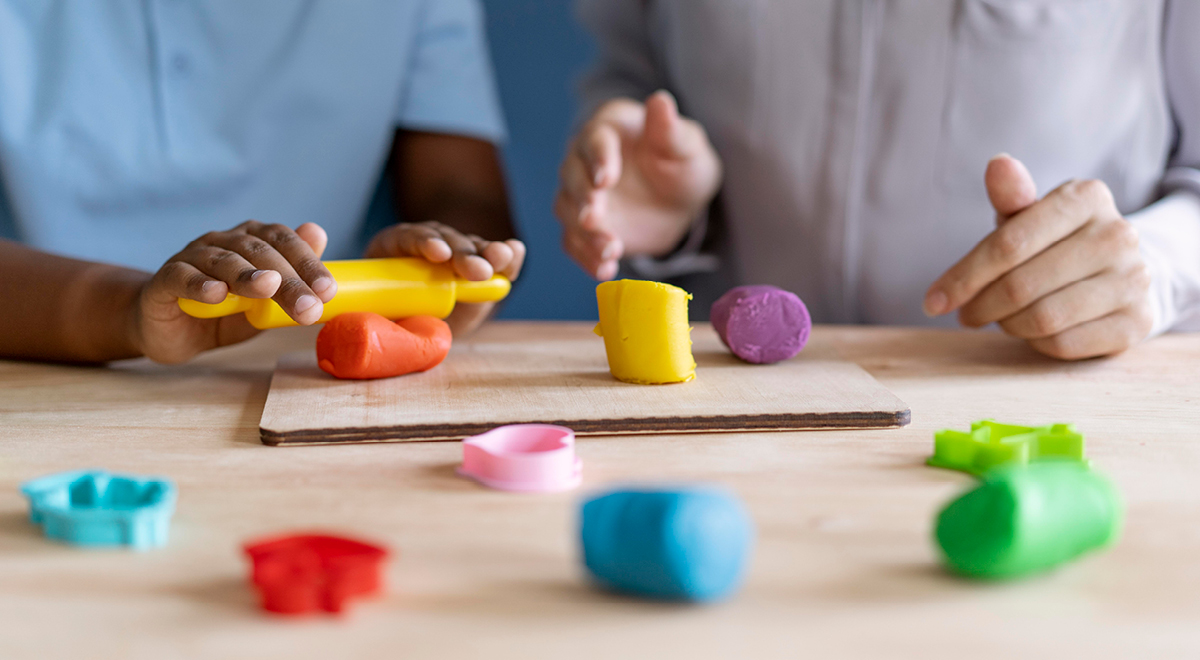
Imagine a child walking into their first therapy session. They’re nervous, uncertain, maybe even scared to talk. That first impression can decide whether they open up or shut down. Now imagine the same child stepping into a playroom filled with familiar objects, soft colors, and space to be themselves. That is where the healing begins.

That’s what a well-designed play therapy room does. It creates a space where children feel safe to express big feelings in little ways through toys, art, and movement. At Imagination Design Studios (IDS), we specialize in building the environments where that healing begins.

Let’s explore how the right space supports effective play therapy and how IDS helps create it.

Note: This guide focuses on fabrication & theming considerations for a play therapy room. Clinical decisions, electrical/AV, and base-building layout remain with your licensed teams. We build to therapy office and facility standards set by your partners. IDS does not provide clinical guidance or therapy programming; we design and fabricate themed environmental elements that support your care team’s goals.

LEARN MORE ABOUT
THEMED THERAPY SPACES


Why Children Notice the Space Before They Notice the Therapist

Children process the world through play. They don’t always have the words, but they do have symbols, movement, stories, and sounds. That’s why the therapy room must speak their language, especially during play therapy sessions.

But designing the right therapy playroom is more than just putting toys on a shelf. The space must:

  • Be scaled for kids, not adults.
  • Include calming colors and non-stimulating layouts.
  • Offer enough space for movement, expression, and real-life toys.
  • Allow play therapists to work without distraction or constant redirection

When these elements come together, kids regulate faster, trust builds quicker, and child-centered play therapy becomes more effective.


Making the Room Work for Parents Too

Parents read a therapy playroom in seconds. Clear sightlines, organized storage, kid-friendly color, and soft, even lighting build trust right away. A calm space with a curated mix of therapy tools (toys, puppets, and art materials) signals that this is a child-centred play therapy room that’s cared for and intentional.

Safety should be obvious without needing an explanation: rounded edges, anchored shelving and play features, slip-resistant flooring, covered outlets, and clutter-free pathways. Defined zones for messy play (like sand and art) help protect materials and keep the room easy to reset. Durable, professional finishes let the play therapist focus on the relationship, not the space, during therapy sessions.

Parents also feel reassured when they can stay connected without hovering. A thoughtfully placed chair or a discreet observation option supports involvement while keeping the room child-led. Small details like stroller parking, a place for personal items, and sound control show the environment was designed with parents in mind, too.


Phase 1 – Let’s Start with the Basics: Choosing the Right Location and Setting the Mood

1) Pick a quiet spot where kids can feel private and safe

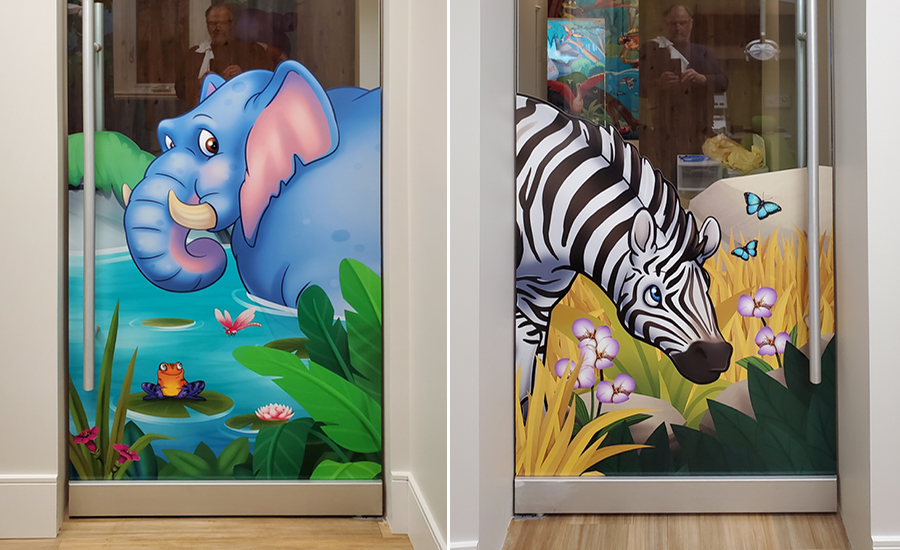
Choose a room away from high-traffic corridors. We fabricate privacy elements like door cover graphics, themed interior window panel graphics, and sightline shields.

Jungle themed glass door mural details of an elephant and zebra for a dental office.

If observation is required, glazing or one-way mirror systems are supplied and installed by your GC or preferred vendor. We fabricate the themed surround and trim so the opening integrates cleanly with the room design.

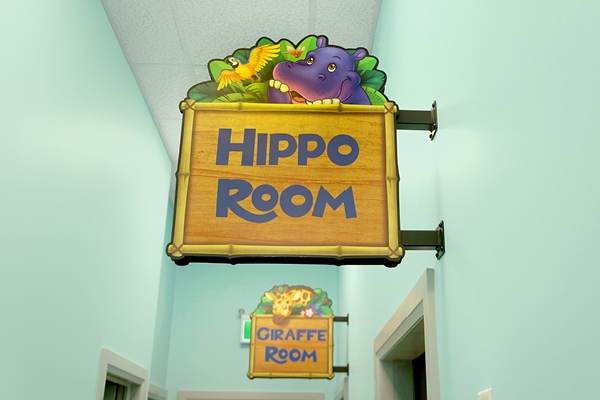
Clear, child-readable wayfinding helps families find the play therapy room without crowding reception.

Wayfinding sign that reads "Hippo Room".

2) Give them just the right amount of room to move and breathe

Many clients find ~120–200 sq ft comfortable for one child + one therapist. We scale built-ins so the room feels intimate, not cramped, and keep floor area open for movement. “Selected, not collected” storage avoids the over-collected look that can dysregulate sensitive children.

If a conference room must occasionally double as a therapy room, use mobile carts and a fast reset plan so the space stays consistent for the child. You need enough space for safe movement, but not so much that choices feel boundless.

3) Soften the noise so play feels gentle, not startling

Use sound-softening treatments (acoustic panels, ceiling baffles, and area rugs) specified and supplied by your acoustical consultant or GC team. IDS coordinates decorative housings, facades, and trim so these elements blend seamlessly into the theme.

For added privacy, consider a hallway white-noise machine to mask everyday chatter.

4) Choose floors and walls that welcome play and clean up fast

For wet or creative play, use seamless welded sheet vinyl or commercial LVP installed over a moisture-resistant substrate by your flooring contractor. Add a tight coved base to make mop-downs fast, and place removable drip trays near sand and water stations to catch the mess before it spreads.

In high-impact wall zones, we can fabricate HPL or laminated wainscot panels with soft radiused edges and flush hardware for durability and easy wipe-downs. Pair this with scrubbable paint on adjacent walls for a clean, cohesive finish.

To keep sessions flowing, add a simple reset diagram inside cabinet doors so every bin and material has a clear “home” after each visit.

5) Wrap the room in colors and light that calm without boring

Keep the envelope gentle (soft off-whites, misty blues/greens) and bring the theme through one feature wall, one photo-op, and coordinated storage colors.

Avoid high-contrast bands at eye level. Where existing fluorescent lighting can’t be replaced, ask your lighting designer about lensing and dimmable, warm task lights. Calmer color supports regulation, so play therapy sessions start on the right foot.


Phase 2 – Now we bring everything down to kid-size

1. Use furniture that feels just right for little hands and feet.

A woman and a young girl sit facing each other on small chairs indoors. The woman holds a clipboard and pen, smiling as she talks with the girl, who is also smiling. The setting appears bright and friendly.

Use tables, benches, and counters at child-appropriate heights with rounded edges and durable solid-surface/HPL tops.

Quiet nooks like a storybook-style cubby or a soft, curtained alcove give children a safe retreat that feels like part of the adventure, not an escape.

2. Keep toys and tools in places kids can find them every time.

Combine closed cabinetry (visual calm) with labelled open cubbies for fast access to toys. Opaque bins with large icon labels reduce choice overload for children.

All tall units are anchored; lockable compartments protect sensitive toys.

3. Create zones where creative expression feels effortless.

Wall-mounted writable panels, pull-out sand-tray bays with lids, and magnetic display rails make cleanup fast between appointments. (Yes, sand play can be tidy with the right details.)


Phase 3 – This is where the toys begin to tell the story

Your clinicians select and approve all therapeutic materials. IDS supports the room environment by fabricating durable themed props and child-friendly storage systems, then organizing those storage zones so everything has a clear “home.” The categories below reflect common ways play therapy rooms are typically organized to support consistency and easy resets:

  • Real-life & nurturing. Play kitchen, dishes, plastic foods, a toy phone, a simple cash register with play money, a dollhouse or doll house with diverse doll families, toy cars, and animals that reflect real-life scenes. (We can build neutral, non-branded characters to match your theme.)
  • Puppets & characters. Hand/rod puppets, people and animals help kids express feelings they may not want to talk about directly. (They’re also simply fun.)
  • Release and limits. If your policy allows, include a bop bag (we recommend two, one light and one heavier) and soft targets (you supply). IDS provides anchored, labelled storage and signage so play stays within agreed-upon limits.
  • Creative expression. Art caddies with crayons, markers, watercolors, glue, construction paper, popsicle sticks, and clay; kinetic sand for tactile work; simple musical instruments to explore sound and music. Keep supplies in labelled bins and refresh regularly.
  • Builders & manipulatives. Blocks, magnetic tiles, and straws/connectors are great for ideas and problem-solving play.
  • Dress-up. Capes, hats, masks, scarves (generic, non-IP) that let children explore feelings, roles, and control in realistic scenarios.
  • Sensory regulation. Fidget kits, therapy putty, textured balls, and soft throws (selected and supplied by clinical leadership); IDS provides storage and labelling.

Organization patterns that help: group by function (nurturing, expressive, building, sensory, release), label shelves with icons + words, and keep layouts consistent so children can find their words week to week. That predictable environment is especially helpful during play therapy transitions.

One-line rule of thumb: Play therapy tools should feel collected, not chaotic, “selected, not collected,” and always easy to reset for the next appointment.


Phase 4 – Keeping the Room Clean and Easy to Reset

Choose non-porous countertops, sealed edges, and stain-resistant finishes. Keep seams to a minimum. Details like lift-off fronts, open toe-kicks, and removable tray liners make wipe-downs and mop-downs faster.

Sand and water play? Yes, as long as it’s planned for. Use contained sensory bins with removable liners and easy-wipe surfaces around the station. That turns a big clean into a quick wipe.

Use reset diagrams and digital checklists to help keep rooms consistently clean and tidy.


Phase 5 – Designing for Shared or Flexible Spaces

For shared rooms or office space that flips during the day, mobile carts and color-coded bins keep categories intact.

For outreach, some teams pack a compact kit into a rolling suitcase with foam-cut compartments so the play therapist can set up a defined play space in minutes, even in a borrowed conference room.


Phase 6 – Behind the Scenes: Safety, Compliance, and Clear Roles

TouchpointWhat we do (IDS)Your team/partners
Themed DecorWe round edges and close gaps in themed decor to reduce pinch points. Then we fabricate and install with safety-first detailing so everything feels smooth, sturdy, and kid-friendly.
CodesWe fabricate to the approved project drawings/specs and coordinate with your architect/GC so our scope integrates cleanly.Your architect/GC owns accessibility clearances, fire ratings, egress, and sprinkler clearances.
ElectricalWe plan cut-outs, wire chases, and housings in our millwork so the installation is tidy.Your licensed electrician/AV sets receptacles, low-voltage, switching, and dimming.
Observation/RecordingIf observation is required, glazing/mirror is by your GC/vendor; we fabricate themed surround and trim to match the room.Your AV contractor handles devices/cabling; you manage policy, consent, and any media storage.
AnchorageBefore construction, we provide wall-blocking requirements; on-site, we anchor pieces to ensure safety.Your GC ensures that blocking is in place per the drawings.


Phase 7 – The IDS Process From Plan to Installation

  1. Consultation & Intent
    We review clinical goals, age ranges, themes, and operational constraints, then confirm partners and site rules. We’ll address timelines and budget up front.
  2. Design Development
    A “Scope of Work” mood board, concept sketches, and mural layouts focused on calm + clarity. We balance ideas with practical workflows for therapists, parents, and children.
  3. Shop Drawings & Approvals
    We document dimensions, anchorage points, floor and wall materials, penetrations, and finish schedules and coordinate with MEP/architectural drawings before fabrication.
  4. Fabrication
    In-house production of props, signage, and graphics. We pre-fit complex assemblies to minimize site time and protect your floor, walls, and ceilings.
  5. Installation & Aftercare
    Our in-house team installs, completes checklists lists, provides cleaning and care guides, and hands you hardware keys for game systems. That’s how a play therapy room stays beautiful, sturdy, and ready for the next story.


It’s not just kids; everyone wins with the right design

StakeholderHow They Benefit
ChildrenFeel safe, empowered to express feelings, build trust through play
ParentsGain confidence in the therapeutic process; more likely to follow up
TherapistsSpend less time redirecting, more time building therapeutic relationships
Admins/ProvidersStreamlined hygiene, faster turnover, and more engaging environments for families


Simple Checklist to Make Sure Your Playroom is Ready

  • Do we have a quiet location (away from traffic) and a clear plan for privacy and observation that aligns with policy?
  • Are built-ins child-scaled with rounded edges, labelled storage, and anchored tall units?
  • Is lighting warm and diffused (or existing fluorescent lighting properly softened)?
  • Do we have designated zones for creative expression, release, sensory regulation, and story?
  • Are materials easy-clean and supplies labelled so resets take minutes, not hours?
  • Are the theme, colors, and wayfinding inviting without visual overwhelm?
  • Does the space invite play therapy while respecting limits, safety, and compliance?


Turning Your Space Into a Therapeutic Asset

Every child deserves a space that feels safe, colorful, and welcoming. We’ll help you design and build it, down to the last detail.

Have an idea for your play therapy room? Let’s talk. Together we’ll design a space where children feel safe and supported.

????idskids.com/contact

IDS is North America’s leader in kid-focused themed environments. We have completed over 850 projects across dental practices, hospitals, schools, museums, aquariums, retail, indoor play venues, and more. If you’re planning a play therapy build, we’re ready with concepts, drawings, fabrication, and in-house install.

FOUND THIS ARTICLE HELPFUL?

SHARE THE LOVE!

  • envelope

RELATED POSTS

Child-First Design for Pediatric Dental and Medical Spaces

Five Key Factors to an Effective Exam Room Design: Creating a Stress-Free Haven for Kids

Case Study: Theming for Long-Term Impact Across 13+ Community Health Centers in Washington

Inclusive Design for Children’s Spaces: Why Inclusion Matters

Creating a space for children is more than adding bright colors and playful decor. True child-friendly design requires inclusive design, environments that welcome children of every ability, background, and culture. For dentists, hospitals, and other child-focused organizations, this means building spaces that are ADA compliant and go beyond the minimum requirements to make every family feel valued.

Download and read the full article at the end of this blog summary.


What is Inclusive Design?

Inclusive design is an approach that considers the full range of human diversity. This includes mobility differences, sensory needs, cognitive abilities, age, culture, and language. In pediatric environments, inclusive design ensures no child feels excluded or overlooked.

The Americans with Disabilities Act (ADA) sets the baseline standards for accessibility in public spaces. But while ADA compliance is essential, inclusive design goes further. It looks at the whole child, and their family, to create environments that are welcoming, supportive, and joyful.


Mobility and Physical Accessibility

The most visible aspect of inclusive design is physical accessibility. ADA compliance covers features like:

  • Wide pathways and doorways that accommodate wheelchairs and strollers.
  • Ramps or elevators alongside stairs so every child uses the same entrance.
  • Accessible counters and seating at appropriate heights.
  • Family restrooms with space for mobility devices and caregiver assistance.
  • ADA signage with tactile lettering, Braille, and high-contrast text.

For families with wheelchairs, walkers, or strollers, these features ensure independence and dignity. Importantly, they also make life easier for caregivers—parents, grandparents, or siblings who may also have accessibility needs.


Inclusive Design for Sensory and Cognitive Needs

Children experience spaces differently. Inclusive design accounts for those with sensory sensitivities, autism, ADHD, or anxiety.

Key strategies include:

  • Quiet zones or calming nooks where children can retreat from overstimulation.
  • Visual wayfinding using colors, symbols, or friendly icons instead of text alone.
  • Age-specific zones for toddlers, school-aged children, and teens.
  • Acoustic and lighting controls to reduce noise and glare.

These design choices support children who need extra comfort while also benefiting all kids. For example, a quiet corner helps a shy child regroup, while color-coded pathways make navigation fun for everyone.


Cultural and Language Inclusion

Inclusive design also means being mindful of cultural and linguistic diversity. Families who walk into a space should see that it reflects their community.

Ways to achieve this include:

  • Multilingual signage paired with universal icons for clear navigation.
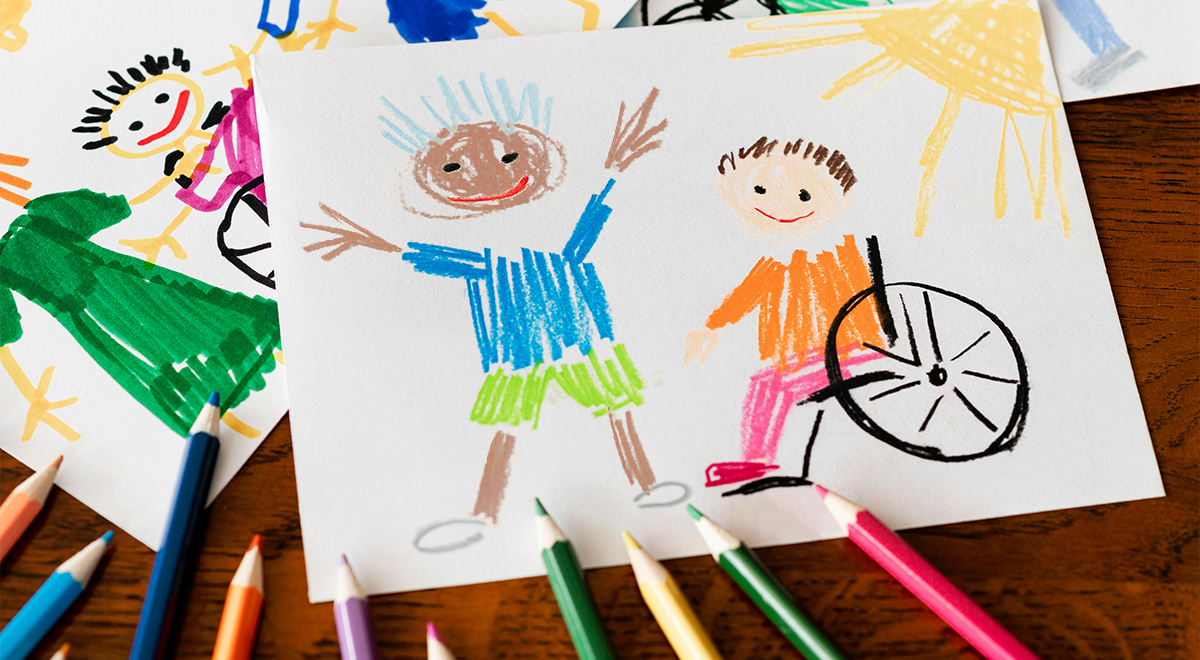
  • Murals and décor that represent children of diverse backgrounds.
  • Books, toys, or media in multiple languages.
  • Neutral reflection or prayer areas in healthcare settings.

These details send a powerful message: every family is welcome, and every child belongs.


Why Inclusive Design Benefits Everyone

Inclusive design isn’t just about compliance or ethics, it has clear benefits:

  • Children feel included. Kids of all abilities can participate equally in play and care.
  • Anxiety decreases. Welcoming, calming environments reduce stress before treatment.
  • Parents feel supported. Accessibility and cultural respect make visits smoother.
  • Reputation improves. Families share positive experiences, strengthening community trust.
  • Compliance reduces risk. Meeting ADA standards protects organizations from legal issues.

For dentists and hospitals, inclusive spaces lead to happier children, smoother appointments, and stronger patient relationships.


IDS Kids: Inclusive Design in Action

At Imagination Design Studios (IDS Kids), inclusive design is built into every project. The company specializes in themed environments for pediatric dental practices, hospitals, and other child-focused facilities.

IDS ensures all projects are ADA compliant, from wide play-area pathways to accessible seating. Their in-house team blends safety and compliance with creative, themed elements that spark imagination. Whether it’s an underwater adventure in a waiting room or a jungle mural in a treatment area, IDS designs spaces where children of all abilities can play and feel comfortable.

With nearly two decades of experience and hundreds of completed projects, IDS knows how to make inclusive design practical, durable, and magical.


Download the Full Article

This blog offers a clear overview of inclusive design, but there’s more to explore. If you’d like a deeper dive into ADA standards, design strategies, and examples, we’ve created a detailed PDF version of this article.

???? Download the Full Guide to Inclusive Design for Children’s Spaces (PDF)

The extended article includes:

  • Expanded explanations of ADA requirements.
  • More real-world examples.
  • Practical tips for dentists, hospitals, and child-focused organizations.

It’s a useful resource to share with your team or stakeholders as you plan your next project.


Conclusion

ADA compliance is the foundation of accessibility, but inclusive design is what truly transforms children’s spaces. By addressing mobility, sensory, cognitive, cultural, and language needs, businesses create environments where every child, and their family, feels valued.

For pediatric dentists and healthcare leaders, investing in inclusive design is both a responsibility and an opportunity. It improves patient experiences, builds trust, and strengthens community reputation.

With experts like IDS Kids, creating an inclusive, ADA-compliant space doesn’t just meet regulations, it creates a welcoming environment where children can thrive.


  • Written by Chris Bexiga, Lead Concept Designer at Imagination Design Studios
  • Reviewed by Dave Nolan, President of Imagination Design Studios, with 30+ years in themed environment fabrication.
FOUND THIS ARTICLE HELPFUL?

SHARE THE LOVE!

  • envelope

RELATED POSTS

Pediatric Dental Office Design: Why Every Practice Needs a Fun Brushing Station

Explore the Best Children’s Murals for Walls to Transform Any Room

Child-First Design for Pediatric Dental and Medical Spaces

The Best Calm Colors for Spaces to Enhance Patient Focus and Relaxation

A child’s first impression of a space matters. Walk into a room that feels cold or clinical, and nerves rise. Step into a room filled with soft blues, leafy greens, and warm light, and the experience shifts the environment says, “you’re safe here.” At IDS Kids, color isn’t just decoration; it’s an emotional anchor that helps children feel calm and supported through every visit.

At IDS Kids, we create more than murals; we design emotional anchors. In this blog, explore the seven most calming colors for children’s spaces and how our themed environments turn every visit into a warm, unforgettable experience.


Why Calming Paint Colors Make All the Difference for Kids

In pediatric environments, every color tells a story. Soft blues build trust and calm. Gentle greens restore balance. Warm yellows inspire creativity and engagement. These aren’t just painted walls, they’re emotional landscapes shaping how children feel in a space. The right palette can help a child decide whether they feel tense or safe, anxious or at ease.

Research shows the right hue can reduce anxiety, improve concentration, and make visits more memorable. That’s the calming effect of thoughtful color and why calming paint colors and murals, paired with natural light and smart accent walls and furniture, matter so much.

We merge psychology and storytelling to craft immersive environments. From choosing the perfect shade to installing ceiling murals designed to help ease tension, we understand how to design spaces that truly support children. Next, we’ll explore seven of the best colors for soothing pediatric spaces.


The 7 Best Calming Colors for Pediatric Spaces

Designing pediatric spaces that soothe, calm, and engage young visitors is no small task. The paint colors and murals you choose for these environments play a pivotal role in how children feel, especially in medical or educational settings where anxiety can easily take over.

It’s more than just aesthetic; colors have the power to create emotional connections, foster a sense of safety, and even enhance a child’s ability to focus or relax.

Here are the seven best calming colors that have been carefully selected not just for their beauty, but for their ability to work wonders on a child’s mind and mood. These hues, used thoughtfully in design elements like paint colors, murals, furniture, and clever use of lighting, can make all the difference in how a child experiences a space.


1. Soft Blue Color Palettes

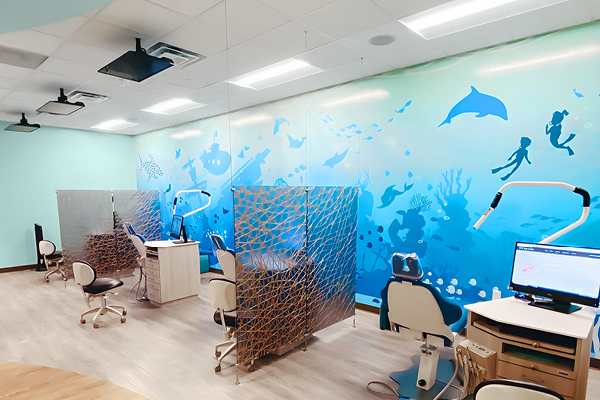
A brightly lit dental clinic with ocean-themed wall art, featuring dolphins, fish, and scuba divers. There are dental chairs and workstations separated by decorative partitions.
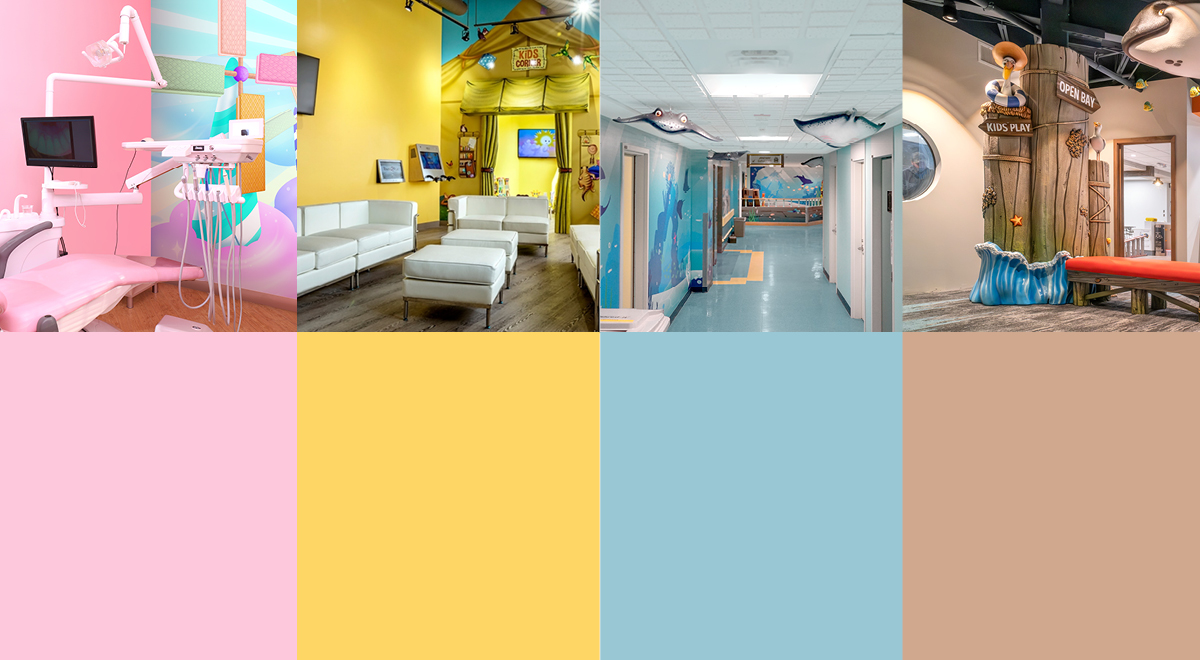
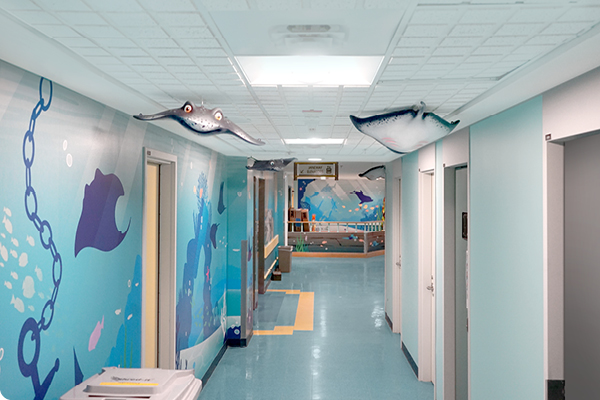
A hospital hallway decorated with ocean-themed murals and hanging manta ray models. The walls feature underwater scenes with fish and chains, creating a playful and calming atmosphere.

Soft blues are one of the best calming colors for pediatric spaces. They are associated with lower anxiety and can build trust, making them perfect for treatment rooms and waiting areas. Picture a serene ocean mural or a sky-blue ceiling that instantly puts kids at ease.

Take a look at our Deep Sea Adventure Waiting Room, where ocean murals and blue accents transform a regular medical office into a calming, welcoming space for young patients. It’s the perfect color to set a soothing mood!


2. Leafy Greens & Mint Color Palettes

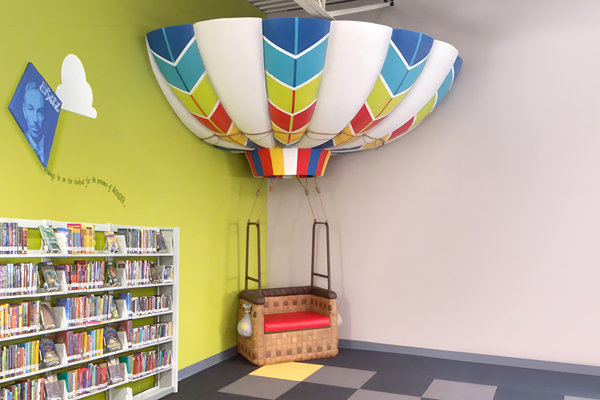
A colorful hot air balloon-themed bench is attached to a wall in a library. Nearby, shelves are filled with books, and a green wall features a cloud-shaped decoration and a quote. The floor has a checkered pattern.
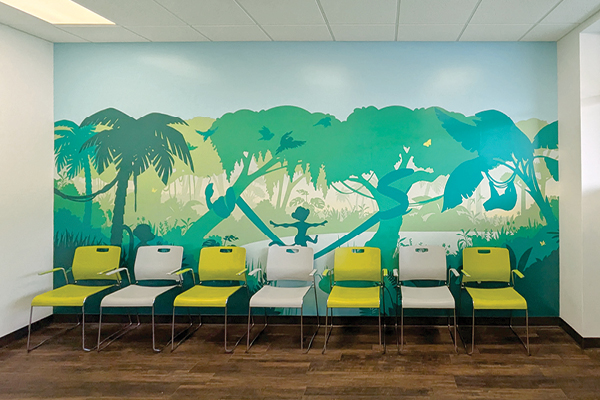
A row of green and white chairs is lined up against a wall with a mural of jungle trees, animals, and vines in shades of green and blue. The floor is dark wood, and the ceiling is white with built-in lights.
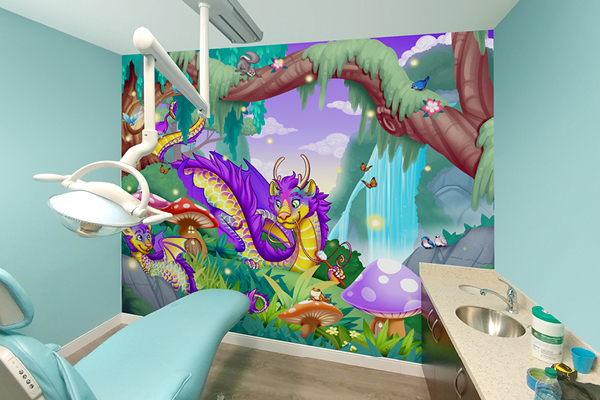
A childrens dental exam room with aqua walls and chair, featuring a colorful mural of a purple dragon, butterflies, mushrooms, and a waterfall in a whimsical forest setting.

Leafy greens and mints are nature’s soothing tones. They help restore balance and improve focus, making them perfect for classrooms, libraries, and exam rooms. These colors bring the outdoors inside, helping children feel calm and grounded.

In our Jungle Hut Pediatric Dental and Ortho Office, lush green murals and forest scenes create a tranquil environment that supports concentration and relaxation. These calming colors help boost productivity and focus, ensuring children feel at ease in every corner.


3. Pastel Pinks & Lilac Color Palettes

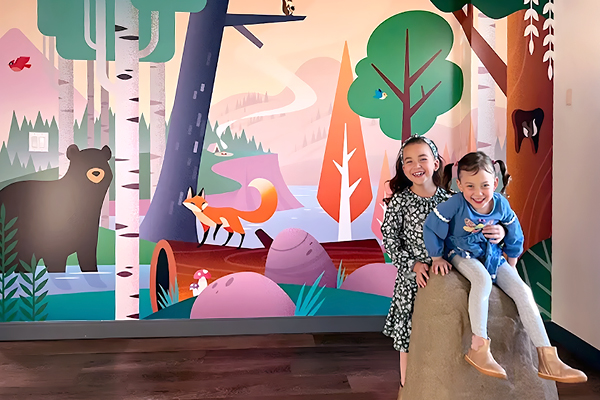
Two smiling young girls sit on a rock indoors in front of a colorful mural featuring a bear, fox, trees, and other forest scenery. The mural has a whimsical, cartoonish style.
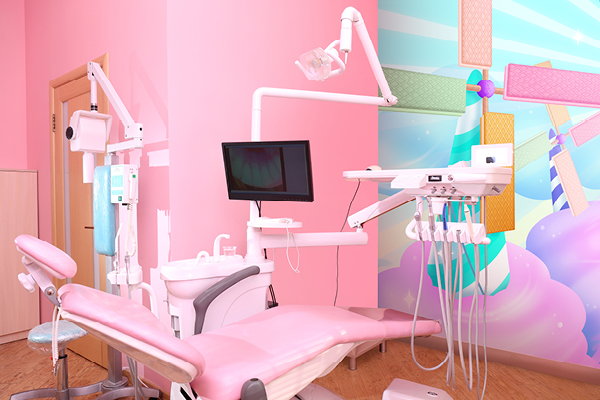
A brightly lit dental office with a pink dental chair and equipment, set against a colorful wall mural featuring whimsical windmills and pastel clouds.

Pastel pinks and lilacs are the ultimate colors for creating warmth and comfort. They can help reduce feelings of fear and anxiety, making them ideal for pediatric wings and literacy corners. These soft hues evoke safety, helping children feel secure in spaces where they might be nervous.

Our designs can incorporate pastel pinks and lilacs to create an enchanting space filled with whimsy and comfort, just like what you’d see in a fairy tale pediatric wing. The combination of calming colors and fairytale murals allows children to relax, escape into a fantasy world, and feel safe during their visits.


4. Earthy Beige & Warm Taupe Color Palettes

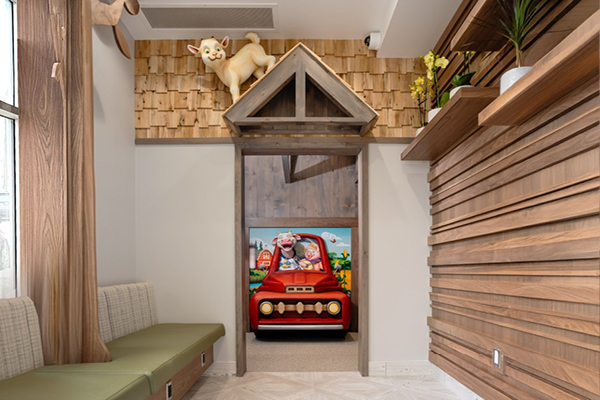
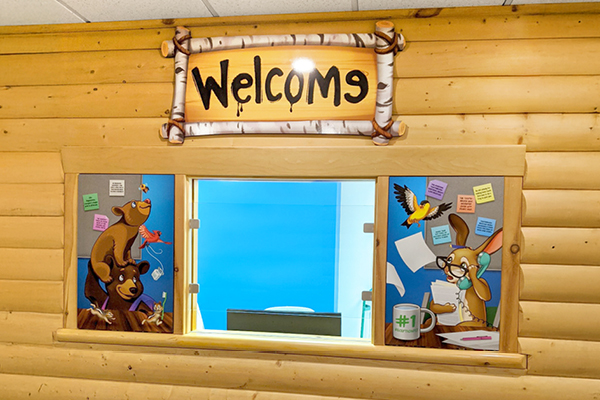
A playful waiting room with wooden walls, green cushioned benches, a cat statue above a door, and a red toy car with cartoon animals in a colorful play area beyond the doorway.
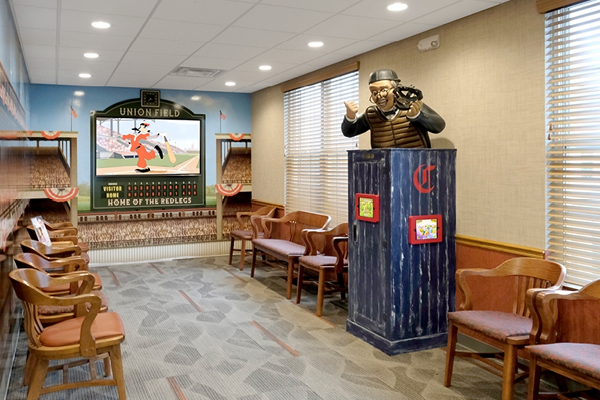
A waiting room decorated with a baseball theme, featuring wooden chairs, a mural of a stadium scoreboard, and a statue of an umpire in full gear standing on a blue platform. Light streams in from tall windows with blinds.
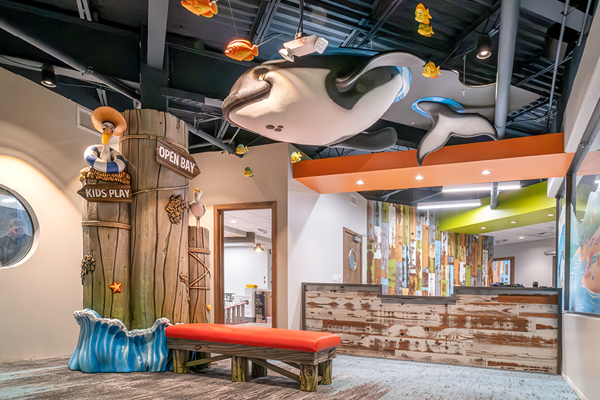
A colorful childrens waiting area with ocean-themed decor, including a large hanging orca, playful fish, a “Kids Play” wooden structure, and a red cushioned bench. The space is bright and welcoming.

Earthy beiges and warm taupes provide the perfect neutral backdrop, reducing overstimulation and offering a grounded, calming atmosphere. These tones work well in hallways, seating areas, or floor-to-wall transitions.

In our Cozy Woodland Office and Reception, earthy beiges and taupes set the stage for nature-inspired murals that invite calm while still maintaining a warm, welcoming vibe. These colors complement vibrant elements without overpowering the space, making it inviting and relaxing for both children and parents.


5. Whites with Warm Undertone Color Palettes

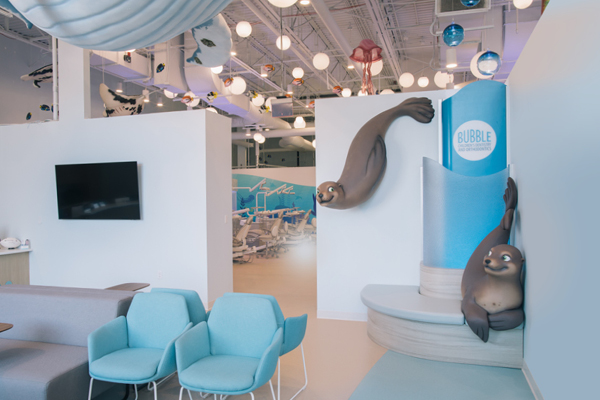
A bright, modern dental office with sea-themed decor, including two playful seal sculptures by a blue sign reading Bubble, light blue chairs, a couch, and a TV mounted on the wall.
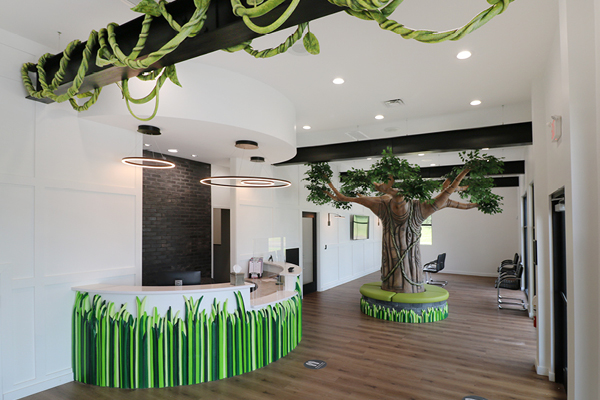
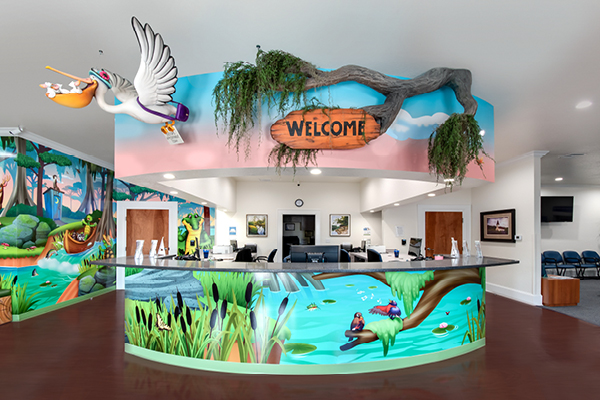
A bright, modern office waiting area featuring a round reception desk decorated with green grass designs and a large artificial tree in the center, with vines hanging from the ceiling and wood floors.

Whites with warm undertones bring light and warmth to a room, brightening the space without feeling cold or clinical. Perfect for ceilings, signage, and backdrops, these colors create an open, airy atmosphere that doesn’t feel sterile.

In our beautiful Ocean Recovery Room, bright sky whites combined with ocean murals transform a clinical space into a serene, uplifting environment. The natural light enhances the warmth of these tones, making the room feel welcoming and relaxing, perfect for recovery.


6. Buttery Yellow Color Palettes

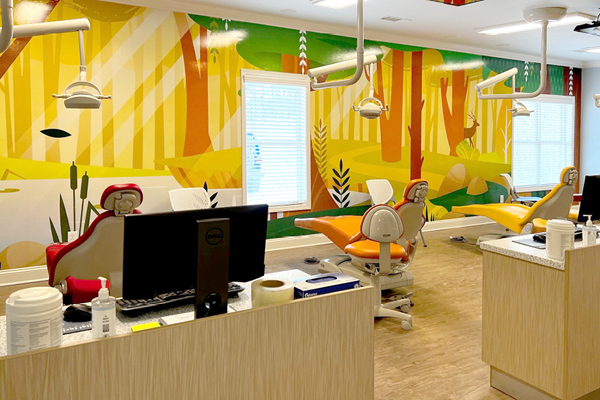
A bright dental office with colorful, forest-themed wall art, multiple dental chairs in red, yellow, and orange, two computer stations, and large windows letting in natural light.
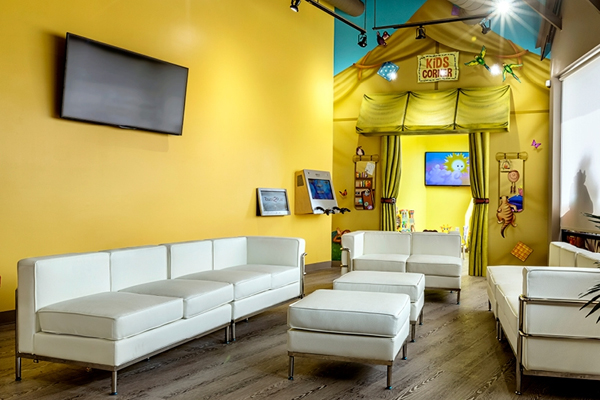
A brightly lit waiting area with white modern sofas and ottomans, yellow walls, and a colorful kids’ corner decorated with toys, books, and a TV. A larger TV is mounted on the main wall above the seating.

Buttery yellows are full of joy, creativity, and energy. They’re ideal for play areas, activity corners, and wayfinding, where you want to encourage exploration and fun. Yellow sparks happiness and curiosity, helping children feel engaged and inspired.

We can incorporate vibrant yellow accents and murals to create a lively, cheerful space where kids can explore, play, and learn. This uplifting color boosts creativity and makes any space more inviting, ensuring children feel excited and curious in every corner.


7. Soft Purples & Periwinkle Color Palettes

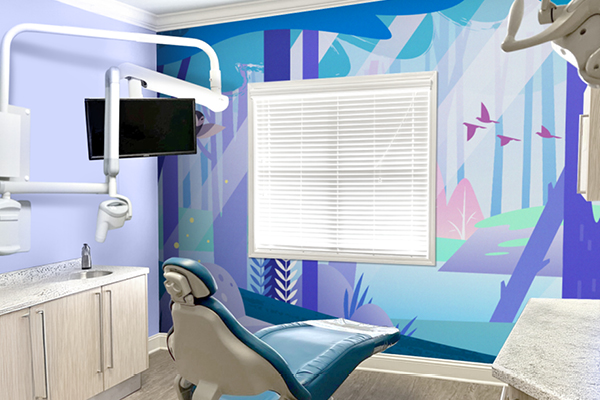
A modern dental exam room with a blue dental chair, wall-mounted equipment, and a vibrant mural of a forest with birds, in shades of blue and purple, on the wall beside a window with closed blinds.

Soft purples and periwinkles spark creativity and curiosity, making them perfect for reading corners, sensory play areas, and creative studios. These hues encourage children to explore their imaginations and foster a love for learning.

We can incorporate soft purples and periwinkles to set the stage for a magical environment, bringing whimsy and inspiration to young readers, just like in an Enchanted Forest Reading Nook. These colors, combined with enchanting forest murals, create a captivating space that fuels curiosity and inspires a love for reading.


Colors That Can Do More Harm Than Good

While certain colors can create a calming and inviting environment for children, some hues can be overwhelming or induce anxiety. It’s important to use colors thoughtfully, as their emotional impact can vary significantly.

  • Harsh Reds: Although energizing, red can increase anxiety and agitation, making it unsuitable for treatment rooms. Use it only as an accent, not as the primary color.
  • Neon Greens: Neon greens can be too stimulating and may create a sense of discomfort. It’s best to reserve these shades for small details or accents, not entire walls.
  • Clinical Whites: While white reflects light, it can feel cold and sterile in pediatric spaces, making children feel more anxious. Choose softer whites or warm tones to create a welcoming atmosphere.

In short, Colors like bright red, neon green, or stark white can feel playful at first glance, but to children they often send the wrong message. Red can heighten anxiety, neon tones can overstimulate, and clinical whites can feel cold instead of comforting. That’s why we recommend using these shades only in small accents, balanced by calmer tones that make kids feel secure.


Choosing the Right Colors for Different Spaces

Color isn’t just a visual treat; it’s the secret ingredient that shapes the energy and functionality of a space. At IDS, we don’t just choose any color; we recommend the perfect one for your space, transforming it into something truly magical.

Space Type,Recommended ColorsPurpose & Psychological Impact
Dental & Medical OfficesSoft blues, greensCreate a sense of tranquillity. Adding ceiling murals and thoughtful lighting cues can support calmer focus, helping to keep both staff and patients comfortable.nd staff.
Hospitals & Pediatric ClinicsLight tones, natural muralsGuide visitors through the space, reducing anxiety and reinforcing healing. These perfect colors also help with wayfinding, making the experience smoother.
Libraries & SchoolsSoft pastels, bold orange accentsEnhances focus; orange sparks creativity; turns learning into an exciting adventure. The perfect color choices inspire young minds to engage and explore.
Malls & Play CentresBright murals, accent wallsInject energy into the space, creating an exciting environment. The right colors spark joy, providing both fun and function.


Lighting, Ceilings, and Sensory-Smart Design: Not Just Color, But How It’s Seen

The visual experience in a pediatric space goes beyond just the color on the walls. In spaces where natural light is limited, we coordinate with your lighting designer/EC to keep the atmosphere warm and visually balanced. Ceiling murals, often the only view a child has during treatment, become more than art. They’re comfort, they’re a distraction, and they’re a story to hold onto.

For children with sensory sensitivities, muted tones and balanced light create a relaxing environment. At IDS Kids, we expertly integrate murals and theming and coordinate with your lighting and furniture plans for a cohesive design, ensuring every detail contributes to an immersive, calming space.


What a Child Remembers Shapes What They Expect

Kids don’t remember paint chips; they remember how a room felt. A first visit wrapped in story-led color and gentle lighting becomes the baseline they expect every time.

  • Start with subtle gray walls for a calm field; layer calm colors for office accents through murals and wayfinding.
  • Choose the best paint color per zone (exam vs. play), and reserve dark colors for small, grounding trims.
  • Keep one “great color” per area and just two other colors (simple, memorable ideas win).
  • Make it tactile: ceiling scenes, discovery nooks, soft textures.
  • Coordinate your furniture plan (desks, seating, storage with IDS palettes and custom themed millwork to echo the scheme

When color, storytelling, and furnishings sing together, fear fades, and families return calmer, more compliant. Kids remember comfort, not procedures. Design for that memory, and every visit gets easier.


From Psychology to Production, IDS Brings It All Together

Trusted by clinics, schools, and attractions, IDS pairs child psychology with built science. With 18+ years and 800+ themed projects, our premium fabrication turns stories into spaces. Spaces that are precisely fitted and code-aware; final approvals by your architect/authority having jurisdiction.

From discovery to installation, IDS handles everything: research-led design, precision build, and installation. We coordinate with facilities, optimize themed zones and wayfinding within your approved plan in collaboration with your architect/GC, integrate interactive elements, and keep budgets, schedules, and safety clear.

Every mural, wall, and prop is engineered for high-touch spaces (cleanable and chip-resistant). Need speed? IDS Essentials™ delivers ready-to-install themes with cohesive paint colors and accents and guidance from order to installation.


Ask IDS: Color, Light, and Little Minds


1) How does natural light influence calming paint colors in pediatric spaces?

Natural light shifts how hues read throughout the day, so test large swatches under morning and afternoon sun. Pair low-saturation blues/greens with task lighting (3500–4000K) to keep tones consistent.

Coordinate the palette with office furniture finishes and wall art so everything feels calm, cohesive, and cool rather than clinical.

2) What are the best colors for exam rooms versus play areas?

For exam rooms, choose softer hues like pale blue, mint, or warm off-white to create a calm, focused atmosphere for both kids and caregivers.

In play areas, you can introduce more color and personality to complement the theming and play structures. Use bright, cheerful tones in accents or feature walls, while keeping surrounding areas balanced with lighter, neutral shades. This approach keeps the space playful and energetic without becoming visually overwhelming, allowing your themed elements to take center stage.

3) How do I pick calming paint colors when natural light is limited?

In low light, lean on warm off-whites and desaturated tints; overly cool greys can feel flat. Use high-CRI task lighting to keep colors true, and echo the palette across office furniture, laminates, fabrics, and feature art.

If you add other office furniture later, choose matching finishes to preserve the calm.

4) What are the best colors to coordinate with office furniture, art, and wayfinding?

Choose one neutral wall color to ground the space, then layer in one or two accent tones that complement your murals, furniture, and art.

Keep the palette simple to let themed elements and signage stand out without visual clutter. For wayfinding, use a single brighter “pop” color to draw attention where it’s needed most.

Soft, calming hues, like light blues, greens, or warm neutrals, help maintain a cohesive and welcoming atmosphere throughout the office.


Need Help Choosing Paint Colors? We’ve Got You Covered.

Selecting paint colors can be tricky. That’s why our office design packages include complimentary wall color suggestions to match your murals and overall theme.

What you’ll get (at no additional cost):

  • A custom palette with three Sherwin-Williams paint colors selected to complement your murals and theme

What we’ll need from you:

  • Room function and any existing furniture details
  • Floor plan or photos of the space
  • Brand colors (if applicable)


IDS designs, fabricates, and installs themed environments, murals, props, and signage. We coordinate closely with your architect, GC, and MEP teams for lighting, furniture, and code approvals. Palette and finish recommendations are provided for coordination with your painter and facility standards.


  • Reviewed by Dave Nolan, President of Imagination Design Studios, with 30+ years in themed environment fabrication.

FOUND THIS ARTICLE HELPFUL?

SHARE THE LOVE!

  • envelope

RELATED POSTS

Explore the Best Children’s Murals for Walls to Transform Any Room

Pediatric Dental Office Design: Why Every Practice Needs a Fun Brushing Station

Child-First Design for Pediatric Dental and Medical Spaces

Beyond Books: 7 Tips to Create Magical Library Play Zones

Children’s areas in libraries are no longer just rows of bookshelves, they’re becoming immersive environments that support early literacy, social-emotional development, and community connection. Designing a play zone in your library isn’t just about aesthetics. It’s about creating a space where children want to be, and where learning happens through joyful interaction.

Below is a practical guide for designing engaging library play areas, with real-world insights, design advice, and important considerations for public and private libraries.


1. Start with a Theme to Spark Imagination and Encourage Return Visits

Themes help transform ordinary spaces into narrative-rich environments. Research shows that themed environments stimulate imagination and encourage repeat engagement—especially important in early literacy development where repetition and exposure matter.

Tips for choosing a theme:

  • Align it with your community identity (e.g., local animals, regional history, seasonal themes).
  • Let kids become characters in the story—forest explorers, ocean divers, astronauts, etc.
  • Rotate soft elements (like reading props or mural overlays) seasonally to keep the space fresh.
A colorful, bayou-themed pediatric medical health center waiting room with a wall mural of animals by a river, a tree stump play structure, green benches, log stools, cushioned seating, playful decor, and a soft carpeted floor.
Local tree landmark in a play area.

Popular, kid-approved themes:

  • Woodland Forest – Encourages nature-based play and discovery. Think animals, trees, leaves, and hidden story corners.
  • Under the Sea – Ocean life, coral reefs, submarines, and treasure maps. Great for sensory and exploration play.
  • Outer Space & Astronomy – Planets, stars, rockets, and alien life forms. Encourages STEM tie-ins with curiosity and science.
  • Storybook Land – Classic tales, fairytales, and fables brought to life. Bridges literacy with visual storytelling.
  • Jungle Safari – Animal habitats, vines, explorer themes. Active and educational, with geography tie-ins.
  • Arctic Adventure – Snowy landscapes, polar bears, igloos, and the aurora. Works well for calm, cool-toned spaces.
  • Time Travel or Historical Eras – Castles, ancient ruins, dinosaurs, or pioneers—engaging for slightly older kids too.
  • Transportation Station – Planes, trains, and automobiles. Fun for toddlers and connects to local infrastructure stories.
  • Agriculture Theme Barns, crops, tractors, animals, and farmers. Great for teaching where food comes from, rural storytelling, and celebrating local heritage.
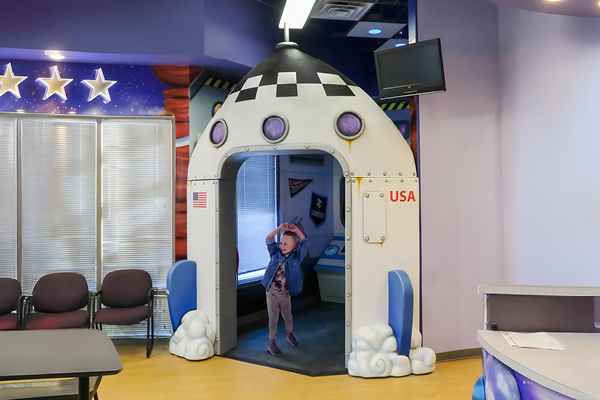
A young child stands under a rocket ship doorway in a colorful indoor room with space theme library decor, surrounded by chairs, a TV, and outer space-inspired decorations.

Why it works: Themes increase dwell time and enjoyment. According to a 2020 Library Journal survey, play zones with recognizable or imaginative themes saw up to 40% more use than undecorated areas of similar size.

EXPLORE THEMED LIBRARY DECOR


2. Design for Movement: Encourage Physical Play Alongside Reading

Literacy isn’t just built through reading, it’s also supported through physical play. Gross motor activities help with coordination and self-regulation, both of which are critical for attention and early learning.

Ideas to integrate physical activity:

  • Crawl-through tunnels sculptures like books or hollow logs
  • Slides for active play and adventure
  • Soft play climbable structures shaped like bookworms or woodland animals
  • Sculpted steps or platforms for hopping and balancing
  • Kid-height nooks for climbing into and curling up with a book
Two young girls play indoors; one kneels inside a large play tunnel, smiling, while the other, in a pink dress, crouches just outside. The colorful background features playful wall art and cheerful library decor.
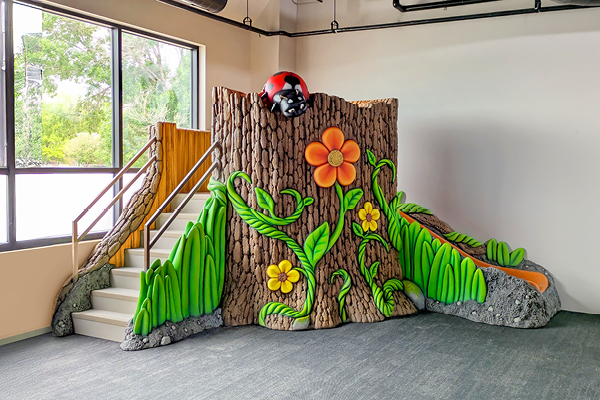
A colorful indoor playground slide shaped like a tree stump decorated with large flowers, green leaves, and a red ladybug on top, next to a staircase, in a bright room with large windows.

Design tip: Ensure that your sculpted pieces serve dual purposes, like a tree stump that’s also a seat, or a photo op that doubles as a hide-and-seek feature.


3. Incorporating Literacy-Based Play

Reinforce language development and pre-reading skills through integrated literacy elements.

Ideas:

  • Alphabet steps or tiles
  • Hidden rhyming words in murals
  • “I Spy” games integrated into the decor
  • Letter-shaped seating or word walls

Stat: The ALA highlights that environments promoting print awareness and storytelling can accelerate early literacy milestones by up to 12 months.


4. Balance Energy with Calm: Include Reading Nooks and Quiet Zones

Every child engages differently. Some are drawn to movement; others prefer calm, quiet places to recharge or focus.

A young girl sits and reads a book inside a circular nook in a colorful, underwater-themed playroom wall decorated with seaweed and coral, with playful library decor and a pink bean bag nearby.

Key components of cozy reading areas:

  • Themed benches shaped like clouds, lily pads, or leaves
  • Soft seating with easy-to-clean upholstery
  • Tree-trunk book bins or bookshelf alcoves
  • Soft lighting or natural daylight (avoid harsh fluorescents)
  • Calming color palettes (earth tones, soft greens, muted blues)

Evidence: Studies from the American Library Association suggest that providing “layered learning zones” (a mix of active and quiet areas) increases engagement and reduces behavioral issues, especially in younger patrons.


5. Design for Shareability: Encourage Community Connection

Families love sharing memorable outings. A well-designed kids’ space can become a social media magnet, increasing visibility for your library.

Ways to increase shareability:

  • Add a “selfie spot” or reading sculpture for family photos
  • Incorporate your library’s name or logo into murals or props
  • Use bold colors and whimsical shapes that pop in photos
  • Create visual landmarks that children will recognize and want to return to

Why it matters: Community members who share photos help promote the library organically. A 2022 Pew Research Center study showed that 32% of parents discovered local children’s events and spaces through social media posts from friends or influencers.

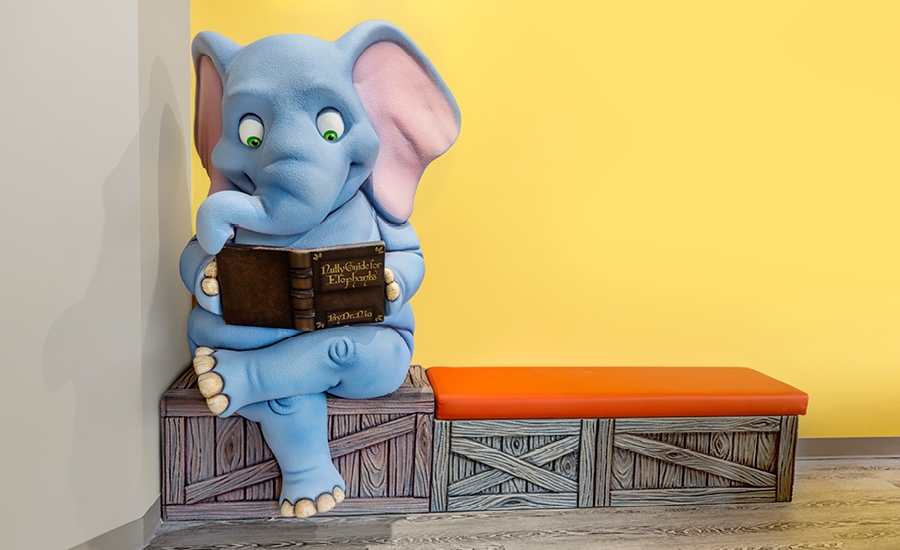
Custom, sculpted wood crate bench seat with photo-op elephant reading a book.
A photo-op elephant reading a book.

Marketing bonus: Include your library’s name on murals or props so it shows up in shared photos and community posts.


6. Designing for Multi-Age Use

Not all children’s areas serve toddlers only. Libraries often cater to a wide age range, from infants in storytime programs to tweens looking for a place to hang out.

What to include:

  • Tiered seating or zones for different age groups
  • Flexible furniture (e.g., movable beanbags, low benches, work tables)
  • Age-appropriate signage and decor
  • Dedicated “tween zones” with art tables, comic collections, or tech corners

Why it matters: Avoiding a one-size-fits-all design ensures the space remains useful and welcoming as children grow.


7. Design for Durability, Safety, and Easy Maintenance

Children’s play zones face heavy use, by sticky fingers, curious minds, and enthusiastic climbers. Materials and layout must be built to last, clean easily, and ensure safety.

What to look for in your materials:

  • Rounded edges and smooth transitions to eliminate pinch points
  • Non-toxic, hospital-grade coatings safe for kids and durable enough for disinfectants
  • Slip-resistant flooring or integrated cushioned zones
  • ADA-accessible routes and inclusive design

Maintenance tip: Use sealed surfaces wherever possible and avoid fabric unless it’s easily replaceable or wipeable.


Final Thoughts on Library Play Areas

A well-designed children’s library space is more than playful, it’s purposeful. It encourages exploration, builds early literacy skills, supports different learning styles, and enhances community visibility. Whether you’re working with a large budget or starting with a small corner, thoughtful design choices can create big impact.

IDS specializes in transforming kids’ library sections into spaces that excite young minds and serve your mission.

Let’s turn your library into a destination where stories come to life.


Ready to upgrade your library’s children’s area?
Visit IDSkids.com to explore themed play environments, request a quote, or browse real-world projects designed for public and private libraries.


  • Written by Chris Bexiga, Lead Concept Designer at Imagination Design Studios

FOUND THIS ARTICLE HELPFUL?

SHARE THE LOVE!

  • envelope

RELATED POSTS

Explore the Best Children’s Murals for Walls to Transform Any Room

Pediatric Dental Office Design: Why Every Practice Needs a Fun Brushing Station

Child-First Design for Pediatric Dental and Medical Spaces

How to Decorate a Speech Therapy Room: Creating a Magical, Calming Space for Kids

At Imagination Design Studios (IDS), we believe that a speech therapy room is more than just a space; it’s a canvas for creativity, learning, and growth. As a leading design and fabrication company specializing in themed environments for pediatric spaces, we’ve transformed countless therapy rooms into magical, kid-friendly havens that inspire communication and joy.

With 18 years of expertise, we craft speech therapy room decor that’s not only functional but also imaginative, fostering a stress-free setting for young learners. In this guide, we’ll share practical tips, vivid ideas, and expert insights to help you create a speech therapy room that captivates kids, supports language goals, and elevates your practice.

A woman holding a clipboard smiles and talks with a young girl in a speech therapy room. They sit on small white chairs facing each other indoors, both appearing engaged in conversation.


Why Speech Therapy Room Decor Matters

A thoughtfully designed speech therapy room does more than look inviting; it reduces anxiety, boosts engagement, and supports the development of communication. Children thrive in spaces that feel safe, leaving them free to explore and spark curiosity.

Our experience at IDS shows that speech therapy room themes like underwater worlds or jungle adventures can transform a clinical space into a magical haven, making therapy sessions feel like playtime.

Research supports this: calming, interactive decor helps kids focus, while vibrant visuals encourage verbal expression. Whether you’re an SLP in a school, clinic, or private practice, your speech room can be a powerful tool for connection and progress.

Let’s dive into how to create a speech therapy room design that’s functional, engaging, and unforgettable.

LEARN MORE ABOUT
THEMED THERAPY SPACES


Creating a Layout That Sparks Joy and Function

Maximize Space with Purpose

Arrange furniture to create open areas for movement-based activities, like practicing articulation through games. Wall-mounted storage keeps materials accessible without cluttering the speech room. We’ve designed custom shelving for pediatric clinics that blends seamlessly with themes like dinosaur landscapes, ensuring functional decor that’s also enchanting.

Set Up Zones for Fun and Learning

Create a cozy corner for storytelling, a table for art-based language goals, and a play area for interactive games. Our 3D play structures, like pirate ship nooks, encourage spontaneous speech while keeping the speech therapy classroom decor organized.

Keep Tools Handy and Spaces Tidy

Store visuals and resources in labeled, wall-mounted holders for quick access. At IDS, we create custom signage and storage solutions that complement speech therapy room themes, making organization effortless and visually appealing.

Consider Ergonomics Subtly

Ensure chairs and tables suit children’s sizes for comfort, but focus on decor over clinical adjustments. Our handcrafted furniture, designed for pediatric spaces, prioritizes safety and durability while maintaining a sense of whimsy.


The right theme transforms a speech therapy room into a world of wonder.

At IDS, we specialize in speech therapy room decor ideas that reduce anxiety and spark verbal engagement.

Bright yellow wall featuring three large cartoon-style Faux Window murals with colorful animals, birds, and cheerful children, creating a playful, welcoming atmosphere perfect for a speech therapy room or waiting area.
A colorful speech therapy room with a whiteboard showing vowel sounds, a curved table, bright cube seats, and a wall mural featuring underwater animals like fish, an alligator, and sea plants.
Colorful speech therapy room with blue walls, bright orange rug, sensory pathway featuring textured tiles and domes, shelves with toys, two sinks with a blue and yellow mosaic, and a large window with yellow blinds.
A cheerful pediatric therapy room showcases vibrant therapy clinic decor with colorful cones, rings, and a blue bench. A padded therapy table rests against a wall featuring a mural of cartoon jungle animals like a lion and giraffe.

These speech therapy room themes aren’t just cute, they’re strategically designed to calm nerves and inspire speech. At IDS, we tailor each theme to your space and budget, ensuring a premium, cohesive look that’s uniquely yours.


The Power of Theming in Speech Therapy Rooms

Theming elevates speech therapy room decor by creating an immersive environment that captivates children’s imaginations. A themed speech room creates an immersive environment that encourages participation and supports language goals. Here’s how theming can transform your space:

Why Theming Works

StakeholderBenefitHow IDS Delivers
ChildrenReduced anxiety, increased engagementCalming themes like underwater worlds with interactive elements.
ParentsMemorable, shareable experiencesPhoto-worthy speech therapy room decor that encourages social sharing.
SLPsImproved morale, streamlined sessionsFunctional, themed storage and decor that enhance workflow.
PracticeMore referrals, higher client retentionPremium speech therapy room design that attracts and retains families.

At IDS, we’ve transformed numerous pediatric spaces, including speech therapy rooms, into a wonderland that aligns with therapeutic objectives. Our client-centric approach ensures that every theme is tailored to your practice’s needs.

How IDS Brings Themes to Life

At IDS, we combine artistic creativity with engineering expertise to create durable, safe, and engaging themed environments. Our process includes:

  • Consultation: We collaborate with you to understand your therapy goals and the interests of your clients.
  • Design: Our artists develop a custom theme, incorporating murals, 3D props, and interactive elements.
  • Fabrication: We hand-sculpt and hand-paint every element in-house, using high-quality, non-toxic materials.
  • Installation: Our team ensures a seamless setup, transforming your speech therapy room into a magical space.

Whether you envision a vibrant farmyard or a serene forest, we have the experience to make your speech therapy room a place where children love to learn.

Theming for Children with Autism

Our themes support kids in speech therapy and Applied Behavior Analysis (ABA) therapy, often used together in the autism field to boost communication. Here’s how we create calming, inclusive spaces:

  • Soothing Landscape Murals: Our laminated, printed murals, like serene forests or hills, cut overstimulation and avoid intense eye contact, perfect for kids sensitive to bright characters.
  • Custom Fit for Your Space: We design ceiling-to-floor themes in various categories, tailored to your needs, ensuring a happy, stress-free vibe.
  • Essentials Collection: Hand‑sculpted murals and 3‑D props from our six most‑loved themes. Same IDS craftsmanship with no custom‑design fees. Mix and match to fast‑track installation, keep budgets happy, and amaze kids from day one.


Decor Tips for a Welcoming, Stress-Free Speech Therapy Room

Creating a calming speech therapy room requires balancing vibrancy with serenity. Here are five actionable tips to elevate your speech therapy office decor:

  1. Use Soft, Neutral Base Colors: Opt for light blues or greens to soothe, then add pops of color through themed decor. Our speech therapy room decor can be matched perfectly to your palette for a seamless look.
  2. Incorporate Natural Elements: Biophilic touches like tree sculptures, leafy murals, nature‑inspired textures; reduce stress and sharpen attention. At IDS, we craft custom tree‑shaped shelving and friendly animal characters that double as décor and storage, blending beauty with practicality.
  3. Create Cozy Corners: A built‑in nook offers a retreat for shy or overstimulated kids. We integrate themed props and seating that align with your room’s story, giving therapists flexible, comforting zones for emotional regulation and sensory needs.
  4. Minimize Distractions: Avoid overloading walls with posters. Instead, use one or two large-scale murals for great impact. Our speech therapy decor prioritizes clean lines and intentional design to keep kids focused.
  5. Highlight Safety and Durability: We build custom 3‑D props and murals with hospital‑grade finishes engineered for hygiene, longevity, and the energy of busy kids.

These details shape a speech therapy room that’s warm, welcoming, and thoughtfully designed for kids.


Engaging Parents and Staff with Your Speech Room Decor

A well-decorated speech therapy room doesn’t just benefit kids but also wows parents and energizes staff. Parents love snapping photos of our speech therapy room themes, like pirate treasure nooks, and often credit the playful décor for easing first‑visit jitters, which boosts social media shares and referrals.

In a 2024 client survey, 94% of new families said themed decor influenced their choice. For staff, a vibrant speech room lifts morale and aids recruitment. We’ve designed speech therapy classroom decor that SLPs adore, making therapy sessions a joy to lead.


Easy Ways to Create a Fun Speech Room on a Budget

At IDS, we believe a high-quality speech therapy room doesn’t have to break the bank. Here’s check out these ideas to achieve a high-end look affordably:

  • Start Small: A single mural or 3D prop can transform your speech room. We offer scalable solutions, like a standalone coral reef panel, that pack a punch without overwhelming your budget.
  • Focus on Impactful Pieces: Invest in one durable, interactive element, like our magnetic word boards, to maximize engagement. These are built to last, offering long-term value.
  • Focus on Impactful Pieces: Invest in one durable, interactive element, such as our wall‑mounted, themed play panels to keep kids engaged and conversations flowing. These hands‑on units are built to last and deliver long‑term value.
  • Repurpose Existing Items: Integrate current furniture with themed wraps or decals. We’ve refreshed the speech therapy classroom decorations by adding ocean-themed decals to plain tables.
  • Plan for Longevity: Choose decorations for speech therapy room that are easy to clean and maintain, like our kid-proof finishes, to avoid frequent replacements.

Our team at IDS works within your budget to craft speech therapy room ideas that feel luxurious and last for years.


Download the Therapy Room Design Checklist

We’ve put together a comprehensive Speech Therapy Room Design Checklist to help you create a functional, welcoming, and sensory-friendly space that supports learning and communication. From furniture placement to acoustic treatments, this checklist covers every detail you need to consider, so you can focus on helping your patients thrive.
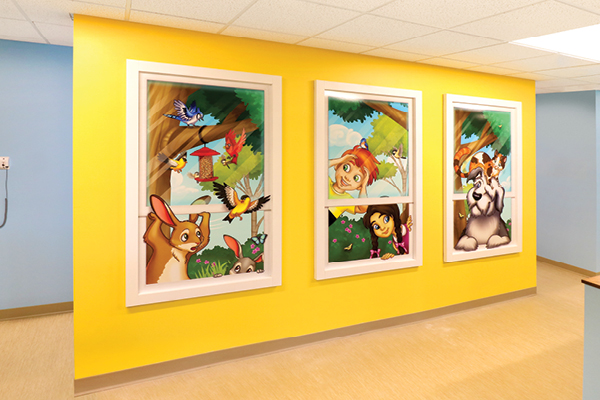
Download the checklist here.


Ready to transform your speech therapy room into a magical, stress-free haven?

Bringing Your Speech Therapy Room to Life. At IDS, we’re passionate about crafting speech therapy room decor that calms kids, inspires language goals, and grows your practice.

With our handcrafted murals, 3D props, and interactive elements, we bring your vision to life, whether it’s a dinosaur expedition or an underwater quest. Our 18 years of experience and 800+ projects ensure unmatched quality and durability, tailored to your space and budget.

Book a free 15-minute design call and see your dream room take shape. Not ready yet? Grab the free decor checklist for immediate, low-cost upgrades. Together, we will create a space where kids thrive, parents smile and SLPs shine.


  • Written by Chris Bexiga, Lead Concept Designer at Imagination Design Studios

FOUND THIS ARTICLE HELPFUL?

SHARE THE LOVE!

  • envelope

RELATED POSTS

Pediatric Dental Office Design: Why Every Practice Needs a Fun Brushing Station

Explore the Best Children’s Murals for Walls to Transform Any Room

Child-First Design for Pediatric Dental and Medical Spaces

FAQ: How Can IDS Help Solve Common Hospital Design Challenges

When hospitals consider upgrading their pediatric spaces with custom theming, they often encounter complex challenges that impact timelines, budgets, and outcomes. At Imagination Design Studios (IDS), we’ve partnered with hospitals and healthcare networks across North America to deliver immersive, anxiety-reducing spaces that are as practical as they are magical.

Below, we’re answering the most common questions we hear from Patient Experience Directors, Facility Managers, and Design Committees.


Answers to Your Top Patient Experience and Facility Design FAQs

1. How can IDS help us stick to our project budget?

Challenge: Custom designs and unpredictable material costs often lead to budget overruns.

Our Answer: IDS uses historical data from hundreds of past projects to accurately forecast costs upfront. You’ll receive a clearly scoped proposal with fixed design hours and reliable estimates. Plus, because our sculpting, painting, and coating are all done in-house, we reduce the risk of cost creep from third-party vendors. The durable materials we use are not only long-lasting but help lower lifecycle costs too.

  • Detailed Upfront Scoping: IDS provides clear proposals with fixed design hours and material estimates based on past project data.
  • In-House Fabrication: With control over sculpting, painting, and hardcoating, IDS minimizes third-party dependencies and surprise costs.
  • Proven Materials: IDS uses durable, known-cost materials (e.g., proprietary hardcoat) that hold up over time, reducing lifecycle costs.

Outcome: Fewer budget surprises, accurate quotes, and smoother approvals with finance teams.


2. We’re managing multiple capital projects. Can IDS help reduce our workload?

Challenge: Juggling multiple installs with limited internal resources leads to delays and inefficiencies.

Our Answer: IDS assigns a dedicated project manager to your project who handles everything from design coordination to install logistics. We offer scalable theming options that can be repeated across locations, helping you standardize the experience. And if you’re phasing your upgrades, we’ll build a rollout plan that fits your schedule.

  • Dedicated Project Managers: A single point of contact tracks timelines, approvals, and production across multiple installs.
  • Modular Design Process: IDS builds scalable, repeatable themed components that can be installed at multiple locations simultaneously.
  • Flexible Phasing: Rollouts can be staged to accommodate hospital schedules and minimize disruption.
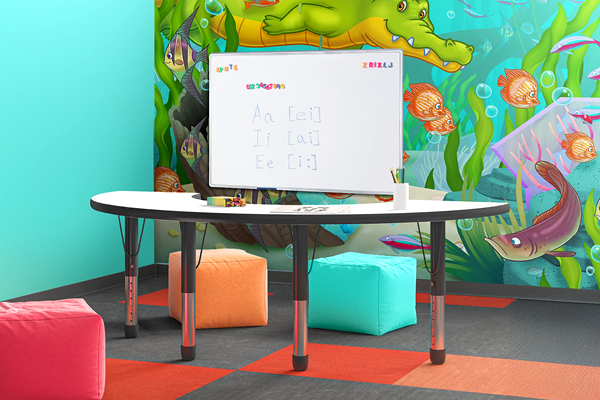
Outcome: Projects stay on track and under control, even when spread across campuses/facilities.


3. How does IDS ensure consistent quality across all spaces?

Challenge: Varying design execution can cause reputational damage and higher maintenance costs.

Our Answer: All design, fabrication, and finishing are handled by our in-house team to ensure uniformity across every sculpture, mural, or play zone. Our materials are commercial-grade, our coatings are impact- and scratch-resistant, and everything is made to withstand the rigors of hospital environments. We also build with code compliance in mind, from fire safety to ADA accessibility.

  • Centralized Design Team: All concepts, revisions, and fabrication go through IDS’s in-house team, ensuring visual consistency.
  • Safety + Compliance Built-In: IDS designs meet rigorous fire codes, infection control standards, and ADA accessibility guidelines.
  • Tested Durability: Products are designed for high-traffic, healthcare environments and used by major pediatric hospitals across North America.

Outcome: Predictable quality and safety across every installation, from lobby to playroom.


4. We’ve had communication issues with past vendors. How do you keep everyone aligned?

Challenge: Miscommunication about designs often leads to confusion, rework, and unmet expectations.

Our Answer: We don’t expect you to interpret blueprints. Our team provides 3D renderings, sketches, and clear visuals so you can easily share the vision with child life teams, donors, or your board. Feedback loops are built into our process, so revisions happen early, before production begins. You’ll always know what to expect.

  • 3D Renderings + Sketches: Visual mockups make it easy for stakeholders to understand the vision and give fast feedback.
  • Collaborative Revisions: IDS encourages input from child life specialists, marketing, and facilities to refine the space for real-world use.
  • Storytelling Approach: IDS helps bring a cohesive theme to life that’s easy to explain to donors and families alike.

Outcome: Fewer revisions, aligned expectations, and excited stakeholders.


5. How do you stay current with design and safety trends so we don’t have to?

Challenge: Hospital leaders don’t always have time to keep up with changes in theming, safety standards, and family experience trends.

Our Answer: This is where IDS shines. Theming pediatric environments is what we do, every day. We stay current on the latest in safety compliance, engagement best practices, and donor-worthy visual storytelling, so you don’t have to. We also provide planning guides and resources to help you make a compelling case internally.

  • Experts in Pediatric Spaces: IDS specializes in child-focused healthcare theming and stays updated on industry trends.
  • Thought Leadership Content: IDS provides guides, checklists, and inspiration portfolios to help teams plan with confidence.
  • Turnkey Solutions: With IDS, hospitals don’t have to be the experts in theming, just the decision-makers.

Outcome: Directors look innovative without having to be trend-chasers themselves.


Let’s Build Something That Works for Kids – And for You!

You don’t need to have all the answers, just the vision. IDS is here to bring that vision to life while solving your biggest project management pain points along the way.
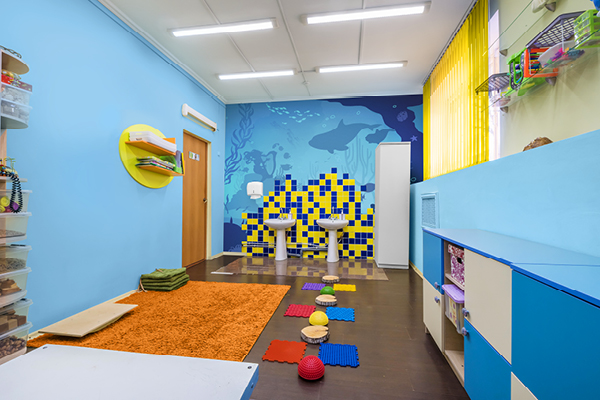
Want to talk through a space you’re working on? Get in touch with our team!

FOUND THIS ARTICLE HELPFUL?

SHARE THE LOVE!

  • envelope

RELATED POSTS

Child-First Design for Pediatric Dental and Medical Spaces

Creating the Best Therapy Playroom for Effective Child Healing

Inclusive Design for Children’s Spaces: Why Inclusion Matters

Top 10 Waiting Room Toys to Enhance Your Pediatric Healthcare Space

You’ve seen it – a nervous child fidgeting in a waiting room, clinging to a parent’s hand. At Imagination Design Studios (IDS), we transform those anxious moments into joy through immersive, themed environments. But the magic doesn’t stop at the murals and sculpted characters – carefully chosen toys can elevate the experience even further.

This list highlights our favorite waiting room toys that complement our designs, adding hands-on fun and extra comfort to the spaces we create.

What to Look for When Choosing Toys for Your Clinic’s Waiting Room

The best waiting room toys do more than entertain. They help set the emotional tone of your space. When children feel calm, safe, and engaged, it transforms the entire experience. At IDS, we design immersive environments with intention, and the right toys act as seamless extensions of that experience. They reinforce your theme while supporting child development and comfort.

Toys with bright colors like ocean blues or jungle greens pull kids in. Interactive features, think slides or tunnels, keep them busy. Toys must be sturdy for busy doctors’ offices, too.

What To CheckWhy It Rocks
Vibrant ColorsGrabs kids’ eyes, lifts their mood fast.
Interactive FunSlides or tunnels make waiting exciting.
Super DurableBest waiting room toys last in hospitals.
Safe AlwaysKeeps children secure in doctors’ offices.
Themed MagicIDS’s designs bring wonder to waiting areas.

These choices make wait time a fun adventure for kids. Your pediatric clinic will feel like a happy playground!

Hygiene and Safety of Waiting Room Toys

Soft toys might appear comforting, but in high-traffic waiting rooms, they’re hygiene hazards. Studies show that 90% carry bacteria, and 20% even contain coliforms. They’re difficult to sanitize, and germs often return quickly.

Hard toys are way better for kids in pediatric clinics. They wipe down easily, keeping spaces safe from infections. Parents don’t stress, and kids play without worry.

That’s why our list – bead mazes, activity cubes, and more – picks hard waiting room toys only. We ensure every toy keeps doctor’s offices fun and clean. Kids stay happy, and parents feel good!

Our Top Picks for Toys That Make Waiting Rooms Magical

1. Bead Maze

Age Group: 18 months to 5 years

Picture little hands sliding colorful beads down twisty tracks while they wait. This classic toy keeps kids engaged and helps develop hand-eye coordination and fine motor skills. At IDS, we customize bead mazes to fit your theme, whether it’s jungle vines or ocean currents. We also design custom bases to mount the bead tables securely, ensuring they are safe, durable, and built to match the look and feel of your space.

Waiting room toys and activities. A play area with a realistic tree stump activity table featuring bead maze wires, a meerkat figure peeking out of a hole, and a blue slide in the background on green padded flooring.

2. Melissa & Doug Get Well Doctor’s Kit Play Set

Age Group: 3 years and up

Kids grab a stethoscope and play doctor with this cool kit in waiting areas. It’s perfect for imaginative role-play, making medical stuff less scary and more familiar as they wait. IDS knows waiting room toys like these fit medical-themed doctor’s offices, helping children relax and enjoy their time in pediatric clinics with ease.

Waiting room toys and activities. Two children sit at a wooden table playing with a toy doctor kit, which includes a stethoscope, thermometer, clipboard, medicine bottles, scissors, and other medical tools.

3. KeeBee Interactive Wall Panels

Age Group: All ages

Spinning gears, sliding shapes, and textured surfaces invite kids to explore and play while they wait. These wall-mounted toys support sensory development and motor skills across a wide age range. At IDS, we custom-build themed displays to mount these interactive panels to match your theme, whether it’s a forest, a spaceship, or an underwater scene. We ensure each panel is both visually integrated and securely mounted, making them a functional and fun part of the environment. IDS crafts them to match space or nature themes, blending seamlessly into custom waiting areas for pediatric clinics or schools.

Waiting room toys and activities. A children's play panel with three colorful activity boards featuring gears, buttons, and animal-themed flip panels, set in an indoor play area with blue water ripple flooring.

4. Activity Cube

Age Group: 12 months to 5 years

This cube’s packed with goodies! Bead mazes, shape sorters, and spinners for children to explore! It keeps little ones busy, growing their motor skills and coordination naturally in the waiting room. IDS designs these toys to fit farm or zoo vibes, bringing a slice of wonder to pediatric clinics that kids can’t resist discovering.

Waiting room toys and activities. A young child plays with a colorful wooden activity cube featuring bead mazes, spinning blocks, and a school bus illustration on one side.

5. Stackable Plastic Blocks

Age Group: 6 months to 3 years

Soft, lightweight blocks or bricks stack into colorful towers that toddlers love to build and knock down. They encourage imagination and support fine motor development, all while being safe for even the youngest visitors. IDS can help you select colors that align with your office theme for a cohesive look. These toys are easy to clean, highly durable, and a favorite among children in medical waiting rooms.

Waiting room toys and activities. A child wearing a colorful striped shirt is playing with bright, multicolored foam building blocks, stacking them on a white surface while more blocks are scattered around.

6. Interactive Touch Screen

Age Group: 3 years and up

A screen full of fun games? Kids won’t look up while they wait! It’s interactive, educational, and keeps them hooked during downtime in the waiting room. These digital activities support learning and coordination through interactive play. At IDS, we design themed enclosures and custom mural backdrops to house touch screens, blending them into high-tech, futuristic, or nature-inspired environments. The result is a clean, engaging space that children are excited to explore.

Waiting room toys and activities. A young boy sits on a blue stool, smiling and interacting with a touchscreen display mounted on a colorful, tropical-themed wall with leafy patterns and bright designs. Another similar screen is visible behind him.

7. Fisher-Price Medical Kit

Age Group: 3 years and up

Little doctors wield toy stethoscopes with glee here in doctors’ offices! Toy stethoscopes, syringes, and medical tools let kids step into the role of a doctor, making healthcare settings feel more familiar and less intimidating. IDS recommends this type of imaginative play to help reduce fear and build confidence during visits.

Waiting room toys and activities. A set of colorful toy medical instruments, including a stethoscope, syringe, thermometer, blood pressure cuff, and bandage, arranged next to a white bag with green handles.

8. Melissa & Doug Farm Wooden Cube Puzzle

Age Group: 2 years and up

Farm animals come alive in this chunky wooden puzzle kids can sort and place in order. Children sharpen problem-solving skills while meeting cows and pigs in the waiting area. At IDS, we love toys with themes that match our office decor. This is perfect for a farm themed space, giving kids in hospital a cozy, rural escape they’ll love piecing together.

Waiting room toys and activities. A wooden puzzle features colorful blocks arranged to form a cartoon image of a pink pig standing on grass, with a butterfly and plants in the background. The puzzle sits on a wooden tray labeled Melissa & Doug.

9. Magnetic Maze Game

Age Group: 6 years and up

Kids guide magnets through tracks with a wand. It builds focus, problem-solving, and hand-eye coordination without a fuss. These quiet, screen-free toys are ideal for keeping older children engaged in a calm and constructive way. IDS often recommends magnetic maze games as part of themed waiting areas, adding a thoughtful, brain-teasing element to the experience in pediatric clinics.

Waiting room toys and activities. A child uses a magnetic pen to move colorful balls through a maze on a wooden puzzle board featuring roads, cars, and parking spaces.

10. Barbie Care Clinic Playset

Age Group: 3 years and up

From ambulance scenes to mini clinics, medical playsets invite kids into a world of imaginative play that makes healthcare settings feel approachable. These toys help children feel more at ease during their visit by turning unfamiliar tools into something fun. Imagination Design Studios loves it for medical-themed doctor’s offices, bringing a playful, friendly spark to waiting areas in hospitals that kids can’t get enough of. We especially love how these sets encourage inclusive play, helping young girls see themselves as confident caregivers and healthcare heroes.

Waiting room toys and activities. A young girl with Barbie dolls and a colorful toy ambulance set in a bright, cozy room with a bed and pillows in the background.

How Waiting Room Toys Spark Bigger Adventures

Toys are just the start of the fun for kids! Mix waiting room toys with cool activities, and you’ve got a recipe for smiles in pediatric clinics. Consider a jungle-themed slide, or an underwater-themed digital game that teaches kids about sea life. When toys are paired with immersive themes, a simple wait turns into an unforgettable adventure. A space play area with a bead maze can feel like a rocket launch!

See what we’ve created at IDS Kids for more ideas.

These themed spaces turn waits into adventures, keeping children engaged and happy. Whether it’s a doctor’s office or hospital, blending toys with activities, like interactive wall panels or farm puzzles, creates a magical spot where kids forget they’re waiting.

Why the Right Waiting Room Toys Matter for Kids’ Healthcare Visits

Waiting rooms don’t have to be a drag for kids. With the right toys, that nervous energy flips into pure excitement. We’re IDS, and we’ve seen it happen—waiting room toys work wonders in pediatric clinics!

Benefits of the Right Toys:

  • Reduces Anxiety: Calming toys can help ease stress and anxiety in children.
  • Engages Minds: Interactive toys develop fine motor skills and cognitive abilities.
  • Positive Associations: Toys encourage children to associate healthcare visits with positive experiences.
  • Entertaining Waiting Areas: Keeping children occupied with engaging toys results in calmer waiting rooms.
  • Enhanced Patient Experience: Thoughtful toy selections improve the overall experience for both children and their parents.

Investing in the right toys is a smart choice for creating a calm and pleasant space. Ultimately, these toys help in ensuring that healthcare facilities, whether they are clinics, hospitals, or therapy centers, offer a comforting experience for young visitors.

Creating Kids’ Corners That Make Waiting Fun

Kids deserve waiting rooms that feel like mini wonderlands. IDS shines at crafting child-friendly spaces in pediatric clinics. We blend fun and learning with 18 years of magic.

Our themed designs, like jungle adventures or underwater worlds, turn waits into playtime. We’ve transformed over 800 medical, dental, and therapy spaces with custom solutions. Your waiting room can be next!

Ready to make waiting amazing for kids? Share your ideas with us! Let’s create something special together.

FOUND THIS ARTICLE HELPFUL?

SHARE THE LOVE!

  • envelope

RELATED POSTS

Enhancing ABA Therapy Centers with Themed Decor

How to Use Technology to Help Your Dental Practice in 2024

What to Include in Your Perfect Indoor Family Play Area

Turn Hospital Visits into Adventures with Creative, Colorful Murals

Picture walking through a hospital where the walls are alive with bright colors and playful characters, turning an ordinary visit into an adventure. It’s not just a fun idea – According to the Handbook of Art Therapy, research indicates that murals can reduce a child’s stress by up to 30%, making the hospital feel less intimidating and more comforting. These artistic transformations turn dull, sterile spaces into playful environments where young patients can relax and feel a little bit of joy.

At Imagination Design Studios, we specialize in bringing stories to life through immersive art. With over 18 years of experience, we are North America’s leading experts in hospital murals—transforming medical spaces into healing environments that comfort, engage, and inspire. Our murals aren’t just artwork; they are designed to help young patients momentarily escape the stress of medical treatment and experience a world of imagination.
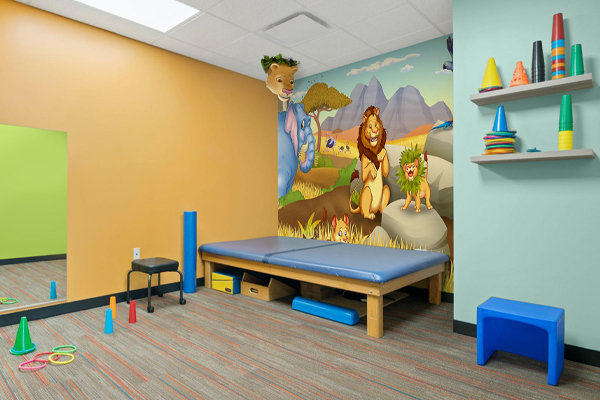

The Healing Power of Murals in the Pediatric Hospital Environment

In pediatric hospitals, the healing process isn’t just about medicine – it’s about creating an environment that helps children feel safe, calm, and cared for.

Murals, with their panoramic properties and vibrant color, are designed by skilled artists to promote happiness and reduce stress.

They also foster a sense of community by creating shared spaces that uplift both patients and their families, contributing to better mental and emotional health.

The healing power of decor in children’s hospitals is well known.

Helping Kids Relax and Feel Safe

It’s easy for young people to feel anxious and uncertain, especially in new places. But when the walls are filled with bright, fun scenes, things start to feel different. That’s why we use vibrant images – they help take their mind off worries and create a more comfortable space, turning an overwhelming environment into one that’s much easier to be in.
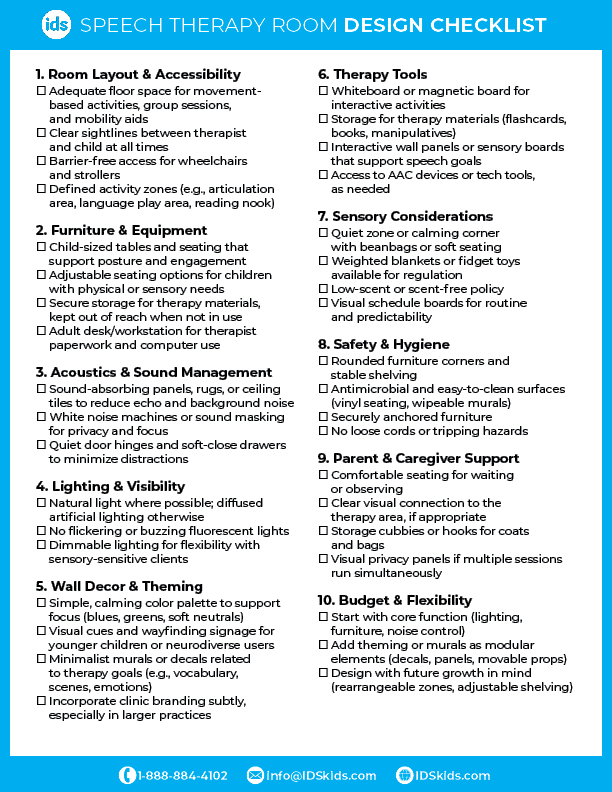
A hallway wall features a mural of a colorful forest, with two bears standing together among the trees—an inviting decor for children's hospital spaces.
Cute bears make this entrance way feel safe and welcoming.
Bright colors and a fun ocean mural are a stark contrast to cold and clinical spaces children may be used to in healthcare settings.

Psychological and Emotional Impact

Art is a powerful tool for emotional healing. In pediatric hospitals, murals do more than decorate—they provide a sense of control and comfort in a stressful environment. By redirecting focus from medical procedures to immersive, uplifting visuals, murals help children cope better and feel more at ease during their visit.

A hospital hallway decorated for a children's hospital with blue ocean-themed walls featuring sea creatures like stingrays and fish, matching 3D stingray models hanging from the ceiling.
Soothing underwater murals line the walls of this children’s hospital.

Imagination in Every Stroke

One of the most valuable effects of murals is their ability to spark imagination and creativity. By immersing children in fantasy worlds or interactive scenes, murals encourage playfulness and exploration. Whether it’s a jungle safari or an outer space adventure, murals can turn a hospital room into a space where kids can dream, imagine, and feel free – even if just for a moment.

A colorful I Spy game mural of a tropical beach with animals, sandcastles, surfboards, and palm trees decorates the wall—a perfect decor for children's hospital exam rooms, creating a playful, child-friendly atmosphere.
I Spy mural in a pediatric hospital treatment room.


Friendly Faces for Tough Times

Murals can become more than just decoration. With playful animals, peaceful nature scenes, or even superheroes, they help children feel more connected to their space. These designs can also gently introduce kids to medical procedures, with kind characters showing them what to expect. It’s a way to ease their fears and make an intimidating situation a little more approachable.

A nurse in pink scrubs stands at a sliding door adorned with hospital decor for children—colorful underwater mural featuring cartoon characters, including a mermaid—set against a bright blue wall.
Friendly characters adorn the sliding doors and walls of these exam rooms.


Murals That Benefit Everyone: Children, Families, and Hospital Staff

Hospital murals do more than brighten walls—they create an atmosphere of comfort and joy for everyone who enters. Colorful and imaginative designs help create welcoming spaces, reducing anxiety during challenging times.

For Children

Murals can turn a hospital visit into something exciting for kids. Instead of a cold, clinical room, these vibrant artworks make the space feel like a whole new world. Bright colors, playful characters, and whimsical scenes help take away the fear and anxiety that often come with being in a hospital.

When children look at these murals, they’re not just seeing a picture—they’re stepping into a story. Familiar characters or fun themes help them feel at ease and give them a sense of comfort. It’s a way to turn something stressful into a more familiar and less scary experience.

For Families

For families, hospital murals offer more than just visual appeal—they serve as emotional anchors during difficult moments. They create soothing distractions, provide moments of connection, and remind families that hospitals can be spaces of healing and hope, not just medical treatment

These artworks can also be a source of bonding, as families engage with the murals together, discussing their favourite parts and sharing stories that the art inspires. Our murals create opportunities for cherished family moments within the hospital environment, bringing small yet meaningful moments of joy to everyone involved.

For Hospital Staff

For hospital staff, murals contribute to a more uplifting, inspiring workplace. Beyond patient care, these artistic spaces reinforce a hospital’s commitment to compassion and healing, creating a positive environment for both caregivers and patients alike.

These murals also tie into the hospital’s commitment to care, helping create spaces that feel warm, welcoming, and full of compassion. When staff see these designs, they feel proud of the environment they work in, knowing it contributes to the comfort and well-being of everyone who walks through the door.


Things to Keep in Mind When Choosing Mural Themes for Hospitals

The right hospital mural can transform a space—but choosing the perfect theme is key. At IDS, we work closely with hospitals to design murals that fit their patients, culture, and space needs.

Key Factors Influencing Mural Design

  • Age group of patients: The first thing to think about is the age of the patients. For toddlers, we’d go with bright, simple colors and cute, friendly characters. Older kids might enjoy more detailed, adventurous scenes that spark their imagination.
  • Hospital culture and branding: Murals should align with the hospital’s mission, reflecting care and healing in a way that feels natural and welcoming. It’s about making sure the art fits smoothly into the hospital’s overall vibe.
  • Space size and location within the hospital: A mural in a waiting room might call for a larger, more expansive design, while a smaller patient room might benefit from something more intimate and soothing. The mural should feel right for each unique space.
A colorful, forest-themed children's room offers perfect decor for children's hospital spaces, featuring wall murals of woodland animals, a stream, and trees. A wooden tree structure and green details create a playful, healing environment.
Located in an indigenous community, this mural represents the local culture.
A colorful illustration, perfect as decor for children's hospital rooms, shows an otter, a porcupine, a loon on a pond, and a beaver by the water. A medicine wheel with sage, sweetgrass, and other healing herbs.
The mural features a medicine wheel honoring the healing traditions of sage, cedar, tobacco, and sweetgrass.

The Comfort of Calming Themes

Popular themes like nature, underwater scenes, and fantasy can positively influence a child’s mood and behaviour. Scenes of lush greenery and gentle animals bring a sense of calm, while underwater worlds offer a peaceful escape, letting kids dive into a soothing adventure.

Fantasy themes add a touch of magic, sparking curiosity and imagination, helping children forget the hospital surroundings and transport them to enchanted places.


Ensuring Long-Lasting Murals in Busy Hospital Settings

Hospital murals need to withstand daily use, so choosing safe, durable materials is key. Non-toxic, eco-friendly paints and water-resistant finishes help keep the artwork vibrant, easy to clean, and safe for everyone.

Ongoing care is just as important. Regular checks and gentle cleaning ensure the murals stay fresh. Quick repairs and proper maintenance keep the space welcoming, offering a bright and comforting atmosphere for patients and families.


Hospital murals are evolving into something really special these days, turning ordinary spaces into something fun and engaging—especially for kids. With new tech like augmented reality (AR), children can point their device at a mural and watch characters move or stories come to life. It’s a great way to make the hospital feel less like a hospital and more like an adventure.

On top of that, hospitals are adding things like soundscapes or walls that change color when touched, creating a calming and soothing atmosphere. These small but thoughtful touches help turn the space into a more comforting place to be. And with big, colorful murals that tell a story, the hospital starts to feel a little brighter, a little more joyful, and full of wonder.


Bringing Stories to Life with Every Mural

Hospital walls don’t have to feel cold or intimidating. With over 18 years of experience, we create vibrant murals that transform spaces into places where kids can feel at ease and inspired. Each mural is designed to bring a sense of wonder, helping to ease the stress of hospital visits. We focus on making every design a story that helps ease the stress of a visit, so kids and their families can feel more relaxed and even smile while they’re there.


Let’s Design a Healing & Imaginative Mural for Your Hospital!

Murals are not just about adding color, they’re designed to reduce stress and spark joy in young patients. We take pride in turning ordinary walls into spaces of wonder, where every corner holds a story and every design creates a sense of comfort. We work closely with our clients to make sure each mural is not only beautiful but functional, helping to make hospital visits feel a little less daunting and a lot more magical for kids and their families.

Get in touch with IDS today to schedule a consultation and start transforming your healthcare space. Let’s work together to create a vibrant environment that makes every visit a little brighter and more comfortable for kids and their families. Don’t wait—let’s bring those walls to life!


Frequently Asked Questions


Can Murals Improve the Overall Atmosphere of a Hospital?

Yes, murals play a significant role in improving the overall atmosphere of a hospital. They add color and life to what might otherwise be sterile or dull spaces. The right mural can promote positivity, reduce stress, and even contribute to quicker recovery by creating a warm, welcoming environment.

A brightly decorated hospital waiting area features an ocean theme with blue walls, murals of sea life like dolphins and fish, and colorful underwater seaweed—a cheerful decor for children's hospital visitors. Benches and railings match the aquatic design.
A hospital sitting area filled with color.
A hospital ER triage room with glass sliding doors, featuring white decorative patterns ideal as decor for children's hospital spaces. Inside, a hospital bed and medical equipment are visible in the clean, well-lit room.
Triage rooms in a pediatric ER ward featured stylish nature themed decals on the doors and colorful I Spy murals within.

How Long Do Hospital Murals Last?

When using high-quality materials and ensuring proper care, hospital murals can last for many years, even in high-traffic environments. UV-resistant laminate and vehicle-grade vinyl ensures durability against sun damage and daily wear and tear. The durability of the artwork ensures that the mural maintains its vibrant look and continues to make a positive impact over time.

A young child with curly hair colors a cartoon skull on a treasure chest with an orange marker. Easy-to-clean IDS mural.
Easy to wipe clean when kids get crafty.

Can Murals Help with Wayfinding in Hospitals?

Yes, murals can be designed to include wayfinding elements that guide patients and visitors through the hospital. By incorporating directional symbols or landmarks within the artwork, murals can serve as both aesthetic pieces and practical tools for easier navigation.

Murals in this hospital hallway all lead to the play room.

Do You Create Murals for Outdoor Spaces like Hospital Gardens or Playgrounds?

Absolutely! Murals in outdoor spaces such as gardens, playgrounds, or entryways can completely transform these areas into vibrant, welcoming environments. These murals offer a wonderful way to engage children and families, creating a sense of joy and relaxation outside the hospital building.

Exterior window murals on a pediatric clinic.

Are Custom Designs Possible for Hospital Murals?

Custom-designed murals are one of our specialties. We work closely with hospitals to create unique pieces that reflect the institution’s values, mission, and the needs of its patients. Custom designs ensure that the artwork is tailored specifically to the space and the people it’s meant to serve.

Custom mural for an autism center donor wall.

Contact Imagination Design Studios (IDS) to get started transforming your office from a mundane to magical patient experience.

Want to learn more about design and decor in healthcare spaces?

Design and Decor Tips for Creating Pediatric Healthcare Spaces


  • Reviewed by Erin Blondin, Creative Consultant at Imagination Design Studios, with a focus on healthcare environments.

FOUND THIS ARTICLE HELPFUL?

SHARE THE LOVE!

  • envelope

RELATED POSTS

Pediatric Dental Office Design: Why Every Practice Needs a Fun Brushing Station

Explore the Best Children’s Murals for Walls to Transform Any Room

Child-First Design for Pediatric Dental and Medical Spaces

Pediatric Medical Office Front Desk Design​ Ideas by IDS Kids

Every child’s visit to a medical office should be an enchanting journey where curiosity sparks, fears fade away, and smiles are just the beginning of the adventure. Let’s be honest, the design of kid-friendly front desks in medical offices—be it a pediatric clinic or a family dental practice—can make all the difference. These initial points of contact serve not just as functional checkpoints but as gateways that set the tone for the entire visit. That’s why we believe that the first thing your young patients see should ignite their imagination and soothe their nerves.

With 18+ years of expertise, IDS specializes in blending fun and function, crafting front desks that captivate, comfort, and create lasting impressions. Our themed reception desks turn to wait into an experience kids look forward to.


Unique Front Desk Themes for Healthcare Facilities

A well-designed pediatric medical office front desk does more than just check in patients—it sets the tone for the entire visit. With kid-friendly reception desks, you can transform your space into an engaging environment that eases anxiety and sparks joy. From underwater adventures and jungle safaris to storybook castles, these themed front desk designs make every visit exciting.

Explore our collection of custom pediatric reception desks and see how a creative first impression can turn your healthcare facility into a place kids love to visit!

A bright, colorful Pediatric Front Desk welcomes visitors to the hospital, featuring undersea-themed wall murals with fish, an octopus, and coral, plus blue accents and a clean counter equipped with computers.
This engaging ocean scene spans across multiple reception stations, one for pediatric patients and one for OBGYN patients.
A colorful Pediatric Front Desk welcomes families, featuring a cartoon hippo statue in medical scrubs and animal-themed murals with a lion, zebra, and hippo decorating the walls and counter.
A safari-inspired front desk featuring a cheerful, life-sized hippo in a doctor’s outfit, lush savannah murals, and wooden counters. The playful atmosphere makes visiting the doctor a fun and adventurous experience for kids.
Colorful Pediatric Front Desk for a dental office, featuring a bright “WELCOME” sign, all surrounded by playful, amusement park-themed wall art and decorations.
A playful and colorful circus-themed front desk at a pediatric dental office.
A Pediatric Front Desk features three blue beluga whales illustrated on the front, “WELCOME” above, blue pendant lights overhead, and a large green plant to the right, creating a cheerful and inviting atmosphere for young visitors.
A sleek and modern reception desk featuring an elegant ocean theme with glowing beluga whale silhouettes. The calming blue and white color scheme, paired with pendant lighting, creates a serene and welcoming atmosphere.
A hospital reception desk features vibrant jungle-themed decor for children's hospital, with playful animals and plants. Staff members greet visitors from behind the counter, while a cheerful WELCOME sign adds to the bright and welcoming atmosphere.
A lively pediatric reception area at the heart of a pediatric ward features a wrap of bamboo murals with jungle animals, lush greenery, and a warm “Welcome” sign.
A colorful, ocean-themed reception desk designed as decor for a children's hospital features coral and sea life decorations with a large blue whale model suspended above. A receptionist sits behind the desk in a bright, modern room.
A vibrant underwater-themed front desk featuring a massive blue whale sculpture suspended from the ceiling creates an immerse in a deep-sea adventure for young patients.
A modern pediatric front desk area features a curved desk decorated with green grass designs and a large artificial tree with a circular bench at its base. Wood flooring and black chairs along one wall create a welcoming, kid-friendly atmosphere.
A modern pediatric medical office with a white and green nature-themed front desk designed to resemble tall grass.
A colorful pediatric office reception area features a vibrant mural of animals and nature, a playful Pediatric Front Desk beneath a large “Welcome” sign on a faux tree branch, and a charming stork sculpture above the curved desk.
A magical bayou-themed reception desk with a “Welcome” sign hanging from a tree branch. The curved desk features a whimsical river mural, with playful animals and lush greenery.
A wooden Pediatric Front Desk features a “Welcome” sign above a window, decorated with colorful cartoon animals like bears and a rabbit, plus sticky notes on either side to greet young visitors.
A charming log cabin-style check-in window featuring a “Welcome” sign and playful woodland creatures, including bears and rabbits, handling the front desk duties. The rustic wood design creates a warm, inviting atmosphere for young patients.


First Impressions Matter: Designing a Front Desk That Kids & Parents Love

Imagine this: A child enters your medical office—wide-eyed, unsure of what to expect. Instead of a cold, clinical reception area, they’re greeted by a giant tree in a lush jungle, a whimsical submarine beneath the ocean waves, or an enchanted castle straight out of a storybook. Instead of feeling apprehensive, they should be greeted by a front desk that sparks their imagination—a giant tree in a lush jungle, a whimsical submarine diving into the depths of the ocean, or even an enchanted castle that seems to come straight out of a fairy tale. 

But it’s not just about how it looks; it’s about easing those little anxieties and igniting joy. A playful, welcoming atmosphere can turn nervous energy into pure curiosity and awe. For parents, an inviting reception area is more than just visually appealing—it’s a sign that you care about their child’s experience. When kids are happy, parents feel reassured. Our designs show families that you’re committed to more than just appointments; you’re dedicated to creating a positive, stress-free environment for everyone.


How to Design a Fun & Functional Pediatric Front Desk

Unlike mass-produced reception desks, IDS creates fully customized, handcrafted designs that withstand years of high-energy, kid-friendly interactions. Every detail is engineered for durability and ease of maintenance, ensuring your space stays as beautiful as the day it was installed.

Here’s how we do it:

Color & Lighting: Creating an Uplifting Atmosphere

A reception area filled with soft, diffused lighting creates ambiance, ensuring every child feels excited and comfortable as they enter, setting the perfect tone for a positive experience right from the start. Warm tones, combined with softer shades of blue and green, can keep children stimulated yet calm. To captivate young minds, adding imaginative themes like a magical forest, space, or underwater world naturally sparks their imagination, transforming the space into a realm of wonder.

Interactive Fun Zones

Why settle for the mundane when you can create something truly exceptional? Incorporate interactive technologies such as touch screens, textured panels, or storytelling displays that seamlessly align with your theme. Enhance the experience further with a dedicated play zone featuring books, puzzles, or digital games, ensuring children remain engaged while parents manage the check-in process.

Balancing Form & Function

Creating a kid-friendly reception desk goes beyond just playful aesthetics; it’s about crafting a space that genuinely supports both children and their families. Think child-height counters that make young patients feel included and empowered, turning the check-in process into an engaging experience just for them. For parents navigating the chaos of multiple tasks—children, bags, and paperwork—every detail matters. Stroller-friendly pathways are thoughtfully designed to eliminate friction, ensuring seamless movement even when juggling diaper bags, snacks, or restless toddlers.

Safety and Strength

In pediatric environments, safety is non-negotiable. Your design features need soft, rounded edges and durable, easy-to-clean materials, ensuring that your front desk can effortlessly withstand the boundless energy of young visitors. Furthermore, a well-orchestrated check-in system enhances the experience by streamlining staff workflow and simplifying paperwork for parents.


Bring Your Front Desk to Life

We believe your medical front desk should create a captivating first impression. Our designs strike a perfect balance between modern aesthetics and practicality, featuring vibrant themes and lively colors that invite patients in while ensuring staff efficiency. This harmony elevates your space, making it visually stunning and exceptionally functional.

When you partner with IDS, you collaborate with experts dedicated to creating kid-friendly environments. With over 18 years of proven success, we design spaces that are not only enchanting but also resilient enough to endure the daily adventures of young visitors.

Our installations are crafted from premium materials, built to withstand the hustle and bustle of busy families. Whether facing sticky fingers or energetic kids, our desks maintain their charm and functionality, ensuring they remain a delightful part of your clinic for years to come.


Ensure Every Front Desk Visit Leaves a Lasting Impression

Your front desk is the heart of your medical office – it’s where every visit starts and lasting impressions take shape. So don’t let an outdated front desk hold your medical office back; design a space that works for everyone. With warm tones, playful designs, and efficient check-in processes, we create welcoming, functional spaces that ease anxiety and build trust with both kids and parents.

Our design calendar fills up fast! Contact IDS today to schedule a consultation, and let’s create a front desk that sparks smiles and makes every visit unforgettable. Together, we’ll create a front desk that sparks smiles and leaves a lasting impression on every family that walks through your doors.


Frequently Asked Questions (FAQ)


What role do different colors play in the design of a pediatric medical office?

Warm tones can create a feeling of comfort, while vibrant colors stimulate excitement and curiosity. Using a balanced palette helps to create a positive and inviting environment for young patients.

How does patient flow affect the efficiency of my medical practice?

A well-designed front desk streamlines check-in and check-out, improving appointment management, reducing wait times, and enhancing patient satisfaction.

What can I do to improve the patient experience in my clinic?

Enhancing the patient experience involves creating a welcoming environment with engaging designs, interactive elements, and a focus on comfort.

What services does IDS provide to optimize patient flow in medical offices?

IDS optimizes patient flow with custom front desk designs and interactive features that engage children during their visits.

Contact Imagination Design Studios (IDS) to get started transforming your office from a mundane to magical patient experience.


  • Reviewed by Erin Blondin, Creative Consultant at Imagination Design Studios, with a focus on healthcare environments.

FOUND THIS ARTICLE HELPFUL?

SHARE THE LOVE!

  • envelope

RELATED POSTS

Pediatric Dental Office Design: Why Every Practice Needs a Fun Brushing Station

Explore the Best Children’s Murals for Walls to Transform Any Room

Child-First Design for Pediatric Dental and Medical Spaces

CONNECT WITH A CREATIVE CONSULTANT

GET STARTED TODAY

blue-heart

Add a note to this photo: