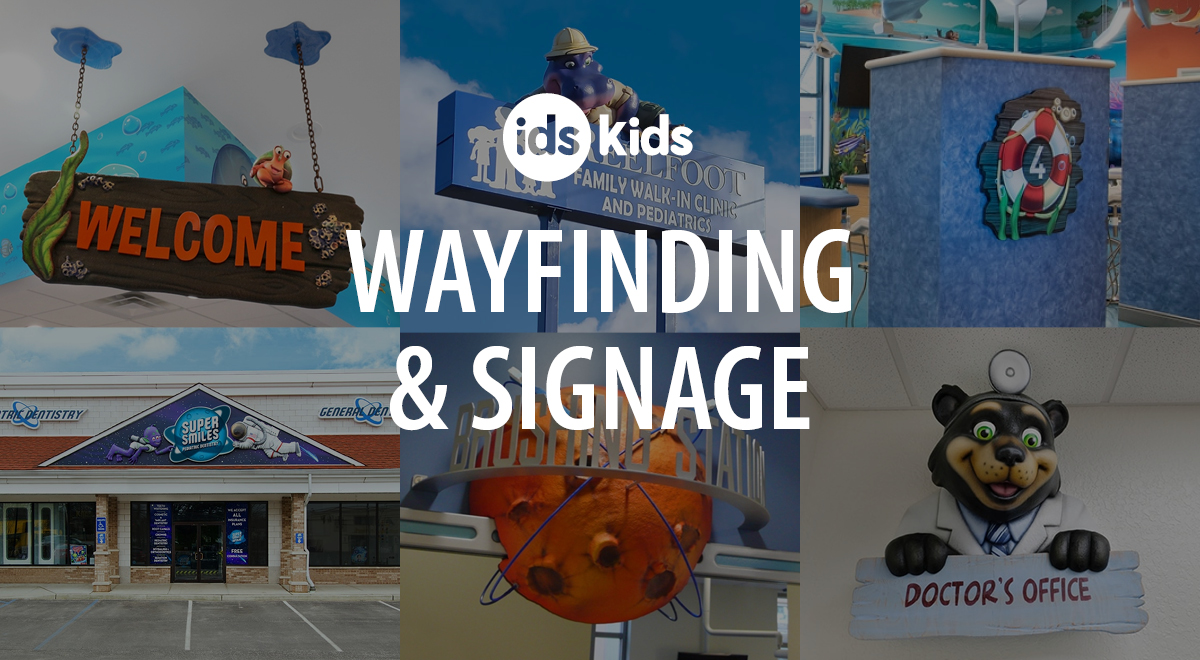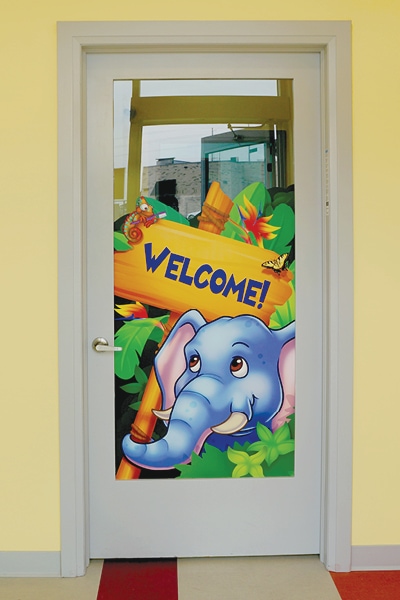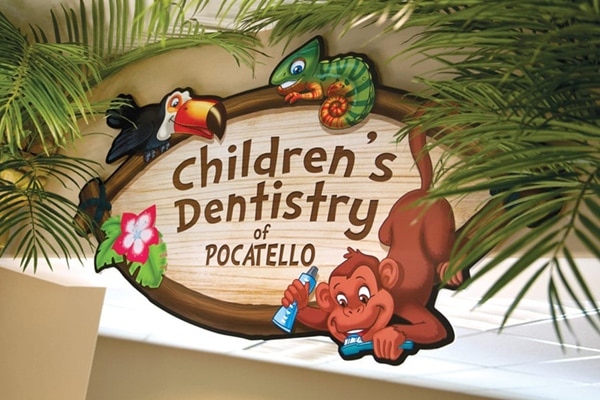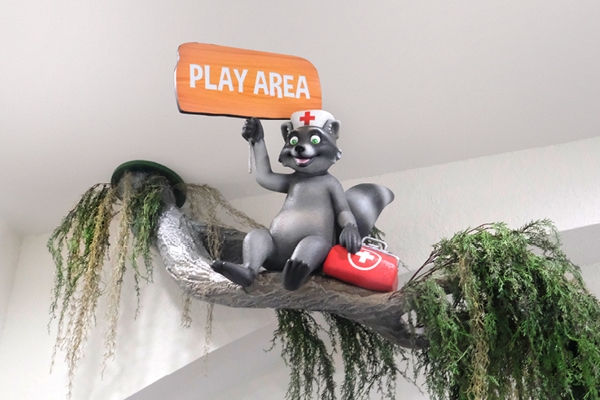
3 Ways to Educate Children & Parents Beyond the Dental Chair

Great oral health goes beyond the dental chair. That’s why it’s crucial to educate both children and parents wherever possible. We’ve created a list of ideas to help you educate children about their oral health beyond the short time you get to see them in your dental chair.


1. Create Educational Resources and Activities for Children to Learn About Good Dental Habits at Home

A way to educate beyond the dental chair is by creating educational resources like brochures, posters, and handouts for parents. These resources can be placed in the waiting area of the dental clinic or distributed at local schools, community centers, and other public places such as karate clubs and church youth groups.

Don’t miss the opportunity to create resources for children too. Consider sending home dental-themed coloring books, interactive toothbrushing charts, or even simple science experiments that demonstrate the effects of sugary drinks on teeth. Educational resources can be designed in a fun and interactive way to make learning about oral health more engaging for children. We have a fun Kids’ Guide to the Dentist activity booklet to help kids with their trips to the dentist. Check out the free download here. We also have monthly brushing charts to help kids track when and how often to brush. Check out the free brushing charts here.

Create a practical tool kit to give away. Kits can include toothbrushes, toothpaste, floss, and timers to encourage proper brushing habits.

By providing these resources, you empower parents to engage their children in meaningful discussions about oral health, reinforcing the importance of brushing, flossing, and regular dental check-ups. These activities not only make learning enjoyable but also instill lifelong habits that promote strong, healthy smiles.

Bonus: Pediatrician Partnerships

Collaborate with pediatricians to ensure that oral health is a part of routine medical check-ups. Pediatricians can distribute educational materials provided by your dental practice and encourage parents to schedule regular dental visits for their children. This partnership can help reinforce the importance of oral health from multiple trusted sources.


2. Connect with Families Through Community Outreach

Host Workshops for Parents & Welcome Tour Groups into Your Space

Dental clinics can organize workshops and seminars on oral health and hygiene, which can be attended by children and parents.

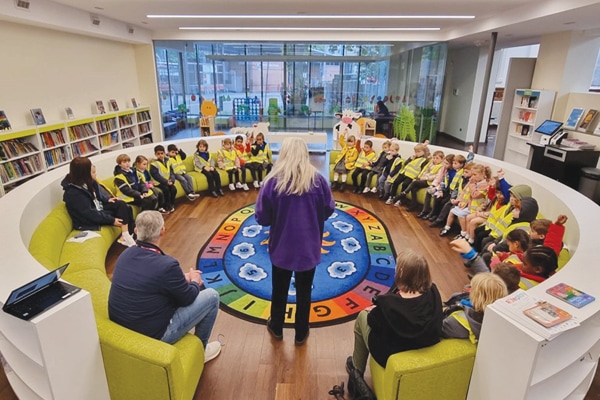
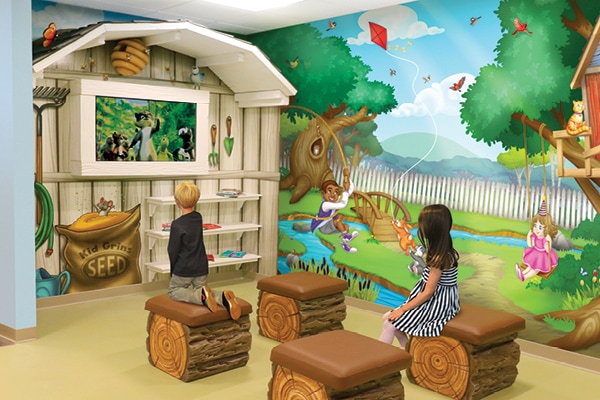
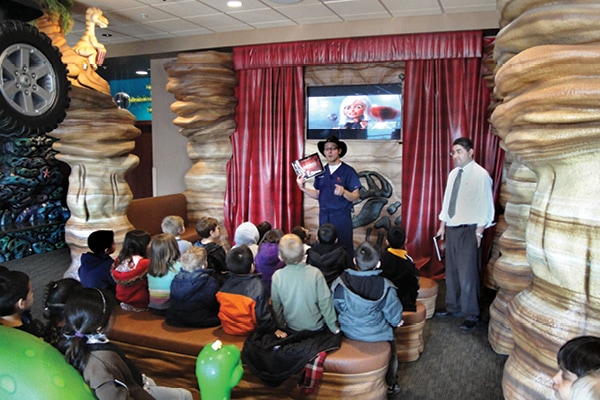
Kids love field trips. Going on an adventure is a great way to sneak some learning into a fun day out. Scout groups, schools, daycares, and open house events are a great way to invite a group into your office. Give an office tour, show brushing and flossing techniques, and show off all the cool dental equipment you have at your disposal to get kids interested in their oral health.

Simultaneously, offer sessions for parents where they can learn about the latest dental care techniques, the importance of fluoride, and how to handle common dental issues such as cavities or gum disease. Providing take-home materials like pamphlets and brochures ensures that parents have resources to refer to at home.

Make Guest Appearances Where Children and Families Gather

When in doubt, go to them. Research local children’s groups and see if they are open to an educational presentation.

You can start by looking for:

  • daycares
  • local elementary schools
  • dance schools
  • karate clubs
  • church youth groups
  • children’s play centers
  • and other children’s extracurricular activities
  • fun fairs and trade shows

When working with a group either in your practice or at an event, it’s a great idea to include games and activities to get groups engaged in the lesson.

Here are a few examples you could try:

  • Dental Hygiene Bingo: Create bingo cards featuring dental hygiene-related terms like “toothbrush,” “floss,” “fluoride,” and “cavity.” Call out definitions or descriptions of these terms, and students mark the corresponding words on their cards. A fun twist on a classic game that reinforces key dental vocabulary.
  • Sugar Content Sorting: For older tour groups, set up a table with various food items and beverages, each labeled with its sugar content in teaspoons. Ask students to sort these items into “high sugar” and “low sugar” categories. This game helps raise awareness about the hidden sugars in everyday foods and their impact on oral health.
  • Plaque-Disclosing Tablets Challenge: Provide plaque-disclosing tablets that temporarily color dental plaque on teeth. Have students chew the tablets and then use mirrors to find and remove the “plaque” by brushing their teeth. It’s a hands-on way to illustrate the importance of thorough brushing and shows how plaque can hide in hard-to-reach places.

A bonus to this type of outreach: connecting with potential patients through seminars creates familiarity, name recognition, and trust which helps your audience choose your particular dental practice over the others.


3. Use Social Media and Create Online Videos, Both Educational and Entertaining

Social media platforms like Facebook, Instagram, and Tiktok can be used to educate children and parents about oral health and hygiene. Dental clinics can share educational content, such as videos, infographics, and quizzes, to promote healthy habits and raise awareness about common dental issues. Social media can also be used to answer questions, share success stories, and connect with the community in a more interactive way. By harnessing the captivating nature of video content, dental professionals can engage children and parents in a medium that’s both accessible and relatable.

Social media platforms are all skewing towards videos. Platforms like TikTokInstagram ReelsYouTube ShortsGoogleLinkedIn, and Pinterest expand their video offerings. You don’t need high production value with long run times, just set up your phone in a quiet room and go for it.

Some educational and engaging video ideas include:

  • Demonstration videos aimed at kids could include a mascot or a hand puppet.
  • Unboxing videos are all the rage amongst children. Get cheeky and film an unboxing video of a new toothbrush and show off how it works.
  • Shoot a video with reviews of commonly bought dental products like fun-flavored kids’ toothpaste and toothbrushes with easy-to-hold handles for young kids.
  • Quick tip videos are exactly what consumers are looking for online.
  • Shoot a Q&A video of you or staff members answering frequently asked questions about children’s dental health.

Sharing these videos on social platforms can help spread the message of good dental habits far and wide, reaching the tech-savvy audience where they spend their time.

It’s a modern approach to dental education that can leave a lasting impact on young minds, reinforcing the value of a healthy smile.


Looking for more helpful resources?

The American Dental Association has helpful resources for children and information about how to celebrate and educate your patients during the month of February. You may also become a sponsor of the ADA’s Give Kids A Smile program.

FOUND THIS ARTICLE HELPFUL?

SHARE THE LOVE!

  • envelope

RELATED POSTS

Pediatric Dental Office Design: Why Every Practice Needs a Fun Brushing Station

Child-First Design for Pediatric Dental and Medical Spaces

Threading a Theme Through Your Digital Space

Create the Perfect About Page on Your Dental Website

Your pediatric dental practice’s website is often the first point of contact between potential patients and your clinic. Therefore, it’s crucial to make a positive impression from the very beginning. One of the most important pages on your website is the “About” page. This page provides a unique opportunity to connect with your audience, build trust, and showcase your practice’s personality. In this blog, we’ll explore how to create the perfect About page for your pediatric dental website.


1. Start with a Warm Welcome:

Begin your About page by extending a warm and inviting welcome to visitors. Use friendly and approachable language to make parents and children feel comfortable and at ease. Explain the purpose of the page, which is to introduce your team and share your practice’s values and mission.

2. Share Your Story:

Every pediatric dental practice has a unique story behind its creation. Share the story of how your practice came to be, including any personal anecdotes or experiences that led you to choose a career in pediatric dentistry. Your story can help humanize your practice and make it relatable to parents.

3. Highlight Your Team:

Introduce the members of your dental team on the About page. Include photos, brief bios, and professional qualifications. Sharing personal interests and hobbies can also help humanize your team members and create a stronger connection with your audience.

4. Emphasize Your Expertise:

Demonstrate your expertise in pediatric dentistry by highlighting your education, training, and any specialized certifications or awards. Parents want to know that their children are in capable hands, so don’t be shy about showcasing your qualifications.

Here are more tips on how to show off your awards and qualifications.

5. Showcase Your Philosophy:

Share your practice’s core values and treatment philosophy. Explain what sets your pediatric dental clinic apart from others. Emphasize your commitment to providing compassionate, child-friendly care and your dedication to oral health education.

6. Include Testimonials and Success Stories:

Include testimonials from satisfied parents and patients on your About page. Real-life success stories and positive feedback can reassure potential patients and their families that they are making the right choice by choosing your practice.

Here are some tips on how to get more great reviews.

7. Incorporate Visual Elements:

Make your About page visually appealing by including high-quality images of your clinic, team, and patients. Use images that capture the welcoming and child-friendly atmosphere of your practice.

Consider adding a video tour of your office for a more immersive experience.

8. Call to Action:

Don’t forget to include a clear call to action (CTA) on your About page. A call to action is what you want the visitor to your website to do next. Encourage visitors to contact your office, schedule an appointment, or sign up for your newsletter. Make it easy for them to take the next step in their journey with your practice.

9. Keep It Up to Date:

Regularly update your About page to reflect any changes in your team, services, or practice philosophy. An outdated page can give the impression of neglect, so ensure that the information is always current.

10. Engage with Your Audience:

Lastly, encourage visitors to connect with you on social media or through a contact form. Let them know that you value their feedback and are eager to answer any questions they may have.

Your About page is a powerful tool for building trust and rapport with potential parents of patients. By sharing your story, introducing your team, and showcasing your expertise and values, you can create a compelling About page that resonates with your target audience.

Don’t underestimate the impact this page can have in attracting new patients and fostering lasting relationships with your community.


Check out these related resources for great marketing tips for your office:

Do You Have a Media Consent Form for Your Office?

How to Create a Dental Newsletter That Deepens Patient Relationships (and Their Trust)

Increase Traffic by Setting Up a Google Business Profile

Contact Imagination Design Studios (IDS) to get started transforming your office from a mundane to magical patient experience.

FOUND THIS ARTICLE HELPFUL?

SHARE THE LOVE!

  • envelope

RELATED POSTS

Pediatric Dental Office Design: Why Every Practice Needs a Fun Brushing Station

Child-First Design for Pediatric Dental and Medical Spaces

Threading a Theme Through Your Digital Space

Enhancing ABA Therapy Centers with Themed Decor

Applied Behavior Analysis (ABA) is widely recognized as a safe and effective treatment for autism, Down Syndrome, and other diagnoses. Recent estimates from the Centers for Disease Control and Prevention indicate a 178% increase in school-age children diagnosed with Autism Spectrum Disorder (ASD) from 1 in 150 in 2002 to 1 in 54 in 2016″​. This statistic highlights the growing need for effective treatment environments.

As more families seek out centers to help improve the lives of their children who are neurodivergent, including those with Autism Spectrum Disorder and Down Syndrome, it’s essential that organizations are able to provide a customized and low-stress environment for individuals of all ages.

Thoughtful autism therapy center design can play an important role in helping centers create a positive setting for their patients and employees alike. However, did you know that using custom theming can enhance your organization’s business practices as well? Custom theming can become an all-in-one solution to address your organizational goals, whether it be through increasing patient experiences and building retention, expanding your organization’s marketing campaign, or finding ways to build your donor list.

Let’s get into how applying custom theming can address each of these goals.


Enhance Patient Experiences and Build Retention in Your Autism Therapy Center

ASD, or Autism Spectrum Disorder, can be a difficult struggle for children, making the environment and atmosphere in which they receive treatment incredibly important for their overall experience.

Custom theming has become widely popular as an effective way to create a stimulating atmosphere for ASD patients. By using unique decor and furnishings of specific colors, shapes, textures, and sizes that may be beneficial to ASD individuals, centers can truly create a warm and inviting space focused on their individual needs.

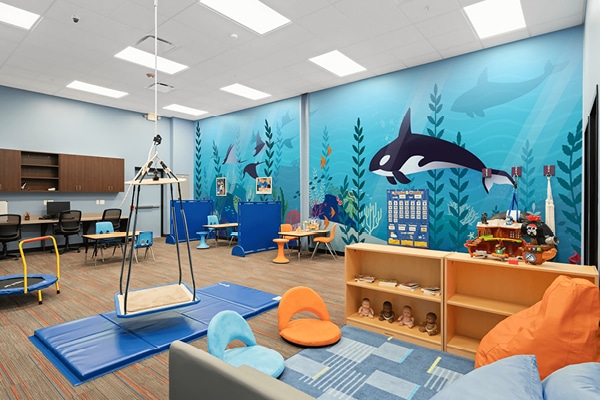
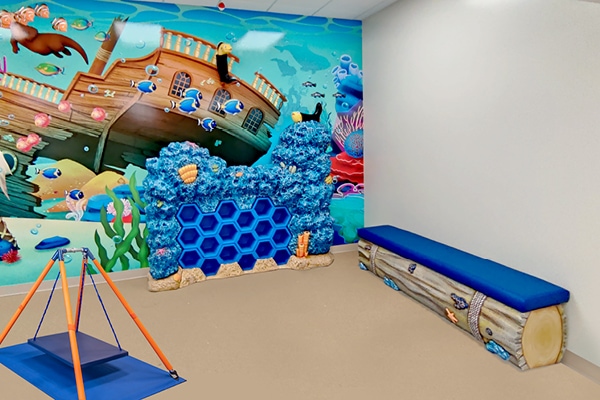
Example of an ABA therapy center with underwater theming.
Example of an ABA therapy center with a calming underwater mural.

Furthermore, certain activities such as crafting, playing games, and reading books are personalized to their interests while different aromatherapy techniques like scent diffusing can also have calm and revitalizing effects on ASD kids. Themed centers can make the patient experience more enjoyable and effective for ASD kids allowing them to focus on the genuine care being provided by the staff.

Example of an Applied Behavior Analysis therapy center with underwater theming.

By improving patient experience, you are directly showing your kids, and especially, the parents, that you genuinely care about how the child feels when they’re at your facility.

Example of a physical therapy center with sports themed animal murals.

Custom theming can help enhance not only the experience of their time at your facility but also the outcomes through the practical uses provided by it. In turn, the parents will recognize the effort being put in and be less likely to want to transfer their child to a different location. These parents may also become advocates for your organization and create new potential clients to come to your facility.


Expand Your Organization’s Marketing Campaigns Through Custom Theming Strategies

Custom theming can be an effective way to strengthen the marketing campaigns for autism centers, as it adds a personalized touch that resonates with ASD clients and their families. By carefully considering the tone, logo, visuals, and messaging in their campaign designs and content, ASD centers can create cohesive experiential campaigns that — when paired with content tailored to ASD stakeholders — provide an effective, meaningful approach to outreach. Not only does this help ASD centers build relationships with those they serve, but it further shows commitment to everyone involved in the effort.

Custom theming is not only tied to the marketing efforts of the organization but can provide an opportunity for organic marketing growth, specifically when it comes to user-generated content.

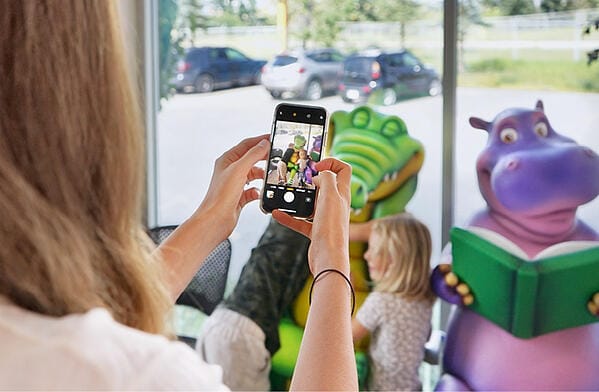
Photo op for customers to promote your business on social media.

User-generated content is made up of photos, videos, or public comments made about your organization that visitors have made online. These can provide organic branches for your marketing campaign to help promote your organization, especially if your facility has built-in photo ops within its space. A fun environment can invite parents to take photos of their child within your space and share it online for others to see and potentially tag you within their posts. This can help grow your organization’s marketing effort and provide eyes to your facility.

Ultimately, custom theming offers autism centers a way to differentiate themselves from competitors; create a unique identity; increase brand recognition; maximize engagement; and drive success for both short-term and long-term marketing goals. This leads to our next point…


Enhance Fundraising and Donor Engagement for Autism Support Centers

If your organization is dependent on the charity of others, this is especially important. Having an increase in funding can allow your organization to improve its resources, provide more opportunities, and most importantly, create an all-in-all better experience for your clients attending your facility.

With custom-theming provides a quality patient experience and pairing that with the marketing potential of having a themed design can provide, it can heavily improve the image that your facility outputs. Having a healthy and attractive image will give potential donors a reason to notice and provide support to your facility. Especially showing the amount of effort being put into the betterment of your clients, donors will recognize your hard work and the outcomes that come out of it.

This attention doesn’t stop at only potential donors but can create a spotlight for potential sponsorships from other organizations to help your facility. These sponsorships can create new branches within your marketing campaigns and feed into the cycle of new eyes, new donors, and new improvements to your facility.

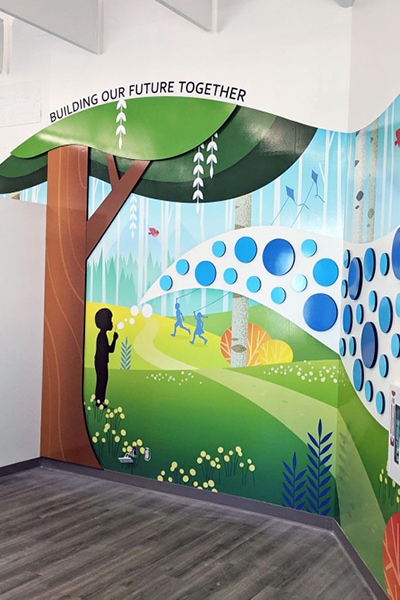
A colorful mural, perfect for autism center decor, shows a child blowing bubbles, kids playing in a green forest, and BUILDING OUR FUTURE TOGETHER above the scene. The gray wood floor adds to the bright, cheerful atmosphere.
Donor wall ready to be filled.


The Impact of Custom Theming on Autism Therapy Centers: A Summary

No matter what size autism center you’re running, the importance of creating a space that considers your individual clientele can have a tremendous amount of positive impact. A comprehensive study found that early intervention programs for very young children with autism, some as young as 18 months, significantly improve IQ, language ability, and social interaction.

Custom theming can provide patients and families with comfort and therapeutic benefits while also furthering your organization’s marketing efforts, and donor list, and building customer retention. Investing in custom theming is an investment in the patient experience and can pay off greatly; just make sure to keep the focus on your key demographics needs when designing your space.

Here at Imagination Design Studios, we understand that custom theming isn’t always easy, so if you’re having a hard time visualizing how this might come together for your autism center or build out work within a budget visit our website to speak to one of our creative consultants today! We are here to help you create an innovative, therapeutic, and welcoming atmosphere for all those utilizing your services.


Dave Nolan, the President of IDS, is a father of two sons, one of whom has autism. While navigating dental and medical appointments, he noticed the heightened stress and anxiety his son experienced when entering unfamiliar environments. This observation led him to wonder, “There must be a way to improve this experience for children in similar situations.” At Imagination Design Studios, our “Why” is driven by our deep belief in the transformative power of positive, welcoming neurodivergent-friendly environments in a child’s development.


Interested in learning more? Check out these related resources on themed environments and their benefits:

5 Ways to Improve Pediatric Patient Experience in Your Medical Clinic

Pediatric Therapy Facility Decor Inspiration

The Healing Power of Fun Decor in Children’s Hospital Environments

Color and Light in Interior Spaces for Children with Autism

Keep Guests on Track with 7 Types of Fun Wayfinding Signage for Pediatric Healthcare Spaces

FOUND THIS ARTICLE HELPFUL?

SHARE THE LOVE!

  • envelope

RELATED POSTS

Pediatric Dental Office Design: Why Every Practice Needs a Fun Brushing Station

Explore the Best Children’s Murals for Walls to Transform Any Room

Child-First Design for Pediatric Dental and Medical Spaces

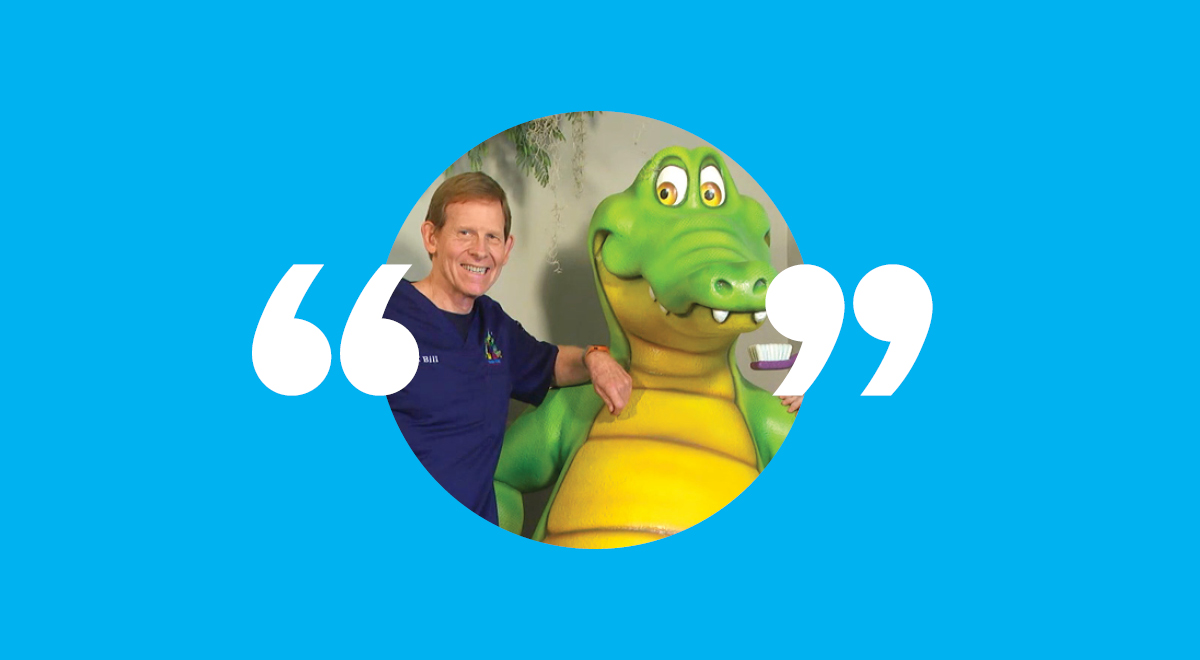
Interview with Dr. Bill Martin

Dr. Bill Martin, the founder of Martin Kids Dental is excited to walk into his office every day to do what he does best, make a difference in the lives of his patients.

IDS outfitted both the exterior and interior of his office with Bayou theming. This one-of-a-kind office is designed specially so kids can touch, play, and feel safe in the space they are visiting.

Dive into our interview with Dr. Martin below and unveil how theming has enhanced his love for what he does and has affected his business better than he could have expected.

Tour a Bayou Themed Dental Office


Why did you decide to add theming to this office?

Dr. Martin: I just had an orthodontist’s office before, and then I decided to add pediatric dentistry and wanted to create a unique and very different environment for kids. Then IDS came along and did a perfect job.

What made you want to choose a Bayou theme?

Dr. Martin: Gainesville is in a town where we have the University of Florida, and the mascot for the University of Florida is the Florida Gator. And of course, around here we have Bayou’s, but the theme went very nicely with everybody in town being a gator fan.

Do you think the theming has helped your practice?

Dr. Martin: Incredibly so. I think that it established our brand, people talk about it, and the word is out. It has created an incredibly fun place for kids to come.

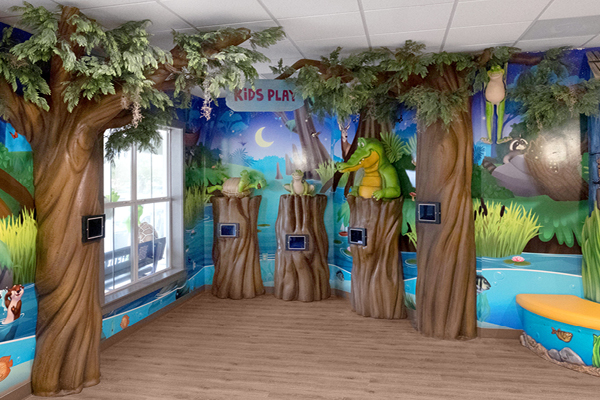
A colorful indoor kids’ play area with tree decorations, animal figures, interactive screens on tree stumps, and a mural of a forest and pond on the walls. An IDS testimonial highlights its inviting atmosphere. The sign reads KIDS PLAY; wood-patterned flooring adds charm.

Do you think that patients are more relaxed when entering your practice after it has been themed?

Dr. Martin: Absolutely, if they were ever in any other kind of office, a doctor’s office, or anything else like that, there’s usually some anxiety. So they walk in here and it’s like a trip to Disney World.

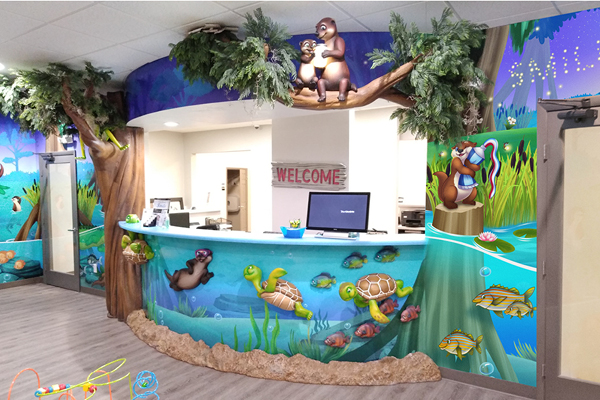
Colorful pediatric reception desk decorated with jungle and underwater animal murals, featuring turtles, otters, and fish. Stuffed animals and greenery create a playful atmosphere that often earns rave IDS testimonial reviews from delighted families.

How would you describe the reactions from the patients when they come into the office for the first time, and even after multiple visits?

Dr. Martin: I think that the first time, the eyes are big and it’s a wow experience. And even after they’ve been here many times they are discovering something new each visit with the different animals and murals. The murals were designed by IDS to have little things hidden, so every time they come in they are going to see something new and different.

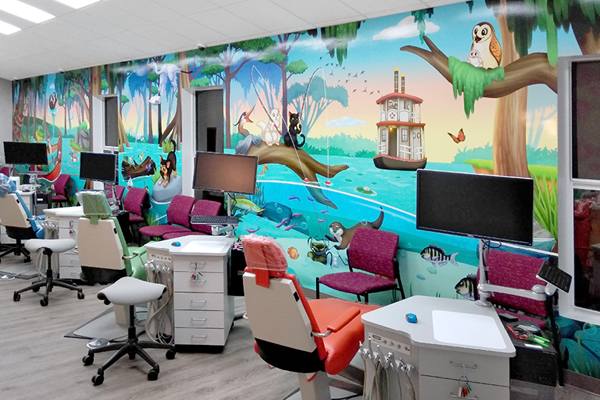
A colorful medical room with several exam chairs and monitors features a vibrant wall mural of a river scene with trees, animals, and a steamboat, creating a cheerful, child-friendly environment inspired by an IDS testimonial.

Do you think that you are gaining new patients as a direct response to the theming?

Dr. Martin: There’s no question about it. I think undeniably this is one of the best marketing tools you could possibly have.

Do people mention seeing your exterior alligator outside when they drive by?

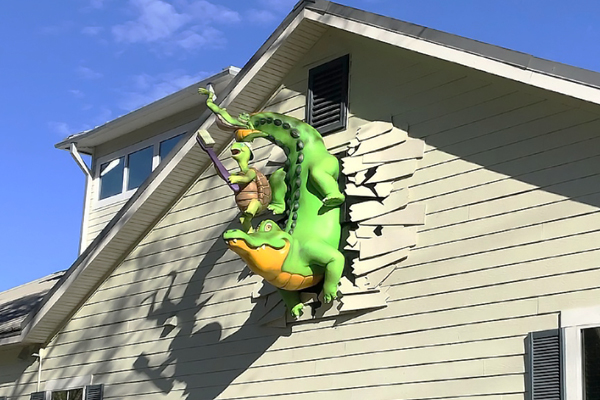
Dr. Martin: They do. When you go around town and you say “Hi, I’m Bill Martin, the Orthodontist at Martin Kids” the first thing they say is “Oh my gosh, that’s the alligator that comes out of the building.” We’ve since had people stopping by and taking pictures, it’s great.

In fact, they’ve said that anything out in this area they will tell their friends where it is in relation to the alligator coming out of the wall.

We also have a bench that has a couple of characters with a space in between them so the kids can get their picture taken there, and that’s being used all the time.

A large sculpture of a turtle riding an alligator appears to burst through the exterior wall of a beige house, with broken siding around them, like an IDS testimonial brought to life. The sky is clear and blue in the background.

What do you think the staff’s response has been to the theming?

Dr. Martin: I think the staff is excited about it because it’s a fun thing. It’s a fun place to come, it’s a fun place for kids, and the funny thing is, that it’s also a great place for adults that never wanted to grow up.

How do you personally feel seeing the theming every day?

Dr. Martin: I love it, it puts a big smile on my face. In fact, instead of coming in the back door I come in through the front door now so I can see the theming of the different animals, and it makes me feel grand, it makes me feel happy.

Being that the theming is a few years old now, how do you think it has stood the test of time?

Dr. Martin: The quality is top-rate. It looks just like it did the day it was put in.

Can you tell any stories of children interacting with characters or spaces?

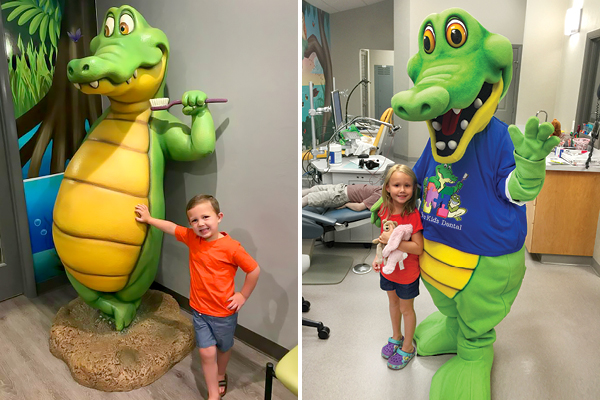
Dr. Martin: What you see out front is one of my favorite places, because the bench is set up so the kids can take pictures and they really like doing that. And then they will have a favorite character. So you can look behind me here, and some will get their picture taken with the alligator, and others with the frog and the turtle. It’s really a photo op moment.

What would you say that your favorite character or area is in the themed spaces?

Dr. Martin: My favorite character is Phineas Frog I call him, and he is the frog that has braces on him. Of course, being an orthodontist I am biased, but he’s a funny little guy.

A large, colorful frog statue wearing a white t-shirt with an M and a blue cap greets visitors from the counter in a modern office or clinic reception area, inviting smiles and serving as a fun nod to an IDS testimonial.

What previous issues do you think that the office had that were solved through theming?

Dr. Martin: I think the theming makes the kids feel so much more relaxed, that is the big one. Plus it makes a statement to parents, that we have invested in their child’s well-being, and happiness and we are more than just putting our face in some kid’s mouth. So I think it really makes a statement to parents that we really care about your kid.

Would you consider adding more theming to other areas in the future?

I don’t see how you can make it any better, I think this was so thought out by the people at IDS that I just don’t know how I could improve it.

If you were to expand to other offices would you consider adding the theme installation to those offices as well?

Dr. Martin: Without a question. At first, when I got into this I said to myself “wow this is a lot of money” but when I look at the benefits of it, not only as a marketing tool, but it really is a marketing tool because you don’t have to put up a billboard when you have an office like this.

Do you think the theming goes hand in hand with your marketing and how do you feel that it is utilized in your marketing?

Dr. Martin: Absolutely, for sure it does.

What we do is we have the characters, and we of course use them when we film advertisements. The other thing is the alligator was so popular, that we had a company make a mascot like you see in the NFL or NBA, and when we go out to do public events, which we do a lot of, we always have our mascot with us. So that presents our brand, and the mascot is amazingly popular, the kids chase him around and hug him all day long.

What do you think are the most important benefits of the theming?

Dr. Martin: One is that it’s a great marketing tool and it certainly cuts down on a lot of the other marketing we would otherwise be trying to do. Two, it’s great for the kids, when they walk in the office they have a place where they walk in and go wow, this is really like going to a theme park. And three, quite frankly for us as a staff, it’s my happy place. When I come in in the morning I might not have a smile on my face, but after seeing these characters and looking at the murals, I got a smile.

How was your experience with IDS?

Dr. Martin: They were fabulous. They are an amazingly creative group, really worked within a budget for me as that was of course a big concern, and they put out a plan and if I said “wow that’s just way out of my budget” then they would modify it and I was always happy with every modification that they made. The guys in charge give me their cell phones. If I need to get in touch with them, they are available.

Would you recommend IDS to others in the future?

Dr. Martin: Absolutely. Nobody in my town, haha, but absolutely to anybody.


Starting with a passion to help others, founder Dr. Bill Martin opened the doors of his first practice in 1979. Since then, his vision has blossomed into a true family practice as his team of experts expanded to his two sons Dr. Dave and Dr. Paul. 

See the full bayou office theme here.


Interested in learning more about themed environments? Check out these related resources on IDS customers:

See more examples of bayou theming here.

Hear more great stories of happy IDS customers here.

Contact Imagination Design Studios (IDS) to get started transforming your office from a mundane to magical patient experience. Or download our inspiring look book and start imagining the possibilities in your office.

FOUND THIS ARTICLE HELPFUL?

SHARE THE LOVE!

  • envelope

RELATED POSTS

Case Study: Theming for Long-Term Impact Across 13+ Community Health Centers in Washington

Orange Conference Interview with IDS Creative Consultant Erin

Interview with Dr. Joe Yale

4 Ways Social Media Can Help Promote Your Library

Social media can be a powerful tool for libraries when it comes to marketing their establishment. From connecting with their communities to promoting their services, social media gives librarians a unique opportunity to connect with their visitors directly. Building a presence online can help build your library’s brand and how people perceive your space even before they visit.

Before we get started, it’s important to choose the social media platforms that are most relevant to your library and your community. Some popular platforms for libraries include Facebook, Instagram, Pinterest, and yes, even TikTok. Each platform has its own unique features and audience, so it’s worth taking the time to consider which ones will be the most effective for your needs.

In this blog, we’ll show you 4 ways that librarians can use social media to stay connected with their visitors and, in turn, build more readers in your space.


1. Update and Inform Library Patrons with Social Posts:

One of the main benefits of social media for libraries is that it allows you to share updates, information, and resources with your patrons in real-time. This can be especially useful for promoting events, such as book clubs, author talks, and workshops, as well as for sharing news about new acquisitions, services, and programs.

You may have useful information and resources that you know would help benefit your patrons. By using social media, you’re able to share that information or supply a link to the blog that holds the information. This helps bring more traffic to your website and further show that the library is a source of knowledge – both online and offline.

The day of waiting for the library to open and speaking on the phone for information is behind us. Nowadays, your visitors can directly message you on your social platform for inquiries about your libraries. This helps your space feel more connected and speeds up the process when helping your community. Your patrons will feel appreciated knowing that they can connect with their local library in seconds.

Some ideas for types of content that libraries can share on social media include:

  • Announcements about upcoming events and programs
  • Previews of new books, movies, and other materials
  • Book “unboxings” showing new deliveries to the library
  • Links to online resources, such as databases and e-books
  • Tips and tricks for using library services, such as borrowing materials or accessing online resources
  • Inspiring quotes or interesting facts related to books and reading

A smiling woman sits indoors holding up two books, Life of Pi and Alone, in front of a camera. Bookshelves filled with colorful books are in the background.


2. Build Engagement with Your Online Community:

Librarians can use social media to engage with their community, making their relationships with their visitors stronger. By creating content and posting online, you are opening an online door for your followers to comment, like, and share what their local library is doing. Doing this shows that your library is active, even when your visitors are away physically.

Take Advantage of Existing Communities

Join the #BookTok community, a subcommunity on the app TikTok which is focused on books and literature, to get your posts global engagement. From book reviews to writing tips, plot reenactments of popular novels and more, #BookTok is a delightful corner of TikTok that encourages followers to enjoy literature. The #BookTokChallenge might be one of the few TikTok challenges that are actually wholesome and inspiring to viewers.

User Generated Content

User-generated content is content that is created by customers and posted to social media. UGC comes in many forms, including images, videos, or testimonials. One particularly effective way to engage with your patrons and create user-generated content is to set up a photo op in the library. This can be as simple as setting up a backdrop or props related to a particular theme, and then inviting patrons to take photos and share them on social media using a designated hashtag.

A young woman with long brown hair smiles and takes a selfie with her smartphone while holding an open book in a brightly lit bookstore filled with colorful books.

Create hashtags specific to your library’s photo op area that people can use when posting their photos online (e.g., #LibraryNamePhotoOp, #lovemylibraryname). You can also run contests where people who post using these hashtags can win prizes such as books or gift cards! This will not only increase engagement with your existing patrons but also draw in new ones who might otherwise never have heard of your library before!

Your followers are gateways to more visitors to your library. By having your followers share your posts and events, it gives your library new potential visitors that can come through your door.

Open Communication

What’s great about social media is that it becomes a two-way street. Online platforms such as Facebook, Instagram, and Twitter give you the ability for your patrons to message and respond to your questions.

Consider asking your audience what events they would like to see from their library, or what genres of books the library should bring in. Maybe you want to learn about what new improvements your visitors want from your library, social media allows you to get that information in an instant.

Giving your visitors a platform to speak will show that you are actively trying to better your establishment for its community.

In addition to sharing your own content, it’s also important to engage with your patrons and encourage them to participate.

Great engagement activities include:

  • Asking for feedback or suggestions from patrons about what they’d like to see at the library
  • Responding to comments and questions from patrons in a timely manner
  • Encouraging patrons to share their own photos, reviews, and experiences at the library using a designated hashtag
  • Running social media contests or challenges, such as a “book spine poetry” contest or a “shelfie” challenge (a photo of someone’s bookshelf)


3. Reach a Larger Audience and Build a Community:

Having an online presence grows your ability to build your library’s community by helping you reach a larger audience than traditional advertising methods.

Through social media platforms such as Facebook, Instagram, and even Tiktok, you are able to see your visitors and how they interact with your space, both online and offline.

Consider hosting a hashtag for your library so that you can stay up-to-date and see the latest posts happening at your location. Reposting these posts can show that you’re actively engaged with your community and care about what your patrons are doing.

By reposting your community’s content, you actively build your library’s ‘User-Generated Content.’ This content, created by your community, showcases the vibrancy of your location. Sharing, tagging, and reposting your visitor’s posts can have your patrons feel noticed, and part of a bigger community.

This especially works if your library’s decor is unique and different from your typical library, which leads to our next point…

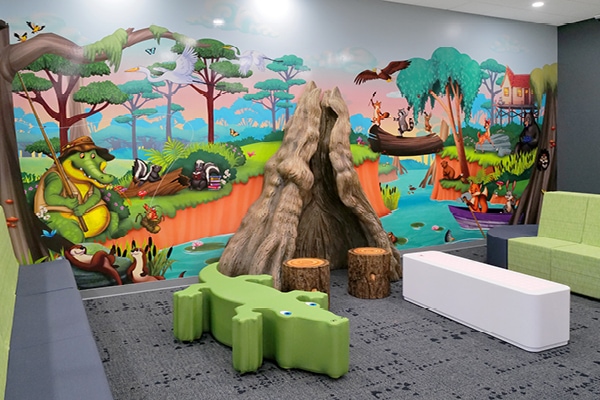
Library story time area with sculpted tree.


4. Show Your Library’s Personality on Social Media:

In today’s society, younger generations such as Millennials and Gen Z place a strong emphasis on values and beliefs when they interact with businesses. As a result, it is crucial for businesses to not only provide high-quality products or services but also have a brand identity and mission that aligns with their target audience. This is where effective marketing comes in.

In the case of libraries, social media can help showcase the library’s personality and create a unique brand identity. By sharing stories and experiences, libraries can build a sense of community around their brand, connecting with followers who share similar values and beliefs. This approach can help libraries attract a younger audience and establish a stronger relationship with their current patrons.

Show off your people and their personalities.

A young man with curly hair balances a pencil on his upper lip while sitting at a table with open books, looking playfully at a camera phone across from him in a library setting.

Having a social media platform allows your library to have its very own spotlight. This allows librarians to show all the details that make your library special and unique compared to others. This is especially important because it gives your space personality and further grows the atmosphere that you’ve worked so hard to build in person – online.

Put a spotlight on your building and the amenities it has to support people in your community.

If making your library more unique and appealing is one of your priorities, consider looking into custom theming to have your library stand out. Theming creates a welcoming and safe space for children to come and explore literature, showing you care about the comfort of families in your community. Theming is an easy way to convey how the atmosphere or your library should feel and look the moment a visitor comes in. Your library theming can range anything from contemporary minimalistic styles to fun and whimsical and appeal to your younger audiences and families.

Click here if you’re interested in how you can add custom theming to your space.


Social Media Can Help Promote Your Library

Whether it be to share information, build engagement, build your community, or show the well-deserved spotlight to your library, social media can be a powerful tool to help all of that and more.

By being on social media, you are not only growing your potential reach, but you are also showing your involvement with your community. Who knows? Maybe your post will become a new member one day!

By using social media effectively, you can strengthen your relationship with your patrons and attract new ones to your library.


Check out these related resources for making your library an exciting place to learn:

Unique Decor Ideas for Libraries

Tips for Creating a Presentation Area in Your Children’s Library

Say Cheese! Playful Photo Op Inspiration

The Benefits of Themed Decor for Kids

Explore Examples of Children’s Library Decor

Contact Imagination Design Studios (IDS) to get started transforming your library into a place that captures everyone’s attention!

FOUND THIS ARTICLE HELPFUL?

SHARE THE LOVE!

  • envelope

RELATED POSTS

Threading a Theme Through Your Digital Space

Beyond Books: 7 Tips to Create Magical Library Play Zones

How Theming Creates the Ultimate Brand for Your Business

What to Include in Your Perfect Indoor Family Play Area

Indoor children’s play areas have become a popular addition to a range of family-friendly businesses in recent years. From shopping malls and family restaurants to gyms and fitness centers, airport waiting areas, hotels and resorts, rec centers, libraries, and more, indoor play areas offer a valuable service for families looking to keep their children entertained and engaged. These centers provide a safe and stimulating environment where children can play, learn and socialize, while parents can relax, catch up on work, or simply enjoy some downtime.

Indoor play centers offer an excellent business opportunity for entrepreneurs who are passionate about providing much-needed service to families in their community while generating profit. By offering a fun and safe space for families to enjoy, indoor play centers can enhance the overall experience of their host business and create a loyal customer base.

5 tips for creating the perfect family indoor play area for any size of space or type of business.

1. Plan the Size of Your Play Room Space

Determine the amount of space you have available and how you want to divide it up. Consider including separate zones for different age groups, such as a toddler area and a separate section for older kids.

A play area could be located in a small room off of your main business area, such as in a gym or community center, or in the center of a food court in a larger business like a mall or airport. Let’s look at some examples of what this might look like.

Play Rooms

Playrooms can make great use of vacant store space in a retail location.

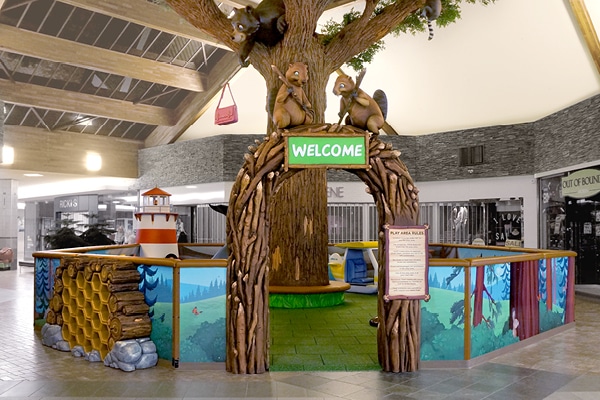
Indoor children’s play area with jungle-themed decorations, including large green leaves, a mushroom, a beehive, and a cartoon character holding a “Welcome” sign. This bright and inviting mall play area is perfect for young adventurers.

Stand-alone Play Areas

Stand-alone play centers are self-contained. Great for hallways or wide open spaces.

Small Play Structures

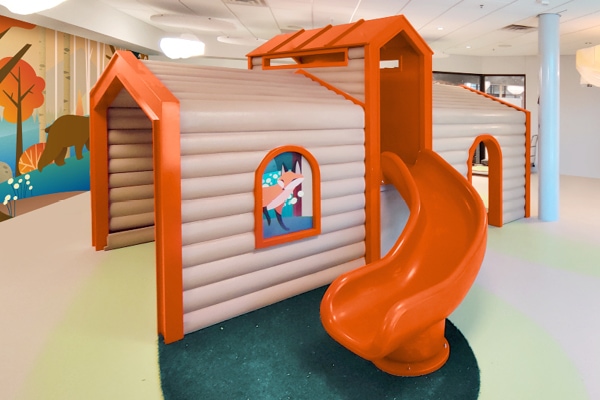
A smaller fort may be all you need for the space you have available, but it will inspire big imaginations all the same.

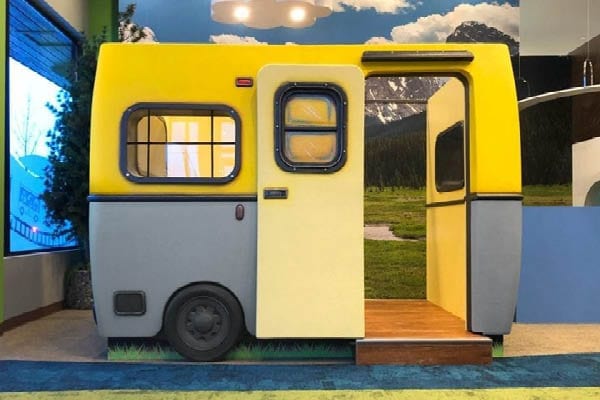
Yellow and grey camper themed kids play house.
Rec Center Play Room

2. Safety First for Children in Your Play Area

Once you have a space, safety should be a top priority when designing an indoor play area.

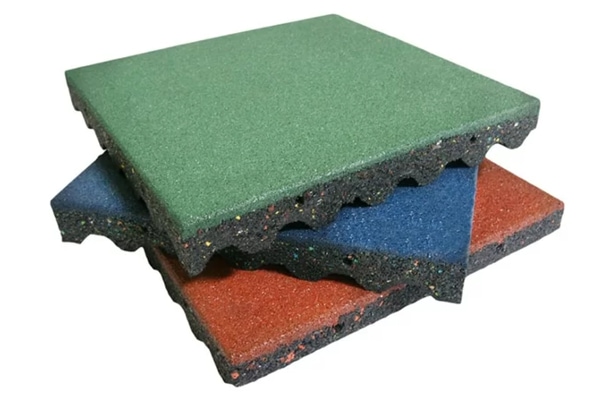
One of the most important aspects of creating a safe indoor play area is selecting the right type of flooring. Soft and cushioned flooring is ideal, as it provides a soft landing surface for children who may trip or fall during play. This type of flooring helps to reduce the impact of falls, minimizing the risk of serious injury.

In addition to selecting the right type of flooring, installing safety gates can also help to prevent accidents and injuries. Safety gates can be used to restrict access to certain areas of the play area to different age groups, such as keeping toddlers out of areas meant for older children.

Using age-appropriate toys and equipment is another important consideration when designing an indoor play area. Toys and equipment that are designed for older children may not be safe for toddlers and can increase the risk of accidents and injuries. Make sure to carefully consider the age range of the children who will be using the play area, and choose toys and equipment that are appropriate for their developmental level. We’ll get into more detail about the types of equipment in a moment.

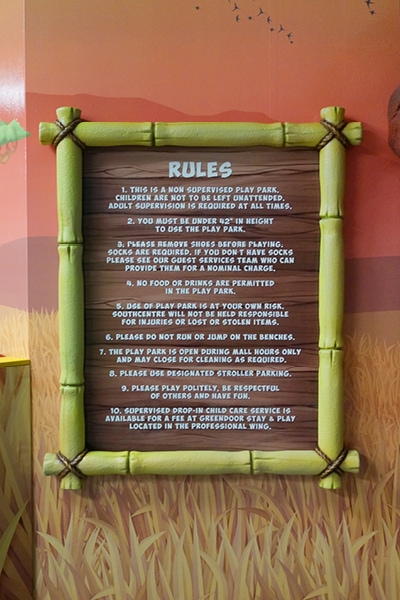
Don’t Forget the Rules

A list of rules for parents and children to follow will also help maintain safety.

A wooden sign framed with green bamboo displays mall play area rules in white text, mounted against a colorful wall with grass illustrations. The rules outline safety guidelines and expected behavior for children and guardians.

Your play area rules could include:

  1. Parental Supervision: Children must be supervised by a parent or guardian at all times while in the play area.
  2. Age Limits: Clearly state age limits for different areas or equipment within the play area to ensure that younger children are not playing on equipment designed for older children.
  3. No Roughhousing: Running, pushing, and other rough play should be prohibited to prevent injuries to children and damage to equipment.
  4. No Food or Drinks: Eating and drinking should not be allowed in the play area to prevent spills and potential choking hazards.
  5. No Shoes: Shoes should be removed before entering the play area to prevent dirt and debris from being tracked in and to reduce the risk of slipping and falling.
  6. No Sick Children: Children who are sick or have a contagious illness should not be allowed to use the play area to prevent the spread of germs to other children.
  7. No Bullying or Harassment: Bullying or harassment of other children should not be tolerated and will result in immediate removal from the play area.
  8. Clean Up: Children should be encouraged to clean up after themselves and return any toys or equipment to their proper place after use.

3. Choose the Perfect Theme for Your Indoor Play Area

Having a theme helps create a cohesive and professional look to your play area, plus it is great for branding and advertising.

Your theme can be based on fun colors. It can be an out-of-this-world space or fantasy adventure. If you’re located in a coastal mountain town or a desert city, you can use your local flora and fauna to inspire you.

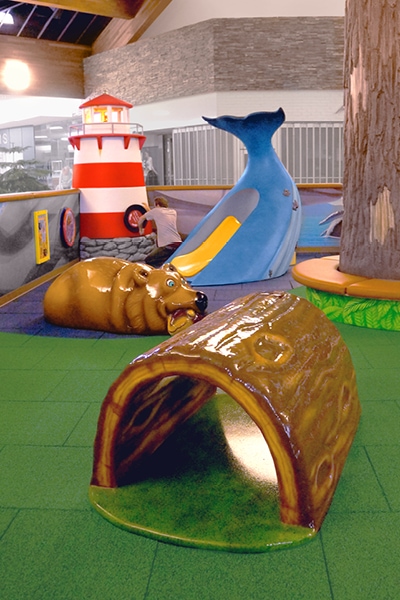
For example, the Westshore Town Centre shopping mall takes its name to heart, with a selection of shoreline-themed play structures including a climbable soft play bear catching a salmon, a whale tail slide, a lighthouse with a wheel that spins the light, plus so much more. This centerpiece play area reflects the brand of the mall along with the local landmarks guests are familiar with.

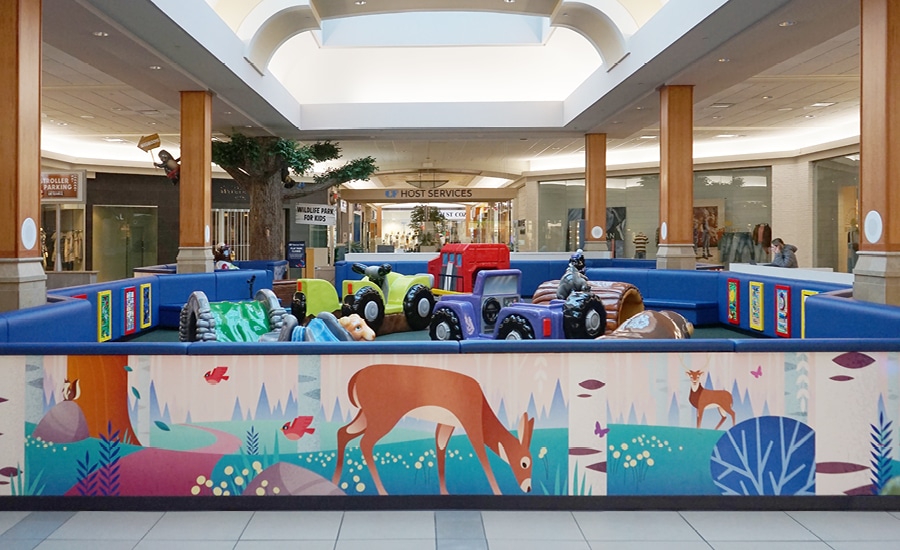
Mall play area featuring a large artificial tree, playful woodland creatures, a green Welcome sign, and colorful fences with nature-themed designs—perfect for kids to enjoy while shopping.

4. Select a Variety of Age-Appropriate Activities for Your Play Area

Select activities that are suitable for the ages of the children who will be using the play area. For example, a toddler area could include soft play mats, low-height slides, and ride-on toys, while an older kids’ zone could include climbing walls, ball pits, and interactive video games.

Hands-on Play Options

Hands-on play is great for younger kids as it helps develop fine and gross motor skills, hand-eye coordination, spatial awareness, and social skills as children interact with others. Hands-on play options could include Keebee playboards, sensory tables like bead maze tables or magnetic activity tables, large puzzles, building blocks, and coloring areas with markers and crayons.

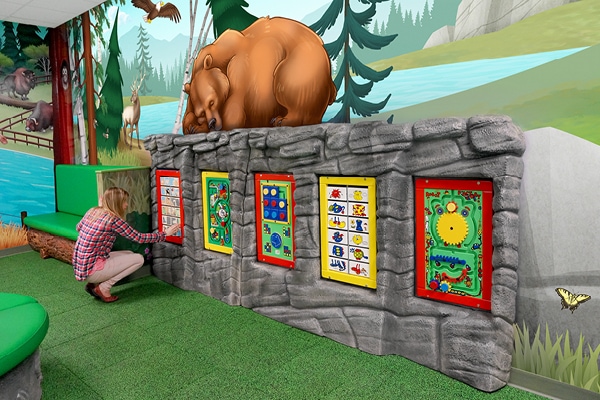
Woodland rock game wall with Keebee play boards and video games.
Woodland rock game wall with Keebee play boards for toddlers.
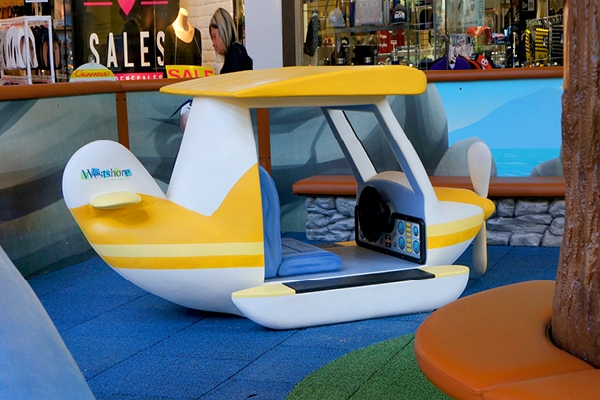
A seaplane that allows kids to turn the wheel and use their imagination.
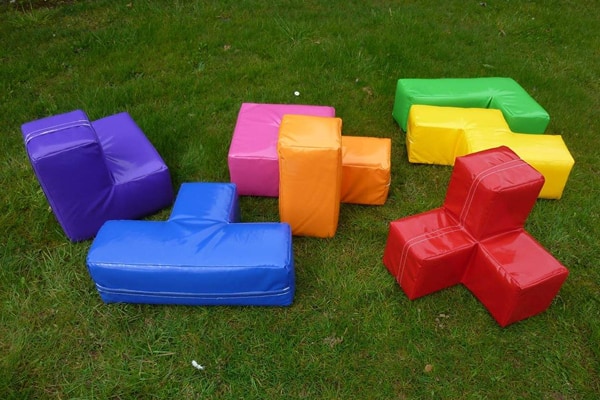
Giant foam play blocks.

Interactive play inspires imagination!

Soft Play Climbable Sculptures

“Soft play” sculptures are typically made from high-density foam that is covered with a durable, waterproof vinyl material. This makes them safe for children to crawl on, climb over, and play with, while also being easy to clean and maintain.

Soft play sculptures come in a variety of shapes and sizes, including characters, slides, tunnels, vehicles, and more. They can be customized to fit any theme or color scheme, making them a popular choice for indoor play areas, daycare centers, and other children’s facilities.

Soft play foam sculpture slide with a goat sitting on a mountain side.
Soft play foam sculpture slide with a goat sitting on a mountainside.

Because soft play sculptures are soft and squishy, they are less likely to cause injury than traditional play equipment made from hard materials like metal or plastic. They can also be used to create obstacle courses and other interactive play experiences that promote physical activity and imaginative play.

Contemporary style, woodland-themed wall murals with deer, birds and squirrels.
A mall play area filled with soft play sculptures for children to interact with.

Slides

Slides are a popular and fun form of active play for children of all ages, and even adults can enjoy them. Sliding down a slide can provide a sense of thrill and excitement, as well as help to develop physical skills such as balance, coordination, and gross motor skills. And they’re just plain fun!

Yellow slide on a pirate ship themed play structure

Ball Pits

Playing in a ball pit provides a tactile and sensory-rich experience, which can be beneficial for children with sensory processing difficulties. The feeling of sinking into a pit filled with soft, squishy balls can be calming and regulating. Let’s not forget that a ball pit is simply a fun and enjoyable experience for children. It can provide a break from structured activities and offer a chance to dive in and laugh to their heart’s content.

Climbing Structures and Ropes

If your facility has the capability and space to incorporate climbing structures, tunnels, and rope courses, these can offer an exciting and engaging way for children to develop essential gross motor skills such as coordination, balance, and strength. Not only do climbing structures provide a safe environment for children to take risks and explore their limits, but they also foster the development of confidence and self-esteem as they navigate through the structures under supervision.

Video Games

While some parents may go to play areas to avoid digital stimulation, adding video games to an indoor play area for children can provide a number of benefits and can engage kids of different ages.

As technology continues to play an increasingly important role in daily life, offering video games in a play area can provide children with a chance to become familiar with and comfortable using technology in a safe and supervised setting. Many video games require players to use hand-eye coordination and problem-solving skills, which can help develop these skills in children.

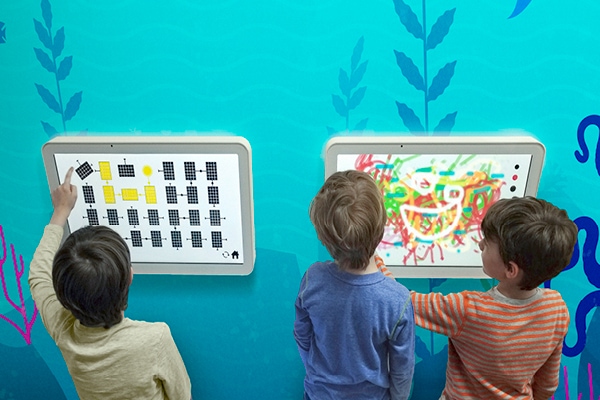
Kids playing on wall mounted gaming tablets.

Offering video games alongside other play options like climbing structures, ball pits, and sports activities can provide a generous range of play activities for children and keep them entertained for longer periods.

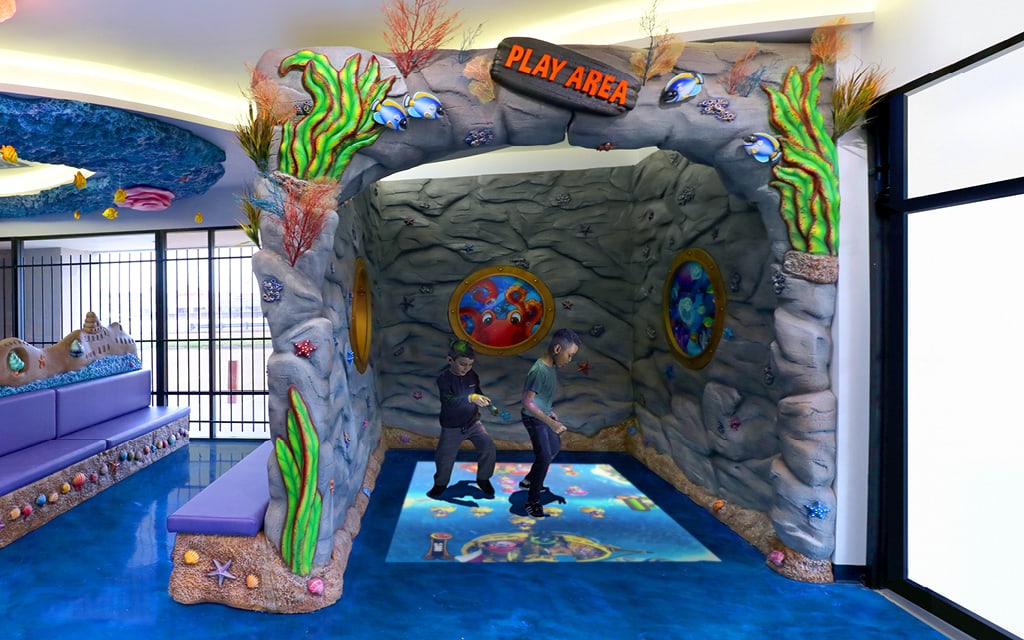
If you want the best of both worlds, a great alternative is floor-projected video games. These games encourage active participation by inviting children to jump and stomp on animated bugs, balls, and lily pads that are projected onto the floor.

An underwater themed reception area with a sculpted cave featuring a floor projected video game for kids.
An underwater themed play area featuring a floor-projected video game for kids.

TVs and Theaters

While adding a TV to a play area can provide entertainment for children, it may not offer the same developmental benefits as active play options. However, it could be a viable addition to a play area depending on the needs of the business and the interests of the children. If children are tired from play but not ready to leave yet, it provides a quiet alternative for those taking a break.

Photo Op Characters and Backdrops

Parents are all about capturing fun and special moments with their children as they play. Providing the perfect photo opportunity for them is a bonus for parents and an even bigger bonus for your social media.

Parents who take and share photos of a fun day at your play park are creating valuable user-generated content that helps promote your fun services. Include your name, your logo, or even encourage the use of a hashtag to make the best use of this content.

KNOW A MALL THAT CAN
BENEFIT FROM A PLAY AREA?

5. Consider These Essential Additions to Enhance Your Indoor Play Area

Add Signs for Wayfinding and Instructions

An important part of any play area is letting people know you have it, where to find it, and how to use it (like the rules sign mentioned earlier). Signs can come in a variety of shapes and styles, from 2D to 3D.

Signs can also include your logo, hours of operation, and other useful information, like where the bathroom is located.

Keep it All Clean with a Shoe Rack

Adding a shoe rack outside your children’s play area can have several benefits:

  1. Keeping the play area clean: Children can bring dirt, mud, or other debris on their shoes when they enter the play area. By having a shoe rack outside the play area, you can encourage them to take off their shoes and leave them outside, which can help keep the play area clean and safe for children.
  2. Preventing slips and falls: Wet or muddy shoes can make the floor slippery, which can increase the risk of slips and falls. By leaving shoes outside, you can prevent these accidents from happening and keep your children safe.
  3. Encouraging organization: A shoe rack outside the play area can encourage children to take responsibility for their belongings and keep them organized. It can also make it easier for them to find their shoes when they need them.

Provide Comfortable Seating for Parents

Make sure to include comfortable seating for parents or caregivers to relax while the children play. Consider adding tables and chairs for snacks or drinks. If food is not allowed near the play area, consider adding a seating area nearby where the play area can still be observed.

Providing seating areas can create a social atmosphere for parents and caregivers to interact with one another. This can lead to new friendships and a sense of community.

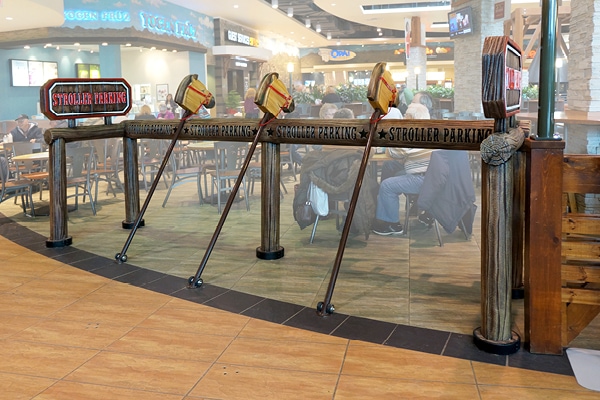
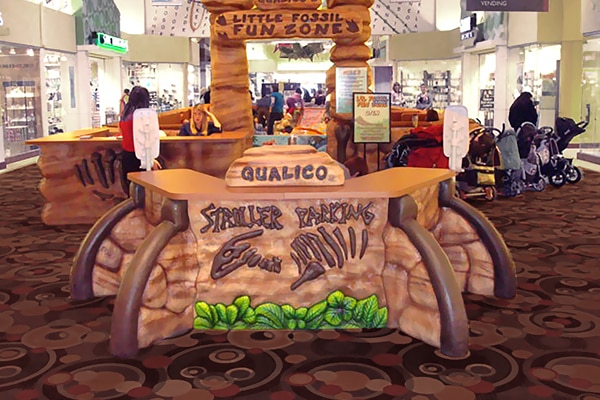
Plan for Stroller Parking

Families with children of all ages will want to come to your play area. Make it as convenient as possible for them by providing a space for them to store their bulky strollers.

Providing a designated space for stroller storage can help eliminate any potential hazards or clutter that may disrupt the play area. Having a safe and easily accessible place to store strollers also makes it more convenient for families with young children, as they won’t have to worry about maneuvering a bulky stroller through a crowded play area.

Follow This Guide to Create the Perfect Indoor Family Play Area

The benefits these play areas can offer parents and kids alike make them invaluable. Now that you have this information in mind, why not consider creating one at your own location? With this list you should be on your way to making an amazing play area for children in any business or location. So don’t hesitate, let the kids go play!


Want more resources related to this topic?

The Secret to Attracting Young Families to Your Shopping Center

Playful Photo Op Inspiration

Play Areas & Kids Clubs

Don’t know where to start with creating your indoor playground? One of our Creative Consultants would love to help. Contact Imagination Design Studios (IDS) to get started transforming your facility from a mundane to a magical guest experience.

FOUND THIS ARTICLE HELPFUL?

SHARE THE LOVE!

  • envelope

RELATED POSTS

Explore the Best Children’s Murals for Walls to Transform Any Room

Pediatric Dental Office Design: Why Every Practice Needs a Fun Brushing Station

Child-First Design for Pediatric Dental and Medical Spaces

How Creative Decor Can Benefit Pediatric Therapy Clinics

In pediatric therapy clinics, creating a welcoming and comforting environment is crucial for helping children of all ages feel at ease during their treatments. Incorporating unique elements like colorful murals, age-appropriate activities, and engaging furniture pieces can not only create an inviting atmosphere for patients but also elicit positive outcomes.

But the benefits of a well-designed therapy space go beyond just the patients.

By creating a fun and engaging environment, you can boost morale and productivity for you and your staff.

A well-branded space can help promote your business and services to potential clients and donors, giving you a marketing boost.

Investing in the design of your therapy space can be a powerful way to enhance the visitor experience for everyone involved.

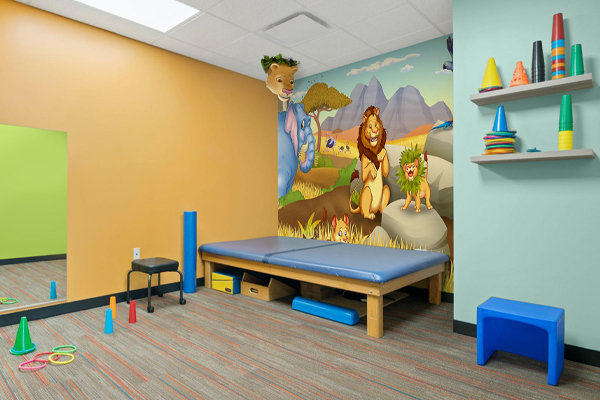
A cheerful pediatric therapy room showcases vibrant therapy clinic decor with colorful cones, rings, and a blue bench. A padded therapy table rests against a wall featuring a mural of cartoon jungle animals like a lion and giraffe.

In this article, we’ll explore why adding creative decor is beneficial for pediatric therapy practices, as well as how you can start incorporating them into your own clinic today.


Engage Pediatric Patients with Creative Visuals in Therapy Spaces

In the world of pediatric therapy, creating a welcoming and engaging environment can be just as important as the therapy itself. By incorporating friendly visuals into your therapy space, you can create an atmosphere that is inviting and reassuring for your patients.

Fun decor can include anything from colorful murals and wall art to mascot characters to playful and age-appropriate toys and games.

The goal is to create an environment that feels safe and familiar to children, which can help to alleviate any anxiety or apprehension they may feel about their therapy sessions.

Creating a comfortable environment is essential to providing exceptional care in any healthcare setting, and this is especially true for pediatric therapy clinics. With kid-centric decor, you can create a safe space for children to receive their treatments without feeling overwhelmed by the clinical atmosphere of a traditional healthcare facility.

By adding decor that is specifically designed with children in mind, you can create a space that is safe and welcoming for your patients. Utilize furniture that is child-sized, colors that they enjoy, and toys made for their development stage

Additionally, custom theming can further enhance the experience, creating a sense of wonder that can help ease anxiety and create a more relaxing atmosphere. Theme parks and play areas use theming to transport children to magical environments. Medical facilities can do the same!


Personalized Touches in Pediatric Therapy Environments Make Your Space Welcoming to All

Personal touches can create a sense of community and belonging within your clinic. Donors, clients, and staff can all feel a sense of pride in being part of something positive and impactful.


Honor Contributions with a Donor Wall

A donor wall can recognize the people and organizations that have made contributions to your business. By prominently displaying the names and logos of your donors, you can create a sense of pride and ownership among your supporters, which can help to deepen their connection to your organization. In turn, this can lead to increased word-of-mouth referrals and positive reviews, which can help to attract new clients and donors.

Additionally, a well-designed donor wall can serve as a powerful branding tool, conveying your organization’s values and vision to potential clients and partners. A creative donor wall is a great way to add decoration and meaning at the same time.

Newly installed donor wall at the facility for children with autism.

A well-supported facility is attractive to parents. If they know their children will have additional funding and support, they will be more willing to trust your level of care.

Ultimately, adding an attractive donor wall to your facility can help to build trust, inspire loyalty, and create a sense of community, all of which can be invaluable for growing your business and achieving your goals.


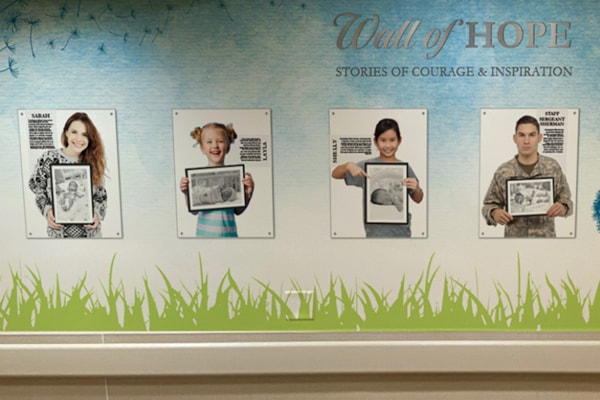
Celebrate Success Stories with Custom Decor

Success stories can inspire and motivate your clients. Seeing examples of other people who have overcome similar challenges can help clients believe that they too can achieve success.

By showcasing success stories and highlighting the accomplishments of your patients, you can build trust with potential clients. Seeing evidence of positive outcomes can make people more likely to trust in your ability to help them.

Overall, incorporating personal touches into your therapy clinic decor can create a more welcoming and inspiring environment that helps build trust, motivation, and a sense of community.


Design Attractive Pediatric Therapy Facilities to Attract Skilled Staff

Recently, there has been a challenge for many types of healthcare employers in attracting and retaining staff. During the pandemic, many workers in the healthcare industry retired, took jobs where they could work from home, or switched career paths entirely.

Businesses need to stand out now if they want to attract staff. An attractive office that shows it cares about the comfort of children will stand out to those who want to go above and beyond to help children.

Themed decor can even make the day to day jobs of you and your staff easier. By putting young patients at ease, appointments become easier, children become more cooperative, and the stress of a combative patient is no longer a daily battle for your employees. Children are excited to come to your space.

Your office atmosphere can have a direct impact on the appeal your employees have towards coming to work. Just like you don’t want to go home to a cold, clinical room, your employees don’t want to walk into a workspace that isn’t inviting. Workers spend a majority of their day on the job, make that space an enjoyable one to be in.

From Mawish Baber, the operations director at the Andalusia Clinics for Kids Wellness:

Hiring pediatricians is no longer a challenge – once they set foot in the facility they want to work here because the decor speaks to our philosophy and dedication to helping kids.

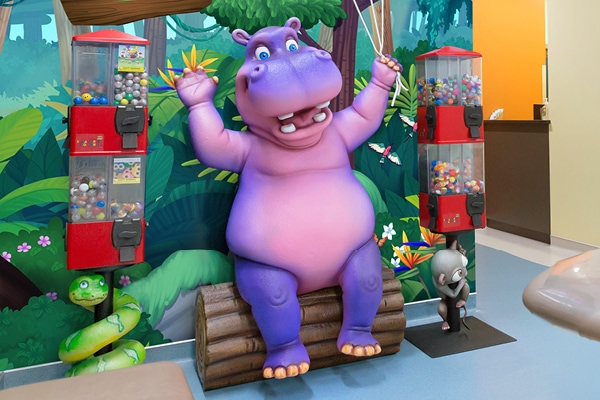
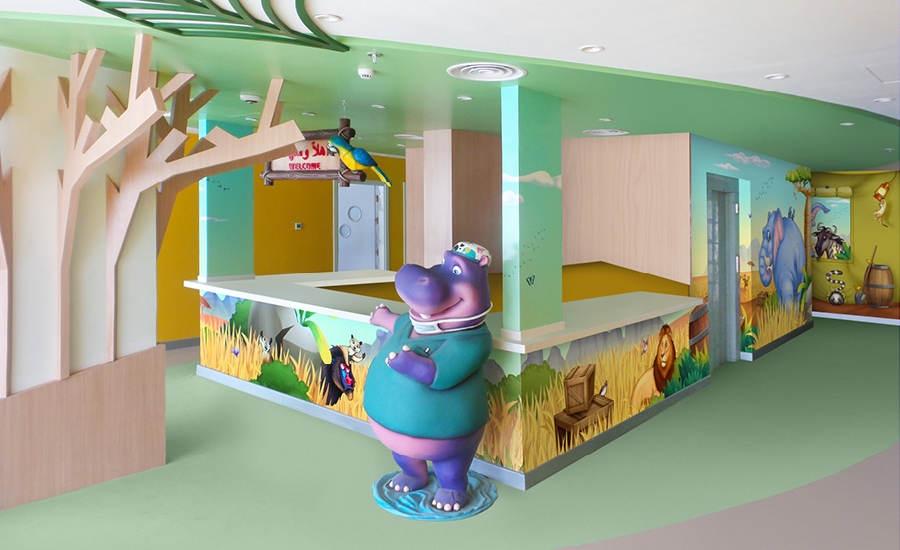
Savannah-themed wall murals, sculpted hippo character wearing medical scrubs and contemporary trees for children's hospital unit desk.


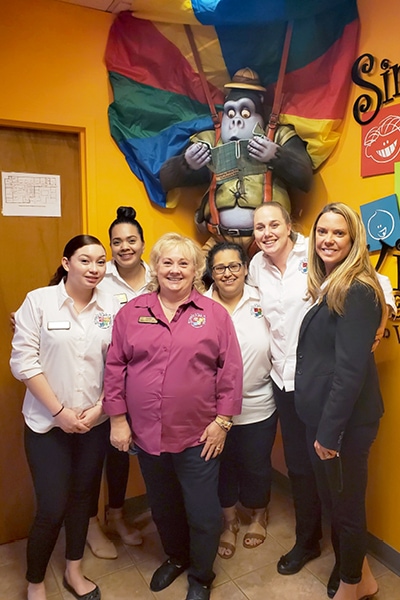
Or consider what it’s like for an interviewee to walk into a vibrant and exciting reception area with a parachuting gorilla to welcome them.

My first expression walking into my office for an interview was WOW!! I wanted the job at first sight just by how the office appeared.

– Candace Chavez, Practice Administrator

When you have a unique space, people will fight to work in one of your themed offices.


Brand Your Pediatric Therapy Clinic with Distinctive Decor

Tell Your Brand Story with Visuals

Your brand is the thoughts and emotions that consumers have when they think of you, and this includes your physical environment. Parents are looking for a wonderful care facility, one that is not only providing the best quality of life for their children, but that is fun and friendly and that their children enjoy visiting. Prove to parents that you fit this description with a friendly, caring, kid-focused brand – showcase your ability to ensure every child feels safe, secure, and supported with an environment tailored just for them!

Immersive and cohesive decor with a theme appears more professional and thoughtful than a few touches here and there.

Promote your environmental brand by taking photos of your therapy spaces and decor and make sure they appear in your Google business listing, your website, and of course, on your social media.

Social media is key! The big social media platforms are focusing on video and photos, rather than text.

More and more advertising your business is about visually stimulating content. Showing off your beautiful, kid-friendly facility in office tours and photos will make you stand out from a cold, clinical competitor. By incorporating your clinic’s branding into the furniture and accessories, you can create a cohesive and recognizable look that reinforces your clinic’s identity and makes a positive impression on patients and their families.

Whether you focus on pediatric occupational therapy, physical therapy, or speech-language pathology, the physical space you work in should resonate with children.


Great Decor Leads to Positive Reviews and Referrals

Even better for promoting your business are positive reviews and referrals. When patients feel valued and supported, they may experience an increase in self-confidence and resilience which can lead to greater success in their rehabilitation.

Furthermore, research has shown that providing a nurturing environment during each session leads to higher patient satisfaction rates, which will result in happier parents more willing to share your business with others.


The Impact of Therapeutic Decor on Pediatric Patient Care

Custom themed environments for therapy centers are one of many tools available when it comes to creating an inviting and stimulating environment for pediatric therapy clinics and their patients. The use of bright colors, engaging visuals, and personalized touches has been proven to improve patient morale while also providing comfort during medical treatments.

For these reasons and more, custom theming should be considered an important part of any successful pediatric therapy clinic’s approach to caregiving!


Interested in learning more? Check out these related resources on themed environments and their benefits:

Design and Decor Tips for Creating Pediatric Healthcare Spaces

5 Ways to Improve Pediatric Patient Experience in Your Medical Clinic

Pediatric Therapy Facility Decor Inspiration

8 Color Schemes and What They Mean for Your Office Vibe

Improve the Experience of Pediatric Therapy Patients with Fun Decor

Color and Light in Interior Spaces for Children with Autism

Contact Imagination Design Studios (IDS) to get started transforming your office from a mundane to a magical patient experience.

FOUND THIS ARTICLE HELPFUL?

SHARE THE LOVE!

  • envelope

RELATED POSTS

Explore the Best Children’s Murals for Walls to Transform Any Room

Pediatric Dental Office Design: Why Every Practice Needs a Fun Brushing Station

Child-First Design for Pediatric Dental and Medical Spaces

Keep Guests on Track with 7 Types of Fun Wayfinding Signage for Pediatric Healthcare Spaces

Signs, signs, everywhere a sign!

Signs are a very important part of your visitor experience. They let people know  ‘where am I?’, ‘where is my destination?’ and ‘how do I get from here to there?’.

Wayfinding signage is an essential aspect of any business or facility, and it goes beyond just guiding people from one place to another. It is a critical component in creating an organic guest experience that makes visitors feel comfortable and confident in your space. Effective wayfinding signage provides clear and accurate information about the layout and features of the space, from restrooms and exits to amenities and services.

Cartoon of two electric eels sending sparks around a wooden sign that reads CHARGING STATION, perfect for children's decor or as playful wayfinding art in a pediatric dental clinic, with green plants and coins in the background.

We’re going to focus on child-friendly signage and how to help

While wayfinding signage is not meant to advertise or promote, it does play a vital role in portraying a positive company image and strengthening your brand. It helps visitors to navigate your space with ease, making their experience more enjoyable and memorable.

We’re going to dive into images from the IDS archives and take a look at different types of signs, their purpose, and let you know why they are so important to creating a great environment for children.

7 Types of Signs You Should Use in Your Family-friendly Business

There are many different types of wayfinding signage that can be used to help people find their way: identification, informational, directional, and regulatory. Some of these signs can be more fun and interactive than others. Let’s take a look at some great examples of fun signage that will appeal to children and their families.

1. Welcome Signs

Welcome guests to your office in the most obvious way… with a giant welcome sign! Welcome signs are a type of wayfinding signage that is specifically designed to greet and orient visitors to a business. They create a positive first impression and help visitors feel more at ease when they arrive at your business.

Jungle themed door mural that reads "Welcome!"
Plank themed welcome sign a little crab perched on top.
A leaf themed welcome sign being held up by a dinosaur pals.
Circus themed "Welcome" sign.
Custom "Welcome" sign with a flamingo and lemur playing tug of war with floss.

A well-designed welcome sign can communicate important messages about the business’s brand, such as its personality, values, and the products or services it offers. This can help to establish a brand identity that customers can connect with.

Logo Welcome Signs

You don’t have to say the word ‘welcome’ when inviting guests in – welcome guests with confirmation that they are in the right location with a big bold sign showing your name or logo.

Iceberg themed sign decorated with penguins and reads "Young & Polite Children's Dentistry".
Jungle themed sign reading "Children's Dentistry of Pocatello".
Custom 3D themed sign of a frog holding a surfboard that reads "Welcome to Smiling Frog Valencia".

2. Directional Signage

Wayfinding signs can help visitors orient themselves and find their way around your business, reducing the risk of them getting lost or feeling frustrated. They will also feel empowered as they will be able to find what they are looking for without having to ask for assistance.

Overall, directional signs are an essential element of wayfinding in a business, helping customers to navigate the space and enhancing their experience. By providing clear directions, saving time, enhancing the customer experience, and establishing brand identity, directional signs can play a crucial role in a business’s success.

Bathroom Signage

Every sign can be themed. Bright, bold colors make these bathroom signs stand out and catch people’s attention.

Instead of traditional bathroom signage, use playful language, silly characters, or puns to make the signs more fun and lighthearted. This appeals to children and will leave a good impression on their parents.

Room and Chair Designations

While wayfinding encompasses many different aspects of navigation, helping people find their intended chair or treatment room is a key component.

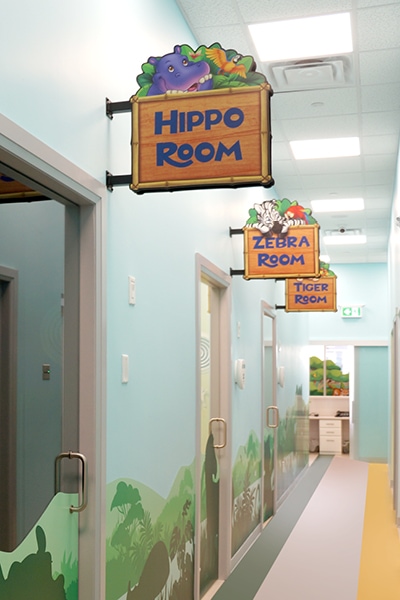
To ensure your dental office signage is effective for all age groups, it’s important to consider the needs and abilities of each demographic. For example, if you work with young patients in a pediatric environment, it’s likely that they won’t be able to read a written sign. In such cases, incorporating easily recognizable characters or imagery can be an effective way to help children navigate the space. For instance, the “hippo room” and “zebra room” names may be difficult for a child to read, but associating them with the corresponding animal characters can make it easy for them to identify the rooms at a glance. By considering the needs of different age groups and incorporating visual cues, you can create signage that is both functional and engaging for all patients.

By helping visitors navigate your business more easily and feel more comfortable, navigational signs can contribute to overall customer satisfaction.

3. Label Signs

The importance of clear and concise signage cannot be overstated. In the examples below, visitors will know exactly what each station is used for and if it is for them to use.


4. Monument Exterior Signs

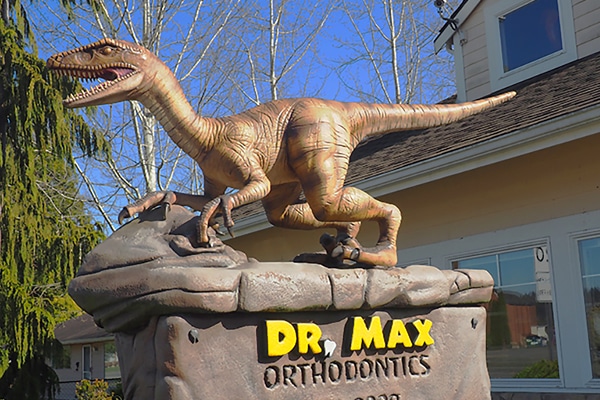
Monument exterior signs are large, freestanding signs. These signs are often located at the entrance to a property, or along a busy road or highway. Monument exterior signs are highly visible and can help draw attention to your business, especially from people driving by or passing by on foot.

A well-designed monument exterior sign can help establish your business as a fun, friendly place catering to children and families.

5. Pylon Street Signs

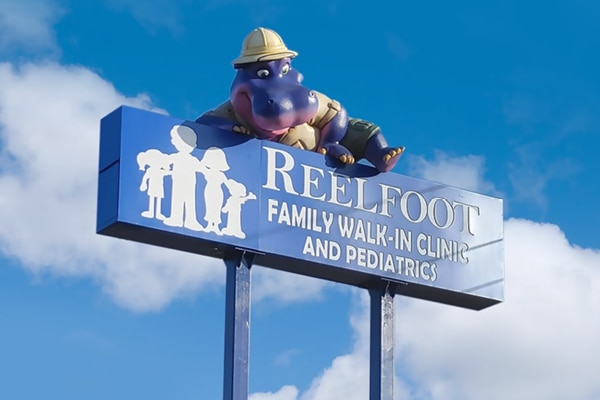
Functioning similarly to a monument sign but towering hiiigh above traffic, a pylon sign is an excellent way to create a high-impact billboard for your business. By utilizing a tall structure, a pylon sign can be seen from a greater distance, making it an effective tool for attracting new customers and promoting your brand.

Pylon signs are often located near highways or other high-traffic areas, making them an ideal choice for businesses that want to increase their visibility and stand out from the competition. With eye-catching graphics and clear messaging, a pylon sign can be a powerful marketing tool that helps to increase brand recognition and drive sales.


NEED NEW SIGNAGE
FOR YOUR OFFICE?


6. Building Signage

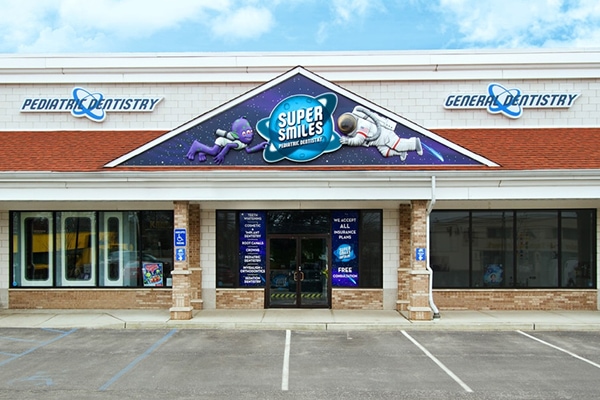
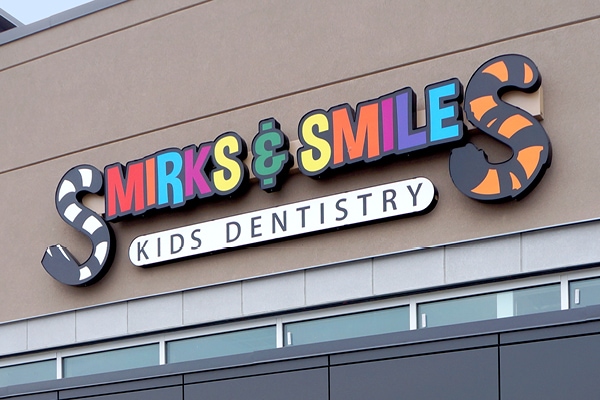
By incorporating big, bold, and 3D exterior signage on their building, businesses can increase their visibility and effectively convey the type of experience customers can expect inside.

Colorful characters can also be added to building signage to make the sign visually engaging and interesting, catching the attention of passersby. Everyone will know your business is meant for kids with this winning combination of colors, characters, and fun!

Such signage can also help your business stand out from the competition and make a memorable impression on potential customers. By investing in attention-grabbing signage, businesses can increase foot traffic and ultimately drive sales.

7. Fun and Educational Signs and Graphics

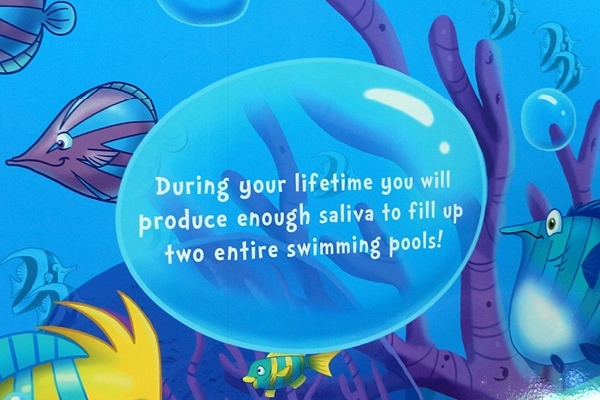
Signs and graphics are not only informative but can also be educational and fun for children. This is especially true in children’s museums, where signs and displays are designed to teach young visitors about a variety of topics in a visually engaging way.

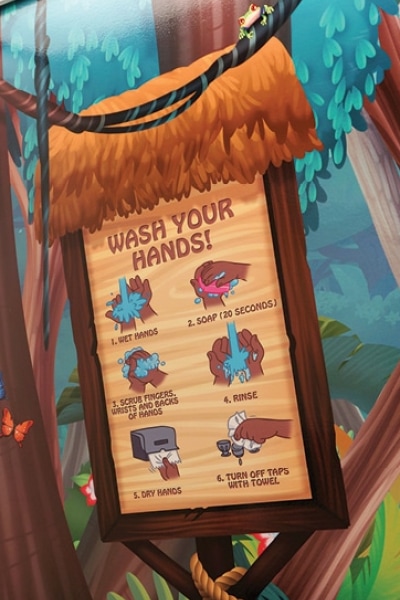
Colorful and interactive signs with graphics and illustrations can help children retain information better and make the learning experience more enjoyable. Use this technique in your dental office for a fun and engaging experience.

Infographic signs use visual elements, such as charts, diagrams, and icons, to convey information in a clear, but approachable, way. Infographics can be used to provide patients with information about how to maintain good oral hygiene, such as brushing and flossing techniques, and the importance of regular check-ups.

Overall, signs play an important role in helping customers and children navigate through your family-friendly business and communicate important information about your fun brand. Have fun with your wayfinding and make your business the first choice for families in your community!

Want some amazing child-friendly signage of your own? Connect with one of our Creative Consultants today to learn how you can get your own unforgettable wayfinding experience!


Check out more inspiring signage and wayfinding ideas for your office:

Signage & Wayfinding

Landmark Characters

Create a Memorable Patient Experience Through Dental Office Interior Design and Decor

Design and Decor Tips for Creating Pediatric Healthcare Spaces

Contact Imagination Design Studios (IDS) to get started transforming your office from a mundane to a magical patient experience.

FOUND THIS ARTICLE HELPFUL?

SHARE THE LOVE!

  • envelope

RELATED POSTS

Pediatric Dental Office Design: Why Every Practice Needs a Fun Brushing Station

Explore the Best Children’s Murals for Walls to Transform Any Room

Child-First Design for Pediatric Dental and Medical Spaces

Tips for Creating a Presentation Area in Your Children’s Library

A library’s storytime area or presentation area is a great space to engage with your community and draw attention to your library. Having exciting decor in a library’s interior area can be a great way to appeal to kids and families. Kids will be excited to attend events and visit the library knowing that it has a space built for them.

Here are ways you can enhance your presentation area and leave an impression on your visitors.


Choosing the Ideal Space for Your Library’s Children’s Presentation Area

When selecting a space in your children’s library that can be dedicated to presentations and storytime with kids, there are several factors to consider to ensure it is appropriate and functional for the purpose.

Firstly, it is important to choose a space that is easily accessible to visitors, especially families with young children where stroller parking space is a factor to consider. Consider a location that is on the main floor, near the entrance, or in an area with high traffic. This will help to increase visibility and encourage visitors to use the presentation area.

Secondly, the space should be visible from various parts of the library. Choose a location that is visible from the circulation desk or other busy areas, such as the children’s section. This will help to promote the use of the presentation area and ensure that visitors know where to go for events and activities.

Thirdly, the space should be large enough to accommodate groups of children and their caregivers comfortably. Consider the average size of groups attending events, and ensure there is enough seating and floor space to accommodate them.

Finally, consider the acoustics of the space. Make sure that it is quiet enough for presenters to be heard without distraction, while also ensuring that it is not too quiet that it dampens the energy of the events.


Comfortable and Inclusive Seating Options for Library Storytime Areas

It’s important to choose seating options that are comfortable for children and their caregivers. Plan for all ages, from toddlers to grandparents. Floor cushions, bean bags, and kid-sized chairs are great options for children, while adult-sized chairs or benches are suitable for caregivers. You may also want to consider providing some tables for children to use for drawing or other activities during events.

The seating arrangement should be designed to allow for optimal viewing and participation. Consider a semi-circle or U-shaped seating arrangement, which allows for good visibility and participation for all attendees.

A group of young children sit in a semicircle on curved green couches in a library presentation area, listening to an adult standing in front of an alphabet-themed rug. Bookshelves and large windows are in the background.

Adding a small stage or podium can create a focal point for presenters and make the presentation area feel more professional. A podium or stage can also make it easier for presenters to be heard and seen by the audience, especially if the space is large or if there are distractions from other library activities.

By considering the seating and layout of the presentation area, you can create a comfortable and engaging space that will encourage children to participate in literacy activities and events and promote a love of reading.


Enhancing Library Presentation Areas with Essential Multimedia Tools

Adding multimedia equipment to a presentation area in a children’s library can greatly enhance the experience for attendees and presenters. Equip the area with multimedia tools such as a projector, screen, TV, and sound system equipped with a microphone, so that presenters can easily share visual aids, videos, or music with the audience.

If you can, add lighting or a spotlight to draw attention to your presenter.

By equipping the presentation area with multimedia tools, the library can create a more professional and polished environment for events and activities. This can help to attract high-quality presenters and improve the overall reputation of the library.


Creative Decorating Ideas for Inviting Library Presentation Spaces

Make the presentation area visually appealing and inviting for children by adding colorful artwork and murals.

Using Creative Backdrops to Transform Library Presentation Areas

Consider using creative backdrops within your decor to really set the scene at your presentation area. Depending on the atmosphere that your library is going for, you can have anything from abstract, contemporary art to fun and whimsical pieces on your interior walls.

theater themed selfie stage in pediatric dentist office

These unique pieces can also create fun backgrounds for photos that you or your visitors can use on social media when not in use.

Create Wonder in Your Library Presentation Area with a Theme

Consider choosing a theme that reflects the library’s mission or focus, such as nature, animals, or a specific literary genre. This can help to create a cohesive and visually appealing space that ties in with the library’s overall brand. Theming is also a great way to immerse your guests and keep them engaged during presentations.


Themes can include having a woodland forest theme and surrounding your guests with the beauty of trees and the natural environment, allowing them to stay connected to nature indoors.

Or transport children under the sea with a sunken ship presentation area with sharks and fish eagerly watching the speaker.

Having a unique theme and characters that come with it can create a central landmark for your space and help focus attention on your little ones. These spaces can also be talking points for your presentees to help break the ice with their audience.

There are many ways that a library can add exciting, themed decor to its presentation area to appeal to kids and families. Creative backdrops, unique murals, and creating wonder are great ways to begin crafting the environment that you and your visitors will enjoy. With unique environments and themed spaces, your library will be filled with eager visitors and, even better, eager readers.


Engage with the Community in Your Library’s Presentation Area

Ultimately if you want to build an amazing presentation area in your library, you need to engage the community. People are what makes your library a success!

Involve local schools, community groups, and parent organizations in the presentation area’s activities to build partnerships and strengthen community engagement. Plan regular events and activities, such as author visits, book clubs, storytelling sessions, or craft workshops, that can take place in the presentation area. Make sure to promote these events through your library’s website, social media, and other marketing channels.

By following these steps, you can create a presentation area in your children’s library that promotes literacy, engages young readers, and fosters a love of learning.


Check out these related resources for making your library an exciting place to learn:

4 Ways Social Media Can Help Promote Your Library

Say Cheese! Playful Photo Op Inspiration

The Benefits of Themed Decor for Kids

Explore Examples of Children’s Library Decor

Contact Imagination Design Studios (IDS) to get started transforming your library into a place that captures everyone’s attention!

FOUND THIS ARTICLE HELPFUL?

SHARE THE LOVE!

  • envelope

RELATED POSTS

Explore the Best Children’s Murals for Walls to Transform Any Room

Pediatric Dental Office Design: Why Every Practice Needs a Fun Brushing Station

Child-First Design for Pediatric Dental and Medical Spaces

Creating a Sense of Nostalgia for The Next Generation of Kids

nos·tal·gia

The wistful yearning to return to a magical moment from your youth.

In recent years, there has been a sad trend of kid-centric places disappearing from public life. From the beloved McDonald’s Playplaces of the 80s and 90s to local ice cream shops and arcades, these spaces filled with fun characters, friendly mascots, play areas, and bright colors have been replaced with more mature establishments.

Places for Kids
Mascots for Kids

This grey washing of our public spaces may result in a generation that could be devoid of fun nostalgia as they look back on the places they visited in their youth. But what if we could bring back this sense of nostalgia; bring back color, bring back fun?


The Benefits of Fun Places for Kids

Millennials’ memories of play places in their childhood will influence how they view your business today. With decor aimed at children, parents will seek to take their children to your location to recreate those magical memories. While McDonald’s attempted to shift its focus away from children to avoid criticism for selling unhealthy food to them, many other companies that can embrace their child-friendly image. Examples include community libraries, children’s ministries, family hair salons, pediatric dental clinics, and mall play areas, which can enhance their appeal to families by incorporating child-focused decor.

Fun places for kids not only create a sense of nostalgia but also provide other benefits to both children and adults. These include increased physical activity, improved social skills and confidence, and strengthened bonds between parent/caregiver and child.


Creating Kid-Centric Spaces with Theming & Bright Colors

To create these much-needed kid-centric spaces, businesses should look at introducing theming, colors, and mascot characters into their establishments.

You can turn any business into a kid-friendly space with:

Creating Memories
Noah’s Ark Children’s Ministry Reception Area
Bayou Play Area
Full view of jungle-themed kid-friendly hair salon showing partition walls with 2D murals, a washing station with 3D sculpted sign, and large waiting area bench wrapped around a 3D sculpted waterfall and characters
Kid-friendly Hair Salon
Backyard themed play area with large central sculpted bee hive game panel kiosk and sculpted worm base sitting stools.
Insect Mall Play Area

Even small changes can make a big difference – something as simple as introducing bright colors or adding a character can create an instant connection with kids while still appealing to adults.

Mushroom Library Reading Area

Compare those examples to what happened to Mcdonald’s. Great for adults, but not inviting for the imagination of children.

I don’t remember kids asking to take the fun away and replace it with beige.

By creating kid-friendly environments that are inviting, businesses will be able to capture the hearts (and wallets) of parents while also giving kids their own special place to hang out and have fun.


Become a Place of Nostalgia

While it’s true that many kid-centric places have disappeared from our lives over the past few decades, that doesn’t mean it’s too late to bring them back. By introducing theming and color into our commercial spaces – big or small – we can recapture some of the fun nostalgia of childhood for the new generation while providing significant benefits for all involved.

It’s time to bring back the fun!


Do you like this article? Here are a few other resources that you might be interested in:

5 Benefits of a Mascot for Pediatric Dental Offices

Play Areas & Kids Clubs

Landmark Characters

 Contact Imagination Design Studios (IDS) to get started transforming your facility from a mundane to a magical guest experience.

FOUND THIS ARTICLE HELPFUL?

SHARE THE LOVE!

  • envelope

RELATED POSTS

Top 10 Waiting Room Toys to Enhance Your Pediatric Healthcare Space

Enhancing ABA Therapy Centers with Themed Decor

How to Use Technology to Help Your Dental Practice in 2024

CONNECT WITH A CREATIVE CONSULTANT

GET STARTED TODAY

blue-heart

Add a note to this photo: