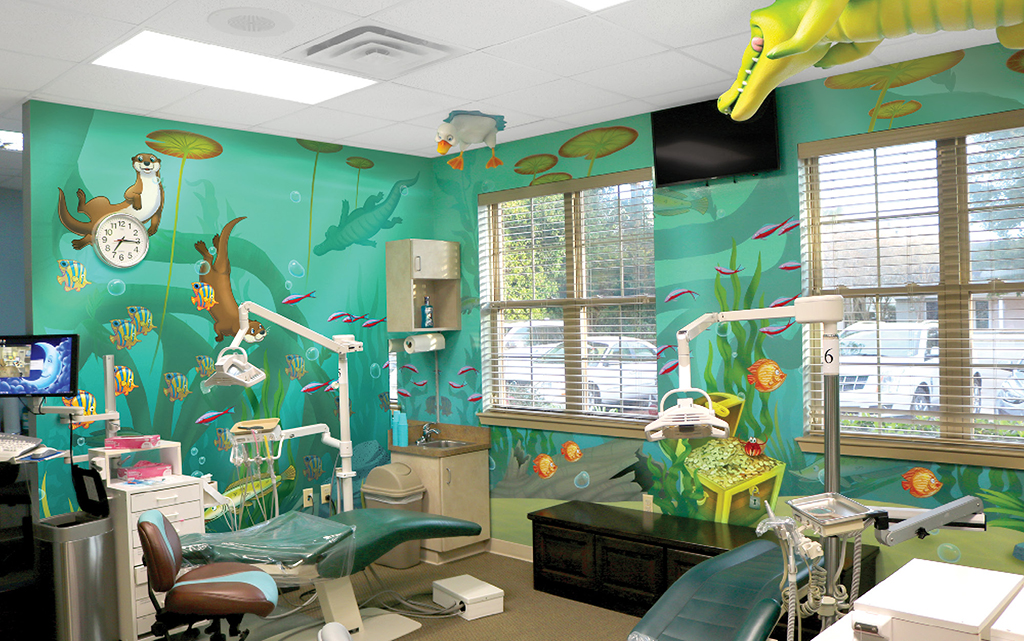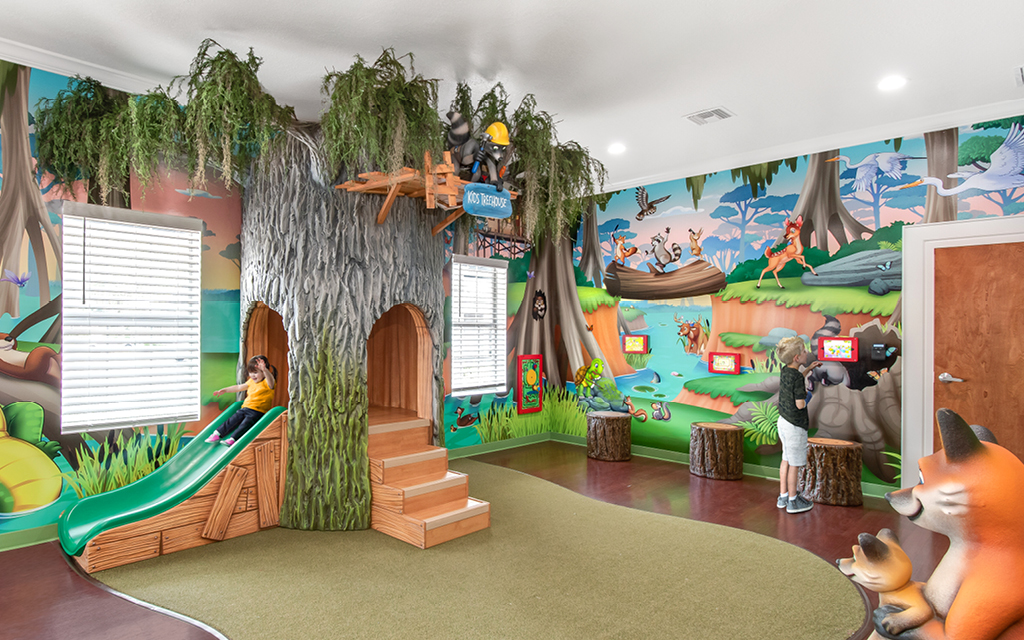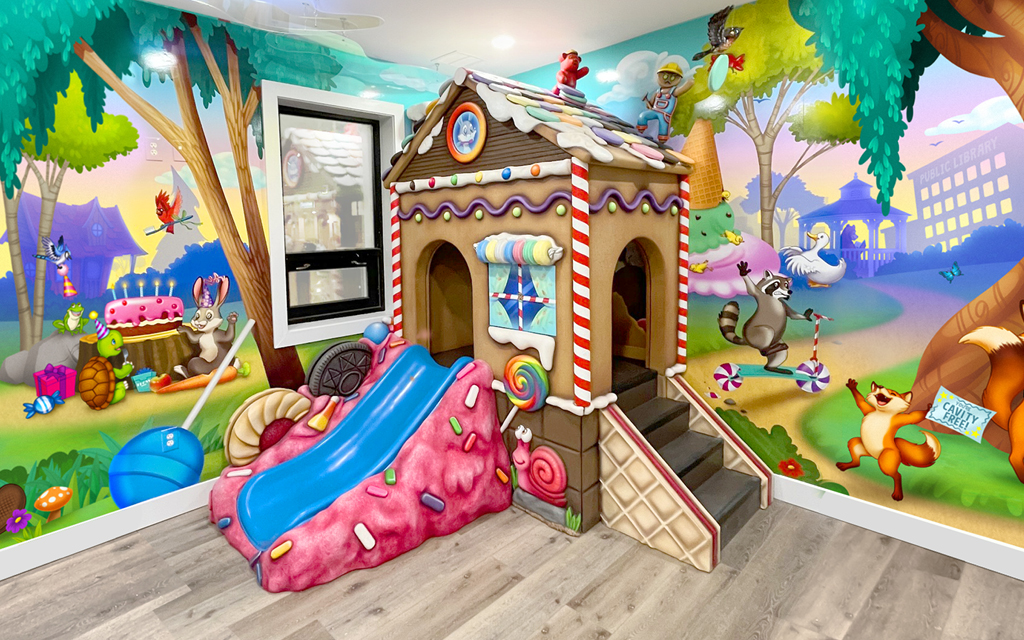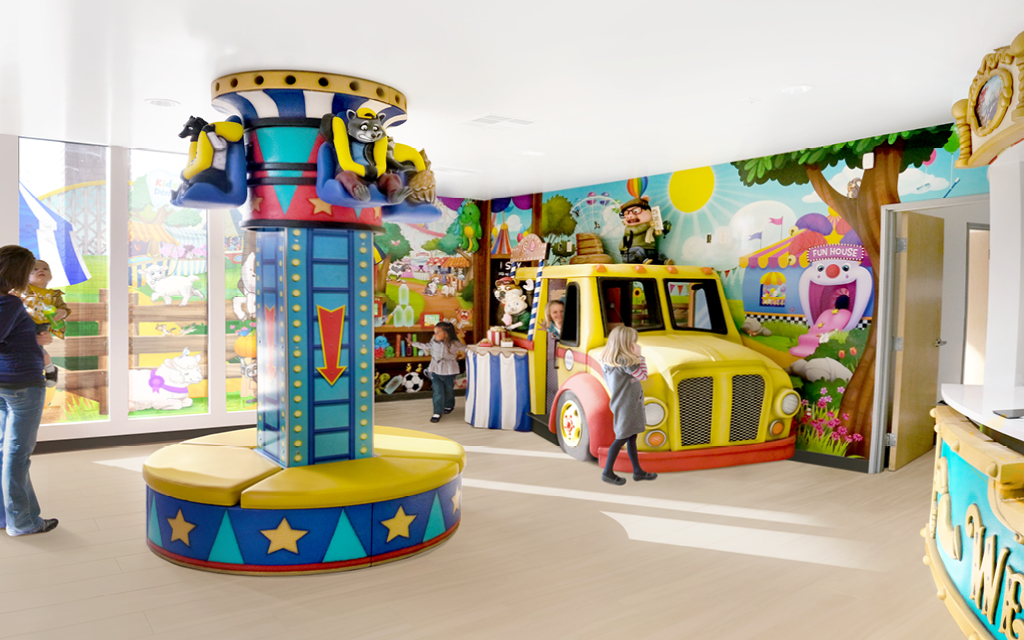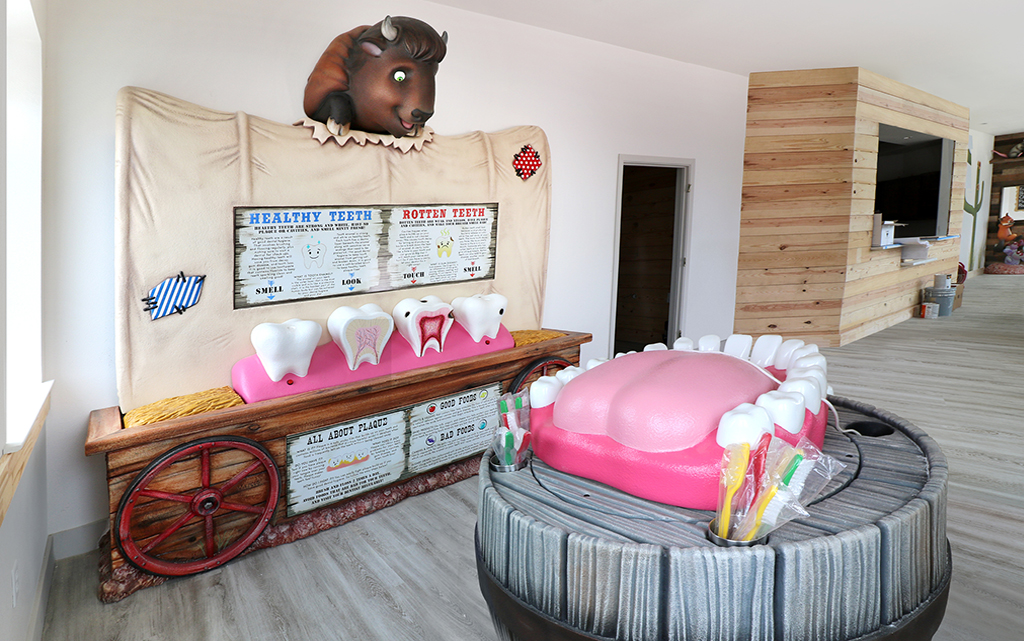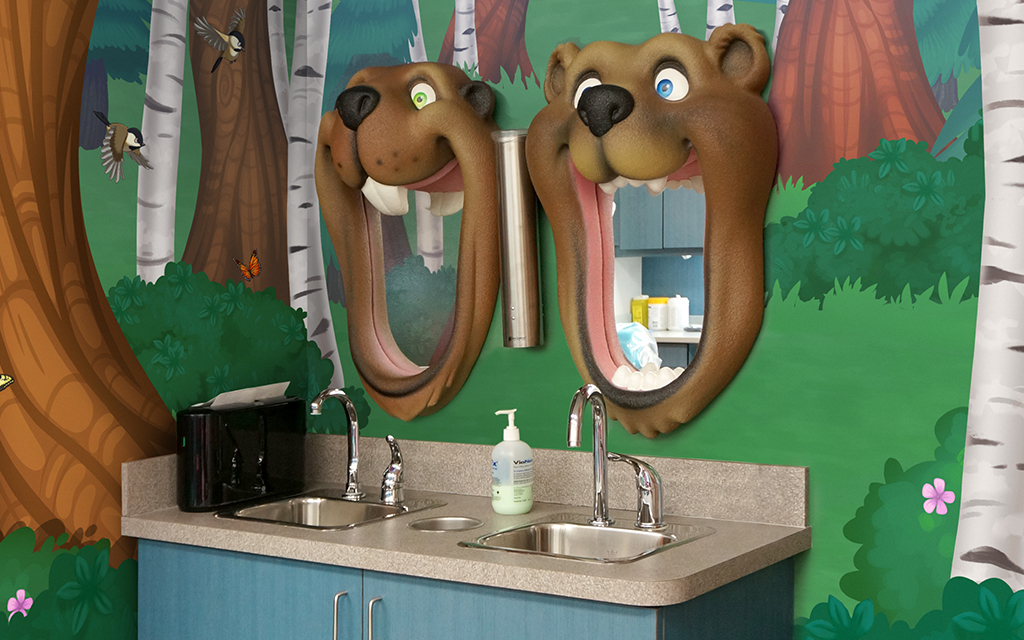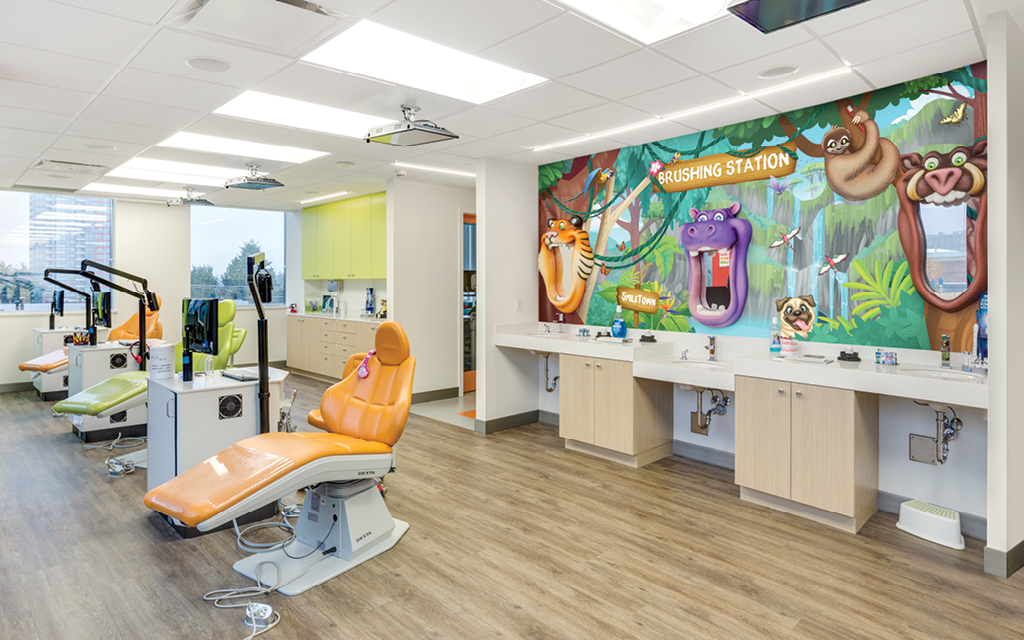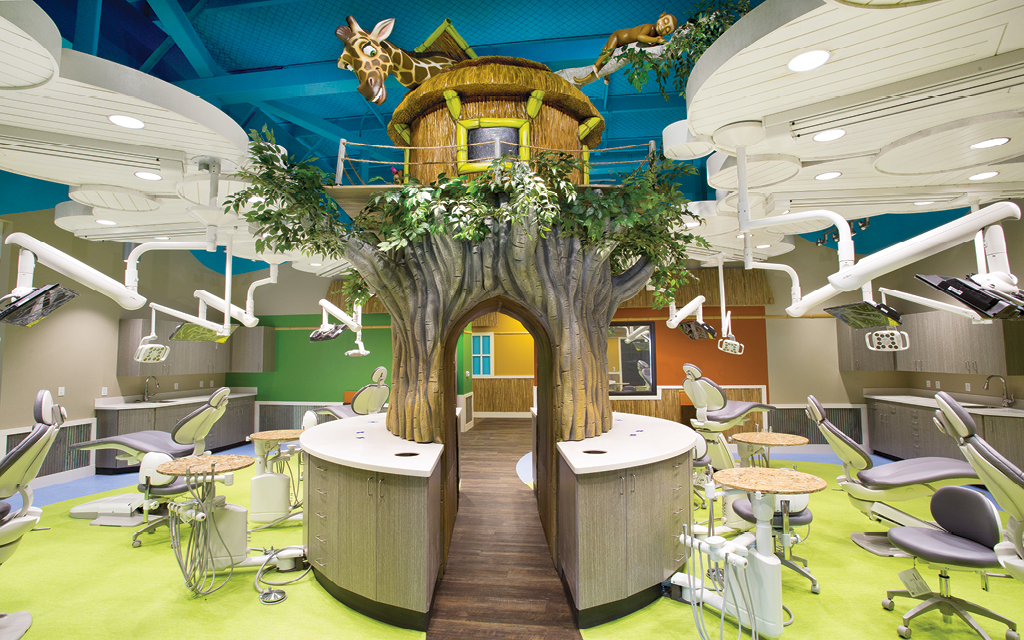
Pediatric Dental Office Design: Why Every Practice Needs a Fun Brushing Station

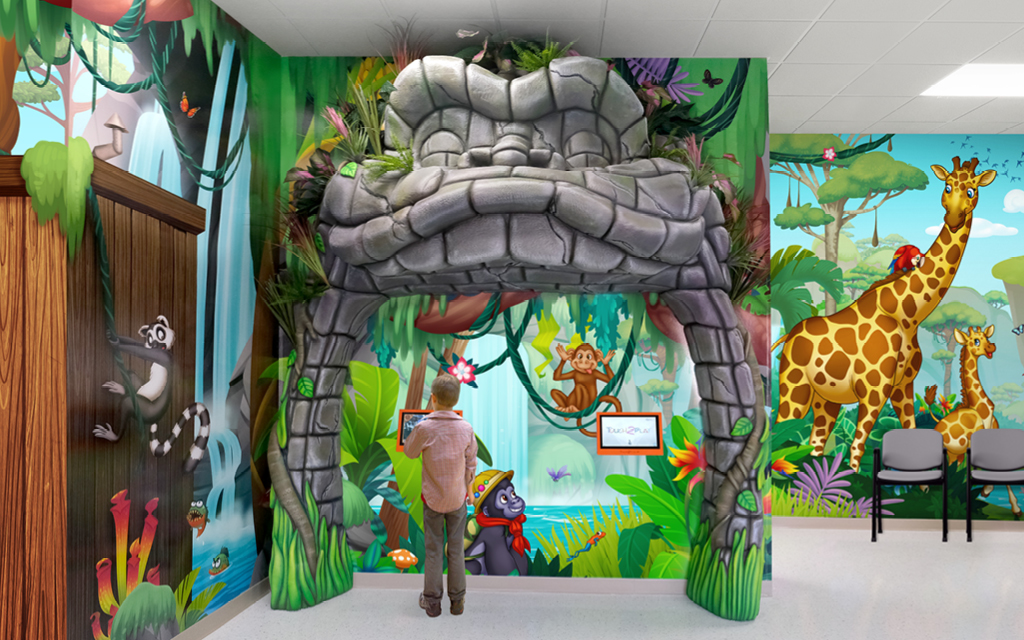
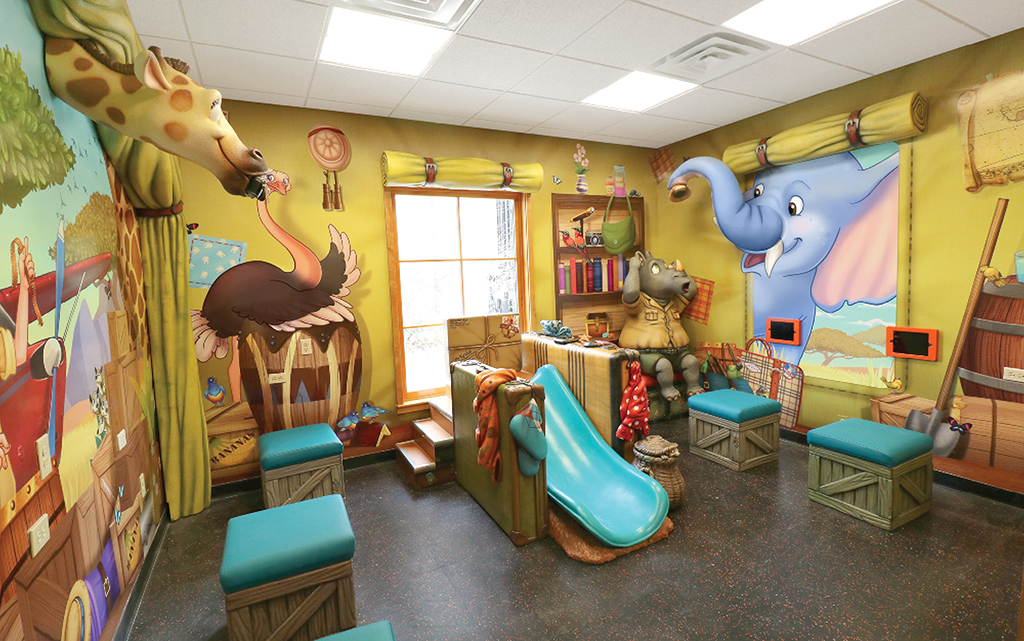
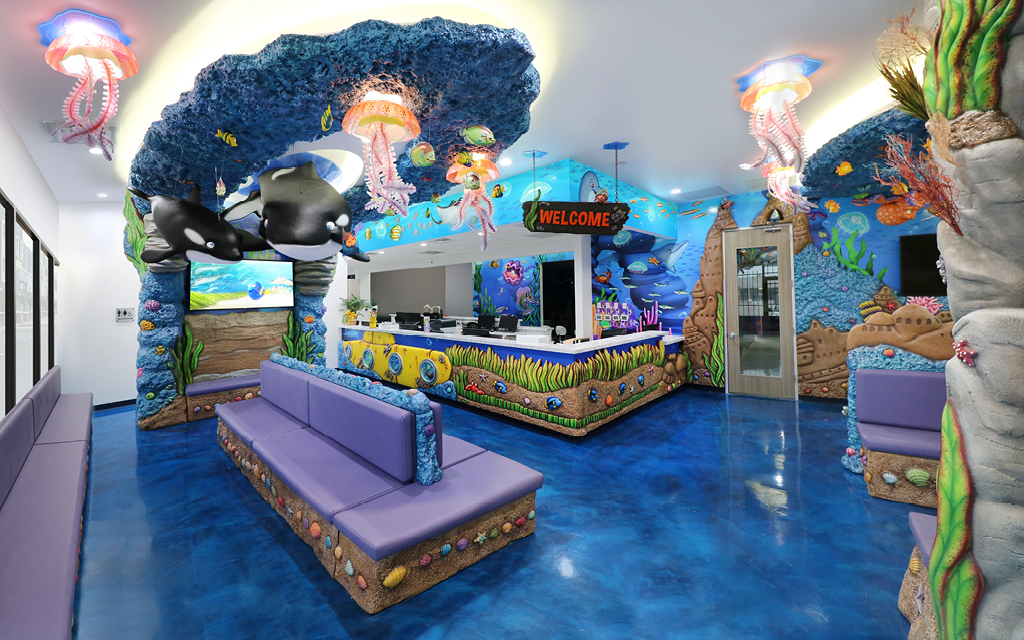
When planning a successful pediatric dental office, every detail matters. From the waiting area to the treatment rooms, thoughtful pediatric dental office design can help children feel more comfortable, reduce anxiety, and support a better overall patient experience.

One feature that we love to focus on is the brushing area.

A fun, well-designed brushing station for a dental office can do far more than provide a place for children to brush their teeth. In a themed pediatric dental office, it can become an educational tool, a confidence-building moment, and an important part of how your team teaches healthy habits.

For pediatric dentists, brushing stations and brushing mirrors for dental offices offer a practical way to combine preventive education with child-friendly design.

EXPLORE THEMED BRUSHING STATIONS


Why Brushing Stations Matter in Pediatric Dental Office Design

Children learn best when they can see, copy, and practice. That is why a brushing station can be such a valuable part of dental office design for children.

Instead of only telling young patients how to brush, your team can show them. A brushing mirror gives children the chance to watch themselves while they practice, making the lesson more interactive and easier to remember.

In a pediatric dental office, these moments matter. A child who is relaxed and engaged is often more willing to listen, participate, and leave with a positive memory of the visit. That is one reason why thoughtful kids dental office design is about more than appearance. It should support the way children move through the space, learn in the space, and feel in the space.


The Purpose of a Fun Brushing Station in a Pediatric Dental Office

A fun brushing station is not just there to look cute. It has a real purpose in a pediatric dentist office.

A dental hygienist in peach scrubs helps a young girl brush a toy crocodiles teeth using a large shark display in a colorful, ocean-themed childrens dental office.

When brushing feels playful and approachable, children are more likely to take part. A themed or colorful station helps turn oral hygiene into a hands-on activity instead of a lecture. That can make it easier for dental staff to teach technique, reinforce good habits, and create a more positive emotional connection to brushing.

A well-planned brushing station for a dental office can help:

  • make oral hygiene instruction more engaging
  • encourage children to practice brushing in the office
  • support parent education during the appointment
  • reinforce preventive care in a memorable way
  • strengthen the child-friendly identity of the practice

For dental teams looking for practical pediatric dentist office ideas, brushing stations are one of the simplest ways to combine education, theming, and function.


What Dental Staff Can Teach at a Brushing Station

A brushing station gives your team a dedicated place to teach oral hygiene education for kids in a visual, hands-on way.

It can be used to show children:

  • where to place the toothbrush
  • how to brush gently and thoroughly
  • how long brushing should last
  • how much toothpaste to use
  • when a parent should help at home
  • why brushing every day matters

Because the child is learning in front of a mirror, the lesson becomes more active. Instead of just hearing instructions, they can see what they are doing and practice in real time.

That makes brushing stations a smart addition to any pediatric dental office design strategy focused on education and patient experience.

Two children holding toothbrushes practice brushing a large model of teeth and gums placed on a wooden table in a brightly lit room.
A childrens dental hygiene station with a large model of teeth, a tooth-shaped sign showing brushing instructions, a sink with a mirror, and wooden-themed cabinets decorated with green plants and a lizard.


Tips for Teaching Kids to Brush in the Office

A brushing station becomes even more effective when your team uses it intentionally. Here are a few simple ways dental staff can make the most of it.

1. Demonstrate First, Then Let the Child Try

Show the brushing motion before asking the child to copy it. Children often learn faster through imitation than explanation.

2. Keep Instructions Simple

Short, repeatable guidance works best. Focus on one or two easy points the child can remember after the visit.

3. Use Child-Friendly Language

Fun, visual phrasing can make a brushing lesson feel less clinical and more approachable.

4. Include the Parent

Parents and guardians know how to brush their own teeth, but do they know how to share that information with a child? A brushing station is also a good place to guide caregivers on how to support brushing at home.

5. Praise Specific Actions

Pointing out exactly what the child did well helps reinforce the behavior and makes the lesson feel achievable.

6. Build It Into the Appointment Flow

When brushing instruction becomes a regular part of visits, it strengthens your pediatric dental patient experience and reinforces your office’s focus on prevention.


Product Spotlight: IDS Brushing Stations and Brushing Mirrors

IDS offers brushing stations and brushing mirrors for dental offices that are designed specifically for child-friendly spaces. These products help transform a standard brushing area into an engaging feature within a pediatric dental office.

A colorful handwashing station with a space theme, featuring painted planets on the ceiling, a mirror framed like a spaceship window, and two sinks below. The wall has stars, planets, and the words “WASHING STATION.”.
A colorful hand washing station with a space theme.
A colorful underwater-themed kids’ bathroom wall featuring 3D cartoon heads—a pirate, a shark, and an alligator—with wide mouths above sinks, and a sign reading “Brushing Station” on a wooden log.
A colorful undersea themed children’s brushing station with cartoon pirate, shark, and alligator heads.
A dental office corner decorated with a tree, white picket fence, birdhouse, and sunflowers. Two oval mirrors are set above sunflower-themed counters, with dental equipment visible on the right.
A dentists office featuring a large artificial tree, birdhouse, butterflies, a white picket fence, sunflower-themed cabinets, and oval mirrors, creating a cheerful, outdoorsy atmosphere.
A large mirror in a brushing station decorated with cartoon jungle animals, including a smiling purple gorilla and birds.
A large mirror decorated with cartoon jungle animal decal.
A Brushing Station with a Hollywood theme, featuring star-shaped mirrors, a cartoon bear statue in a tuxedo holding a microphone, and a vibrant backdrop of city silhouettes and cameras. Red rope barriers are in front.
A colorful “Brushing Station” area with Hollywood-themed decor.

Practices can choose from existing Brushing Mirrors and Wall Murals in the IDS Essentials™ Collection, or work with IDS to create a custom brushing station that fits their office theme, brand, and layout.

This gives pediatric practices flexibility. Whether you are looking for a simple upgrade or a fully themed pediatric dental office feature, IDS offers options that support both function and visual impact.

IDS brushing stations are also designed with durability in mind. The products are made for busy dental environments where easy cleaning and long-term performance matter. That means a practice can invest in a brushing feature that is both playful and practical.

For offices exploring new pediatric dental office ideas, brushing stations are an effective way to support education without sacrificing usability.


A Smart Addition to a Themed Pediatric Dental Office

For practices investing in pediatric dental office design, brushing stations are a small feature with lasting value. They help children feel more comfortable, give staff a tool for teaching better brushing habits, and add a memorable interactive element to the office.

They also support branding. Parents notice when a pediatric dental office has been designed around the needs of children. A fun brushing station shows that your practice cares about more than treatment. It shows that you care about education, comfort, and creating a positive experience from start to finish.

That is what makes brushing stations and brushing mirrors such an effective part of kids dental office design. They are functional, educational, and engaging all at once.


Ready to create a space that inspires confidence and wonder?

FOUND THIS ARTICLE HELPFUL?

SHARE THE LOVE!

  • envelope

RELATED POSTS

Explore the Best Children’s Murals for Walls to Transform Any Room

14 Aquatic Center Design Ideas to Make Your Swim Facility More Memorable

Child-First Design for Pediatric Dental and Medical Spaces

Child-First Design for Pediatric Dental and Medical Spaces

Child-first design starts with a simple premise: a pediatric space should work for a child’s body, nervous system, and sense of safety, not just look “kid-friendly.” When design reduces stress and supports self-regulation, children can cope better with unfamiliar procedures, and caregivers can focus on listening, asking questions, and making decisions. Evidence-based healthcare design links better experiences and outcomes to environments that support controlsocial support, and positive distraction (Ulrich, 2000; Ulrich et al., 2008). 

This blog assumes an outpatient context (pediatric dental clinics and pediatric medical practices/urgent care) serving children roughly ages 2–12, including neurodivergent children and children with disabilities, plus parent/caregiver companions.

Some recommendations must be adapted to local codes, clinical risk assessments, and infection prevention policies (FGI, 2022; CDC, 2016). 


What Child-first Design Means in Healthcare

Adult-focused healthcare interiors often optimize for adult preferences: calm luxury, minimalist finishes, and brand-forward aesthetics.

Child-first design is different: it’s purpose-built around pediatric needs. This includes physical scale, sensory processing, safety, wayfinding, and cleanability all while still respecting clinician workflows and operational realities.

Research on pediatric emergency care environments notes that high-stimulation, “sterile” or confusing settings can be counter-therapeutic for children and families, especially when spaces were not explicitly designed for pediatric users (Gripko et al., 2023). 

A practical way to frame child-first design is “reduce uncertainty and sensory threat while increasing choice and support.” That aligns with supportive design theory and broader evidence-based design findings (Ulrich, 2000; Ulrich et al., 2008). 


Core Child-first Design Principles to Apply to Healthcare Settings

Height and Scale

Make key touchpoints legible and usable for children: child-view signage, lower interactive elements, step stools with handholds at sinks, and child-scale seating options (alongside bariatric and mobility-friendly seating for caregivers). Incorporate accessibility reach ranges and clearances as a baseline, including ADA requirements for operable parts and permitted children’s toilet room provisions where relevant (U.S. DOJ, 2010). 

Sensory Needs and Regulation

Pediatric waiting rooms can become “unpredictable, uncontrollable, and intense,” especially for autistic children; a recent pilot study surfaced themes around triggers, regulation supports, and inclusion (Vetter et al., 2025).  Design responses include: calmer sub-zones, reduced glare, clear expectations (what happens next), and options for quiet positive distraction. A literature review of pediatric public spaces groups effective positive distractions into themes like art/aesthetics, play/interactive tech, sound and lighting interventions, and access to nature, and links them to reduced stress/anxiety and better experiences (Jiang, 2020). 

Real-world pediatric healthcare projects use this same thinking at a larger scale. For example, Shepley Bulfinch’s Boston Children’s Hospital Hale Family Building case study describes interconnected indoor and outdoor garden spaces designed as positive distractions for patients, families, and staff. The project also used full-scale cardboard mockups and simulations to support patient safety, comfort, and planning decisions.

Safety, Supervision, and Dignity

Pediatric safety is not only fall prevention, it’s also eliminating pinch points, sharp edges, unsecured furniture, blind corners, and “escape routes” that place a child in unsafe areas. Design should support line-of-sight supervision without turning the clinic into a surveillance zone.

Accessibility and Inclusive Use

Child-first does not mean “kids only.” It means designing for kids and the adults and assistive devices with them, strollers, wheelchairs, walkers, sensory aids, and siblings. ADA technical standards provide minimum requirements for accessible routes and features (U.S. DOJ, 2010). 

Wayfinding and Predictability

Wayfinding is a clinical intervention in disguise: it lowers cognitive load and prevents late arrivals and frantic, dysregulated transitions. A wayfinding master plan should begin early and integrate signage with color/graphics/patterns and environmental cues, not signage alone (Defense Health Agency, 2022). 

Stanford Children’s Health uses a nature-based wayfinding system where each floor is connected to a different California ecosystem region, making hospital navigation more visual, consistent, and family-friendly.

Materials, Furniture, and Indoor Air Quality

Kids touch everything. Favor durable, easily cleanable surfaces at high-touch zones and choose products that reduce chemical exposure. The EPA notes that levels of some VOCs are commonly higher indoors than outdoors, with spikes during certain activities (EPA, 2025).  Guidance for early childhood settings also emphasizes that cleaning products, paints, and glues can be significant VOC sources and recommends low-VOC choices to reduce exposure (Harvard Center on the Developing Child, 2025). 

Lighting

Lighting should support comfort, visibility, and task performance, and avoid harsh glare that can escalate distress. ANSI/IES RP-29 provides recommended practice guidance for healthcare lighting, including comfort, function, safety, and health and wellness considerations (IES, 2025).

Acoustics

Noise is a common, preventable stressor. WHO community noise guidance has long recommended low indoor sound levels for settings that require rest and recovery (WHO, 1999).  Healthcare facility guidance also increasingly treats acoustics as a design requirement (e.g., criteria tables for building-system noise), not a finishing touch (FGI, 2018). 

Infection Control as a Design Driver

“Easy to clean” is not a vibe; it’s a workflow and safety requirement. The CDC’s dental infection prevention summary calls for routine cleaning/disinfection policies, surface barriers for hard-to-clean clinical contact surfaces, and use of EPA-registered hospital disinfectants per label instructions (CDC, 2016).  It also highlights practical waiting-area infection prevention steps (hand hygiene resources near waiting areas, and, when possible, separate seating for symptomatic patients) (CDC, 2016). 


LEARN MORE ABOUT SPECIALIZED
PEDIATRIC DENTAL DECOR


Practical Recommendations: A Design Checklist

Use this quick checklist during schematic design and again before procurement.

Child-scale touchpoints
Seating, sinks and hand hygiene access, and signage sightlines should all work at a child-friendly scale. (U.S. DOJ, 2010)

A calm option in the waiting area
Include a quieter sub-zone with simple, positive distractions such as nature imagery, art, or a tactile element. (Jiang, 2020; Vetter et al., 2025)

Plan wayfinding early
Use landmarks, consistent color and graphic logic, and clear numbering rather than relying on signage alone. (Defense Health Agency, 2022)

Specify lighting for both comfort and task performance
Control glare, especially near chairs and beds, and provide readable vertical illumination for faces. (IES, 2025)

Treat acoustics as part of clinical comfort
Separate loud and quiet functions, and add sound absorption where cleanability allows. (WHO, 1999; FGI, 2018)

Address infection control in the details
Plan clean and dirty flow, use surface barriers where appropriate, and make hand hygiene visible near waiting and care zones. (CDC, 2016)

Limit indoor pollutants
Choose low-VOC paints and adhesives, and review cleaning chemistry as part of material selection. (EPA, 2025; Harvard Center on the Developing Child, 2025)

An infographic titled Design Checklist for Child-first Design lists 7 pediatric office design tips, including making touchpoints child-friendly, offering a calm waiting option, and focusing on acoustics, infection control, and easy-to-clean surfaces.

Great child-first design is more than a trend in pediatric dental and medical spaces. It is a practical approach to creating pediatric office interiors that feel safer, calmer, and easier for children and caregivers to navigate. By combining sensory-friendly design, child-scaled features, clear wayfinding, easy-to-clean materials, and imaginative pediatric decor, clinics can create spaces that support both clinical function and emotional comfort. The result is a pediatric environment that not only looks inviting, but also helps families feel cared for from the moment they arrive.

Looking to create a more welcoming, functional space for children and families? Imagination Design Studios creates custom child-first environments for pediatric dental offices, medical clinics, therapy spaces, and other child-friendly businesses.


References

FOUND THIS ARTICLE HELPFUL?

SHARE THE LOVE!

  • envelope

RELATED POSTS

Explore the Best Children’s Murals for Walls to Transform Any Room

14 Aquatic Center Design Ideas to Make Your Swim Facility More Memorable

Pediatric Dental Office Design: Why Every Practice Needs a Fun Brushing Station

10 Halloween Dental Office Ideas for Pediatric Practices

October brings crisp air, costumes, and kids arriving at your office full of excitement – and sometimes a little anxiety.

As a pediatric dental practice, you know this month is a balancing act. There’s candy everywhere. Parents are overwhelmed. And your patients? They’re bouncing between excitement and nerves. That’s why Halloween is the perfect time to turn your office into something more than a dental visit.

Not a haunted house. Not a sugar-fueled free-for-all. But a fun, welcoming, playful space where your little patients can relax, laugh, and actually enjoy being here.

A white pumpkin with vampire fangs sits on a counter next to a vase of autumn flowers, a gold candleholder, a small candle, and a sign that reads “Fang-tastic Smiles” in a cozy, modern room.

At IDS, we specialize in permanent, immersive environments that make dental visits magical all year long. But we also know seasonal touches can make October a little less scary for kids. Here are 10 quick Halloween dental office ideas your team can use to keep visits fun and welcoming.

Make Spooky Season Welcoming, Not Scary with These 10 Halloween Dental Office Ideas for a Kid-Friendly October


1. Welcome Families With a Themed Front Desk

A desk decorated with an orange cloth featuring a black jack-o-lantern face, creating a festive Halloween look. An iMac, folders, and office supplies sit on top of the desk.

The moment families walk in, the tone is set.

A Halloween-themed front desk instantly signals that your office is fun, friendly, and kid-focused. Picture oversized toothbrush props leaning playfully in a cauldron, grinning pumpkins with googly eyes, and painted signs that say “Trick or Teeth!” or “Floss Like a Boss.”

It’s not just decoration; it’s a warm, disarming welcome. One that tells kids, “This is going to be fun.” With removable, wipe-clean signage and simple printables that reflect your brand and your patient age group, the space becomes uniquely yours.

And yes, it’s very photo-ready. Think of how many patients post pictures on social media when there’s a themed selfie spot right at check-in.

2. Add Playful Touches to the Waiting Room

A pumpkin decorated with large green eyes, red yarn eyebrows, orange pigtails, and colorful beads for braces on its mouth. It has a plastic bag with a small pumpkin attached, resembling a trick-or-treat bag.

Imagine your waiting room transformed into the Tooth Fairy’s Halloween headquarters.

Floating bats with braces, friendly ghosts flossing above the chairs, and shelves filled with potion bottles labeled “Plaque Be Gone” and “Cavity Crusher.” These simple seasonal touches invite curiosity, spark imagination, and calm nerves before the appointment begins.

Add in a small “spell station” where kids can pick a sticker, write a note to the Tooth Fairy, or guess how many teeth are in a pumpkin-shaped jar, and suddenly waiting feels like play.

You create a space that enhances both patient care and the Halloween spirit. Win-win.

3. Use Halloween Characters to Teach Healthy Habits

A blue cartoon face with open mouth is surrounded by white oval objects with green and black marks. A toothbrush is about to brush the objects inside the mouth area.

One of the easiest ways to make dental hygiene stick? Make it silly (and memorable.)

Set up a ‘Rotten Witch’s Teeth’ (download here) poster or tri-fold foam board near eye level. A big, bold character with crooked, caramel-covered teeth. Right next to her? Her twin sister, with gleaming white chompers and a toothbrush in hand.

Illustration of a witch with green skin. Left: frowning witch with an X. Right: smiling witch with healthy teeth and a checkmark. Text reads, “Don’t let trick or treating rot your teeth!”.

Add a little signage:

  • Witch #1 forgot to floss!
  • Witch #2 brushes twice a day!
  • Don’t let trick or treating rot your smile!

With a visual this fun and interactive, you’re not just encouraging kids to care about their teeth; you’re doing it in a way that they’ll remember.

4. Celebrate With a Costume Day for Kids and Staff

Six people in pirate-themed costumes pose and smile with a cartoon bear statue holding a microphone, set against a colorful backdrop with cityscape graphics and red ropes.

Let’s face it – kids love costumes, and they love seeing their dentists and hygienists dress up even more.

Host a Halloween costume contest for patients of all ages and your own office staff. We’ve seen full teams dressed as dental superheroes, goofy monsters with oversized toothbrushes, and even entire front desk teams turned into candy corn characters.

Set up a space where patients can take photos, and feature winners on your practice’s social media or “Hall of Fame” wall. The goal? Celebrate participation, not perfection. Make every child feel like a winner just for showing up in costume.

5. Add a Trick-or-Treat Trail With Healthy Rewards

Why limit treating to Halloween night?

Design a trick-or-treat trail inside your practice as kids go through their appointments from the front desk, waiting room, brushing station, to treatment room. Each stop offers a non-candy reward: floss box, vampire stickers, pumpkin pencil eraser, or a small toy.

It’s not just fun; it’s structured, memorable, and a great way to engage kids of all ages throughout the whole visit.

6. Turn Candy Buy-Back Into a Positive Event

Two children smiling while lying in a massive pile of assorted candy, surrounded by donation boxes. A banner in the background reads ARLINGTON ORTHODONTICS and a sign says, I gave my candy to troops over seas.

After trick-or-treating, many pediatric dentists set up a candy buy-back program to encourage moderation and help children understand the connection between candy and cavities.

The Candy Buyback isn’t just a helpful initiative; it can be one of your biggest Halloween hits.

Set up a themed “Candy for a Cause” station. Kids bring in extra candy after trick-or-treating, and they can exchange it for small dental-themed rewards (floss, stickers, toothbrush covers) or a book voucher.

Create a simple countertop drop-off bin (clear jar or lined box) with a printed ‘Candy for a Cause’ sign, and the “Cavity Monster” pounds counter that ticks up with each donation.

This supports better dental care during peak cavity season and makes kids feel proud for making healthy choices.

7. Set Up a Halloween Photo Wall for Families

A Halloween-themed office corner decorated with white ghost balloons, black bat balloons, orange jack-o’-lantern balloons, and matching streamers hanging from the balloons. There are chairs and a desk nearby.
A Halloween 2024 photo booth with a black backdrop, cartoon ghosts, pumpkins, bats, a witchs broom, and a black cat, surrounded by clusters of orange, purple, and black balloons.

A simple themed backdrop, like a smiling jack-o’-lantern wearing braces or a group of silly ghosts with floss, can turn a small corner of your office into a viral hit.

Add a few wipe-clean props (like acrylic signs or laminated cutouts). Hang decorations with command hooks or stands – no drilling needed (we’ll leave that for the cavities). A pumpkin with missing teeth completes the setup, turning it into a photo booth that encourages families to snap a quick picture after each appointment

Encourage patients to tag your practice and share the Halloween fun. Not only does this spread the word about your warm, welcoming practice, but it also reinforces how fun going to the dentist can be.

8. Involve Kids With an Art Station

Two children and an adult decorate orange paper pumpkins with markers at a table covered in Halloween coloring pages and art supplies. A smartphone and a teal container are also on the table.

Let your patients be part of the decor!

Set up an area for kids to draw their best Halloween smiles, from vampire teeth to pumpkin grins to flossing skeletons, and hang the artwork in a rotating gallery throughout October.

Not only does this make your office feel more personalized and warm, but you can turn this into a fun contest to win a prize at the end of October.

9. Keep Kids Busy With Halloween Games

Halloween is a great time to engage little minds while they wait. Create a printed game sheet for parents and kids to do together.

Try questions like:

Is a pumpkin a fruit or a vegetable?
Answer: It’s a fruit.

Where did carving jack-o’ lanterns originate?
Answer: Ireland.

What is a male witch called?
Answer: A warlock.

A sign reads Candy Corn Guessing Game! Guess how many candy corns are in the jar. The person with the closest guess wins the jar! Next to it is a jar filled with candy corn and topped with a jack-o’-lantern decoration.

Jar of candy corn guessing game -let kids guess how many candy corn are in a jar in order to win a prize or enter a weekly competition. Winners can receive fun little surprises like pumpkin toy or their own monster toothbrush holder.

A green, cartoonish monster-shaped toothbrush holder with big eyes and a wide mouth holds a green toothbrush and a tube of toothpaste, and makes a peace sign with one hand.

10. Create a Spooky Halloween Story Corner

Halloween can be exciting, but for some children the costumes, decorations, and noise can feel overwhelming.

Designate an inclusive quiet corner that gives children a break from overstimulation. This space helps them feel safe away from the flashing lights, spooky sounds, and busier Halloween decor. Fill it with soft pumpkin-shaped pillows, a stack of not-too-scary Halloween storybooks, and even a Tooth Fairy’s “mailbox” where kids can drop in drawings or notes. This lets them participate in drawing activities in a gentle way, without the jump scares or ghosts.

This quiet, sensory-aware retreat blends the excitement of Halloween with a calming atmosphere, helping children feel at ease while still joining in the seasonal spirit.


Why Halloween Can Strengthen Patient Relationships

Halloween is more than costumes and candy. It’s an incredible opportunity to create joyful, calming, and imaginative experiences for your patients.

When your space is thoughtfully themed and built around engagement, everything feels easier:

  • Appointments are smoother.
  • Nervous kids feel at ease.
  • Parents see the effort and care you bring to your practice.
  • And your team enjoys the energy that fun, interactive environments bring.

At IDS, our job is to help you make those ideas real. Whether it’s a larger-than-life front desk transformation, a simple spooky prop that makes kids smile, or a photo wall that parents talk about long after October ends, we help you design spaces that kids actually want to visit.

The Halloween spirit doesn’t have to fade after one night. With the right design elements and a little imagination, your office can become a place of year-round magic and it all starts with a few pumpkins, a lot of creativity, and one very silly tooth fairy.


Halloween Planning Checklist for Pediatric Dental Practices

Entrance & First Impressions

  • Create a themed front desk display (e.g. smiling pumpkins, custom signage like “Trick or Teeth!”)
  • Add photo-worthy props near check-in for social sharing
  • Use fall-themed floor mats or rugs to match the season

Waiting Room Experience

  • Design a “Tooth Fairy’s Halloween Hideout” or playful themed corner
  • Set up a sensory-friendly space with soft lighting and calming visuals
  • Display themed books, coloring sheets, or story prompts for kids

Educational Decor & Engagement

  • Set up a removable “Rotten Witch’s Teeth” poster/foam board
  • Add posters or props encouraging brushing after candy
  • Include trivia questions or guessing games (e.g. “How many candy corn are in the jar?”)

Costumes & Team Spirit

  • Plan a costume day or week for staff with a fun, unified theme
  • Decorate treatment rooms with friendly ghosts or brushing skeletons
  • Snap staff photos and share on your practice’s social media

Candy Buy Back & Rewards

  • Launch a candy buy-back program with themed bins or jars
  • Offer small dental-themed rewards (stickers, floss picks) or a book voucher.
  • Keep parents informed with handouts or signage

Patient Engagement & Takeaways

  • Set up a Halloween-themed photo wall or selfie station
  • Let kids draw or design their “Pumpkin Teeth” for a display wall
  • Offer take-home goodies like floss, stickers, or toothbrushes


Why Seasonal Touches Help Kids (and Your Team)

You already do the hard part: providing exceptional care to kids and families every day. Adding a layer of Halloween imagination shouldn’t be overwhelming. With the right theming, intentional design, and a little creativity, your practice can become a space kids love visiting, not just in October, but all year long.


Use Fun Child-friendly Decor All Year Long

Seasonal touches are fun, but permanent theming ensures your space is always magical. At IDS, we help practices create lasting environments that children look forward to visiting—Halloween and beyond.

New call-to-action


  • Written by Victoria Mitchell, Head of Marketing at Imagination Design Studios

FOUND THIS ARTICLE HELPFUL?

SHARE THE LOVE!

  • envelope

RELATED POSTS

Explore the Best Children’s Murals for Walls to Transform Any Room

14 Aquatic Center Design Ideas to Make Your Swim Facility More Memorable

Pediatric Dental Office Design: Why Every Practice Needs a Fun Brushing Station

Turning Tooth Decay Into a Fun Game with “Sugar Bugs”

What Are “Tooth Bugs” and “Sugar Bugs”?

Young children may struggle to grasp abstract concepts like bacteria and cavities. That’s why pediatric dentists often personify the cavity-causing bacteria as “tooth bugs”, “sugar bugs” or other similar child-friendly names.

Two colorful, cartoonish tooth bug figurines with green bodies, purple heads, one large eye, and orange eyebrow. With expressive faces and outstretched arms, they are playful sugar bugs ready for an adventure in a themed dental office.

Sugar bugs are a kid-friendly term for the bacteria that live in the mouth and feed on leftover sugars, producing acids that erode tooth enamel and cause cavities (archerdental.org). In simple terms, dentists explain that these “sugar bugs” attack the teeth, making it easier for children to understand why cavities form. One of our clients even tells children that tooth bugs eat candy and poop on their teeth, a very vivid, and funny, image for young kids.

By framing bacteria as pesky little “bugs” that need to be defeated, we can turn dental hygiene into a story that kids relate to.

One pediatric dentist even described the essence of their job as “being able to communicate to a child how to keep the sugar bugs away” (kidsteethsa.com) – a testament to how central this concept is in pediatric dental care.


Educational Benefits of Using Fun Germ Characters

Using imaginative germ-like characters to represent oral bacteria comes with several educational benefits:

  • Engages Imagination: Personifying bacteria as cartoon “bugs” turns oral hygiene into a fun mission or game for kids (archerdental.org). Instead of a boring chore, brushing becomes an adventure to “fight the sugar bugs.” This playful mindset can reduce fear and anxiety, since the focus is on silly characters rather than on scary procedures. In fact, avoiding negative or clinical words is key – many pediatric offices will say we’re just washing off the sugar bugs instead of using words like “scrape” or “drill,” keeping the tone positive and non-frightening (primepediatricdentistry.com).
  • Simplifies Complex Concepts: The sugar bug metaphor breaks down complex dental concepts (plaque, decay, acid) into an age-appropriate story (archerdental.org). Children may not understand “bacterial acid demineralization,” but they do understand that “bugs on your teeth make holes if you don’t brush them away.” This narrative approach helps kids grasp cause-and-effect in dental health at a young age (archerdental.org).
  • Encourages Better Habits: Framing brushing and flossing as a way to defeat sugar bugs motivates kids to take action (archerdental.org). They become the “heroes” saving their teeth. Parents often find that when dental care feels like a game, children are far more willing to participate and even cooperate without a fuss (kangaroosmiles.com). The task shifts from a parental mandate to a personal mission for the child. As one pediatric practice notes, making oral care enjoyable can lead to kids reminding the parents that it’s time to brush, rather than the other way around (kangaroosmiles.com). Over time this builds a positive routine, and since cavities are almost 100% preventable with good habits (surfsidekidsdental.com), these fun characters ultimately help instill lifelong healthy behaviors.
  • Facilitates Communication: “Sugar bugs” also provide a friendly vocabulary for dentists and parents. It’s much easier to talk to a nervous child about “tickling the sugar bugs away” than about scraping plaque. Many dentists use this term during exams and cleanings – for example, saying “I’m going to get those sugar bugs out so your teeth can stay shiny and strong!” (dentistry.uic.edu). According to pediatric dentist Dr. Sam Weisz, the sugar bug story is a great way to frame conversations with kids and parents in a positive, non-threatening manner (dentistry.uic.edu). It steers the dialogue away from fear (no mention of needles or drills) and towards teamwork: child, parent, and dentist all working together to defeat the tiny “bugs.” This approach not only educates but also builds trust, making children more receptive during dental visits.


Integrating “Sugar Bugs” Into Dental Routines and Conversations

How can pediatric dentists and parents put the sugar bug concept into practice? Here are some practical suggestions:

  • Storytime Brushing: Turn daily brushing into a story or game. For example, encourage kids to imagine sugar bugs on their teeth each night and let them “chase the bugs away” with their toothbrush. You can even name the bugs or create a little narrative (“Captain Sugar Bug is hiding on your molar, let’s get him!”). This transforms brushing from a tedious task into imaginative play. Many parents report that their children actually look forward to brushing when it feels like saving the day from tooth bugs (kangaroosmiles.com).
  • Use Books and Media: Leverage children’s books, videos, or apps that feature tooth bug characters. For instance, the book “Sugar Bugs” by Dr. Sam Weisz follows a boy whose mouth is home to the mischievous “Mutans family” of sugar bugs and shows how he learns to beat them by brushing and flossing (dentistry.uic.edudentistry.uic.edu). There are also kid-friendly videos and songs (like “Tooth Bugs Go Away” on YouTube) that make oral care entertaining. These resources can reinforce your in-office messages at home in a fun way.
  • Dental Office Dialogue: Incorporate the friendly terminology during dental visits. Substitute scary or confusing words with gentle, sugar-bug–themed language. For example, instead of saying “we’re going to scrape off plaque,” you might say “we’re going to wash the sugar bugs off your teeth to make them clean” (primepediatricdentistry.com). A filling can be described as “cleaning out the sugar bugs and putting in tooth medicine.” By maintaining this vocabulary consistently, the child will feel more comfortable and understand what’s happening in simple terms. This technique is recommended by many pediatric practices as part of behavior guidance to reduce anxiety (primepediatricdentistry.com).
  • Charts and Rewards: Consider using visual aids like a brushing chart with sugar bug stickers. Each time the child “defeats” the bugs by brushing, they get to place a sticker. This taps into the mission-completion feeling. You can also introduce small rewards or a superhero title (e.g. “Official Sugar Bug Fighter”) for cavity-free checkups. These fun incentives, combined with the sugar bug story, keep kids engaged and accountable for their dental hygiene.


Creating a Themed Dental Environment with Sugar Bug Characters

Beyond stories and language, the physical environment of a dental office can reinforce the sugar bug concept. Children learn visually, so decorating your practice with playful sugar bug characters and dental superheroes makes the lesson immersive. Imagine a mural where a cartoon bug peeks out, or a play area with a giant toothbrush and tooth model covered in icky bugs. These visuals remind kids to brush, even when they’re not brushing.

A themed environment also creates a welcoming, non-intimidating atmosphere. Bright colors, murals, and sculptures help transform a sterile clinic into a fun, friendly space. According to Imagination Design Studios (idskids.com), custom 3D characters and murals can turn an ordinary office into an adventure land. One pediatric dentist said, “When kids walk in here, it’s like a trip to Disney World!”

Sculpted sugar bug characters can become part of your office theme, like a smiling germ climbing a toothbrush or murals showing floss superheroes defeating the bugs. These fun visuals not only entertain but also reinforce good habits. Parents can point to a sculpture and say, “See that silly bug? That’s what we’re brushing away tonight.”

If you need inspiration or resources for creating such an environment, there are companies that can help. For instance, Imagination Design Studios (idskids.com) offers custom-themed pediatric dental office designs, from murals to giant character sculptures. Their projects range from jungle and ocean themes to fantasy candy lands – all aimed at making dental visits fun.

Two whimsical stools shaped like angry sugar bugs with expressive cartoon faces sit beside a large tooth carved out of rock.

A cartoonish green sugar bug monster with bulging eyes and sharp teeth stands among yellow bamboo and leaves, next to a wooden sign that says "Drink More Soda Pop!" Decor for a dental office.

A stool designed to look like an angry yellow sugar monster with green eyes, sharp teeth, and a round brown vinyl seat sits atop a tooth in a dental office. Set against a background of tree bark and vines.

A colorful, whimsical display features a red ice cream truck with cartoon sugar bugs. Cavitar, mustached man in a top hat, and Molar Bear, a brown bear, stand beside the truck on a pink, fantasy-themed platform.
Colorful cartoon tooth bugs ride a red bus with a loudspeaker on top. Some sugar bugs peek out the windows, while one on the roof waves excitedly. Cavitar, a man in a top hat stands on the right side of the image.

The investment in a themed environment pays off by reducing patient anxiety and distinguishing your practice. It turns the dental visit into an educational adventure that children talk about long after – and that can translate into better at-home oral care. After all, a child who leaves the office excitedly telling their parents about the “tooth bug” they saw or defeated is a child who has begun to understand their role in oral health.


Turning Dental Health Into a Fun Game with Sugar Bugs

Using “tooth bugs” or similar characters to personify oral bacteria is a simple concept with powerful effects. It engages children’s imaginations, making the abstract idea of tooth decay concrete and conquerable. This approach educates kids on their level – and makes the learning process fun. Perhaps most importantly, it empowers children: they aren’t passive patients but brave cavity fighters with an important job to do.

By integrating sugar bug stories into daily routines, speaking in kid-friendly terms, and even designing our dental spaces to be visually inviting, we create an environment where positive oral health habits can thrive. The next time you face a fidgety young patient or a skeptical toddler, try recruiting a few “sugar bugs” to your team. You might be surprised how a tiny imaginary germ can transform a child’s dental journey from fearful to fearless, one brushed-away bug at a time.

References:

  1. Archer Dental Blog – “Sugar Bugs: A Playful Way to Introduce Kids to Dental Health” (April 2025) archerdental.org
  2. Surfside Kids Dental – “Teaching Kids About Sugar Bugs: Why It’s a Must”
  3. Kangaroo Smiles Pediatric Dentistry – “Tips for Brushing and Flossing with Children: Make It Fun!” kangaroosmiles.com
  4. UIC College of Dentistry News – “Dr. Sam Weisz’s Book Helps Dentists Exterminate the ‘Sugar Bugs’” dentistry.uic.edu
  5. Kids Teeth Pediatric Dentistry (Dr. Zee) – “Pediatric Dentistry Defined” kidsteethsa.com
  6. Prime Pediatric Dentistry – “Dental Visit Vocabulary” (child-friendly terms) primepediatricdentistry.com
  7. Imagination Design Studios – “Kid-Friendly Decor & Theming Benefits” idskids.comidskids.com


  • Written by Victoria Mitchell, Head of Marketing at Imagination Design Studios

FOUND THIS ARTICLE HELPFUL?

SHARE THE LOVE!

  • envelope

RELATED POSTS

Explore the Best Children’s Murals for Walls to Transform Any Room

14 Aquatic Center Design Ideas to Make Your Swim Facility More Memorable

Pediatric Dental Office Design: Why Every Practice Needs a Fun Brushing Station

3 Ways to Educate Children & Parents Beyond the Dental Chair

Great oral health goes beyond the dental chair. That’s why it’s crucial to educate both children and parents wherever possible. We’ve created a list of ideas to help you educate children about their oral health beyond the short time you get to see them in your dental chair.


1. Create Educational Resources and Activities for Children to Learn About Good Dental Habits at Home

A way to educate beyond the dental chair is by creating educational resources like brochures, posters, and handouts for parents. These resources can be placed in the waiting area of the dental clinic or distributed at local schools, community centers, and other public places such as karate clubs and church youth groups.

Don’t miss the opportunity to create resources for children too. Consider sending home dental-themed coloring books, interactive toothbrushing charts, or even simple science experiments that demonstrate the effects of sugary drinks on teeth. Educational resources can be designed in a fun and interactive way to make learning about oral health more engaging for children. We have a fun Kids’ Guide to the Dentist activity booklet to help kids with their trips to the dentist. Check out the free download here. We also have monthly brushing charts to help kids track when and how often to brush. Check out the free brushing charts here.

Create a practical tool kit to give away. Kits can include toothbrushes, toothpaste, floss, and timers to encourage proper brushing habits.

By providing these resources, you empower parents to engage their children in meaningful discussions about oral health, reinforcing the importance of brushing, flossing, and regular dental check-ups. These activities not only make learning enjoyable but also instill lifelong habits that promote strong, healthy smiles.

Bonus: Pediatrician Partnerships

Collaborate with pediatricians to ensure that oral health is a part of routine medical check-ups. Pediatricians can distribute educational materials provided by your dental practice and encourage parents to schedule regular dental visits for their children. This partnership can help reinforce the importance of oral health from multiple trusted sources.


2. Connect with Families Through Community Outreach

Host Workshops for Parents & Welcome Tour Groups into Your Space

Dental clinics can organize workshops and seminars on oral health and hygiene, which can be attended by children and parents.

Kids love field trips. Going on an adventure is a great way to sneak some learning into a fun day out. Scout groups, schools, daycares, and open house events are a great way to invite a group into your office. Give an office tour, show brushing and flossing techniques, and show off all the cool dental equipment you have at your disposal to get kids interested in their oral health.

Simultaneously, offer sessions for parents where they can learn about the latest dental care techniques, the importance of fluoride, and how to handle common dental issues such as cavities or gum disease. Providing take-home materials like pamphlets and brochures ensures that parents have resources to refer to at home.

Make Guest Appearances Where Children and Families Gather

When in doubt, go to them. Research local children’s groups and see if they are open to an educational presentation.

You can start by looking for:

  • daycares
  • local elementary schools
  • dance schools
  • karate clubs
  • church youth groups
  • children’s play centers
  • and other children’s extracurricular activities
  • fun fairs and trade shows

When working with a group either in your practice or at an event, it’s a great idea to include games and activities to get groups engaged in the lesson.

Here are a few examples you could try:

  • Dental Hygiene Bingo: Create bingo cards featuring dental hygiene-related terms like “toothbrush,” “floss,” “fluoride,” and “cavity.” Call out definitions or descriptions of these terms, and students mark the corresponding words on their cards. A fun twist on a classic game that reinforces key dental vocabulary.
  • Sugar Content Sorting: For older tour groups, set up a table with various food items and beverages, each labeled with its sugar content in teaspoons. Ask students to sort these items into “high sugar” and “low sugar” categories. This game helps raise awareness about the hidden sugars in everyday foods and their impact on oral health.
  • Plaque-Disclosing Tablets Challenge: Provide plaque-disclosing tablets that temporarily color dental plaque on teeth. Have students chew the tablets and then use mirrors to find and remove the “plaque” by brushing their teeth. It’s a hands-on way to illustrate the importance of thorough brushing and shows how plaque can hide in hard-to-reach places.

A bonus to this type of outreach: connecting with potential patients through seminars creates familiarity, name recognition, and trust which helps your audience choose your particular dental practice over the others.


3. Use Social Media and Create Online Videos, Both Educational and Entertaining

Social media platforms like Facebook, Instagram, and Tiktok can be used to educate children and parents about oral health and hygiene. Dental clinics can share educational content, such as videos, infographics, and quizzes, to promote healthy habits and raise awareness about common dental issues. Social media can also be used to answer questions, share success stories, and connect with the community in a more interactive way. By harnessing the captivating nature of video content, dental professionals can engage children and parents in a medium that’s both accessible and relatable.

Social media platforms are all skewing towards videos. Platforms like TikTokInstagram ReelsYouTube ShortsGoogleLinkedIn, and Pinterest expand their video offerings. You don’t need high production value with long run times, just set up your phone in a quiet room and go for it.

Some educational and engaging video ideas include:

  • Demonstration videos aimed at kids could include a mascot or a hand puppet.
  • Unboxing videos are all the rage amongst children. Get cheeky and film an unboxing video of a new toothbrush and show off how it works.
  • Shoot a video with reviews of commonly bought dental products like fun-flavored kids’ toothpaste and toothbrushes with easy-to-hold handles for young kids.
  • Quick tip videos are exactly what consumers are looking for online.
  • Shoot a Q&A video of you or staff members answering frequently asked questions about children’s dental health.

Sharing these videos on social platforms can help spread the message of good dental habits far and wide, reaching the tech-savvy audience where they spend their time.

It’s a modern approach to dental education that can leave a lasting impact on young minds, reinforcing the value of a healthy smile.


Looking for more helpful resources?

The American Dental Association has helpful resources for children and information about how to celebrate and educate your patients during the month of February. You may also become a sponsor of the ADA’s Give Kids A Smile program.

FOUND THIS ARTICLE HELPFUL?

SHARE THE LOVE!

  • envelope

RELATED POSTS

Pediatric Dental Office Design: Why Every Practice Needs a Fun Brushing Station

Child-First Design for Pediatric Dental and Medical Spaces

Threading a Theme Through Your Digital Space

Create the Perfect About Page on Your Dental Website

Your pediatric dental practice’s website is often the first point of contact between potential patients and your clinic. Therefore, it’s crucial to make a positive impression from the very beginning. One of the most important pages on your website is the “About” page. This page provides a unique opportunity to connect with your audience, build trust, and showcase your practice’s personality. In this blog, we’ll explore how to create the perfect About page for your pediatric dental website.


1. Start with a Warm Welcome:

Begin your About page by extending a warm and inviting welcome to visitors. Use friendly and approachable language to make parents and children feel comfortable and at ease. Explain the purpose of the page, which is to introduce your team and share your practice’s values and mission.

2. Share Your Story:

Every pediatric dental practice has a unique story behind its creation. Share the story of how your practice came to be, including any personal anecdotes or experiences that led you to choose a career in pediatric dentistry. Your story can help humanize your practice and make it relatable to parents.

3. Highlight Your Team:

Introduce the members of your dental team on the About page. Include photos, brief bios, and professional qualifications. Sharing personal interests and hobbies can also help humanize your team members and create a stronger connection with your audience.

4. Emphasize Your Expertise:

Demonstrate your expertise in pediatric dentistry by highlighting your education, training, and any specialized certifications or awards. Parents want to know that their children are in capable hands, so don’t be shy about showcasing your qualifications.

Here are more tips on how to show off your awards and qualifications.

5. Showcase Your Philosophy:

Share your practice’s core values and treatment philosophy. Explain what sets your pediatric dental clinic apart from others. Emphasize your commitment to providing compassionate, child-friendly care and your dedication to oral health education.

6. Include Testimonials and Success Stories:

Include testimonials from satisfied parents and patients on your About page. Real-life success stories and positive feedback can reassure potential patients and their families that they are making the right choice by choosing your practice.

Here are some tips on how to get more great reviews.

7. Incorporate Visual Elements:

Make your About page visually appealing by including high-quality images of your clinic, team, and patients. Use images that capture the welcoming and child-friendly atmosphere of your practice.

Consider adding a video tour of your office for a more immersive experience.

8. Call to Action:

Don’t forget to include a clear call to action (CTA) on your About page. A call to action is what you want the visitor to your website to do next. Encourage visitors to contact your office, schedule an appointment, or sign up for your newsletter. Make it easy for them to take the next step in their journey with your practice.

9. Keep It Up to Date:

Regularly update your About page to reflect any changes in your team, services, or practice philosophy. An outdated page can give the impression of neglect, so ensure that the information is always current.

10. Engage with Your Audience:

Lastly, encourage visitors to connect with you on social media or through a contact form. Let them know that you value their feedback and are eager to answer any questions they may have.


Your About page is a powerful tool for building trust and rapport with potential parents of patients. By sharing your story, introducing your team, and showcasing your expertise and values, you can create a compelling About page that resonates with your target audience.

Don’t underestimate the impact this page can have in attracting new patients and fostering lasting relationships with your community.


Check out these related resources for great marketing tips for your office:

Do You Have a Media Consent Form for Your Office?

How to Create a Dental Newsletter That Deepens Patient Relationships (and Their Trust)

Increase Traffic by Setting Up a Google Business Profile

Contact Imagination Design Studios (IDS) to get started transforming your office from a mundane to magical patient experience.

FOUND THIS ARTICLE HELPFUL?

SHARE THE LOVE!

  • envelope

RELATED POSTS

Pediatric Dental Office Design: Why Every Practice Needs a Fun Brushing Station

Child-First Design for Pediatric Dental and Medical Spaces

Threading a Theme Through Your Digital Space

How to Use Technology to Help Your Dental Practice in 2024

Dentists can leverage new technology, applications, and artificial intelligence (AI) in various ways to enhance their business operations, improve patient care, and streamline processes.

Here are some ways in which dentists can use AI to benefit their practices:

Use Technology for Appointment Scheduling and Management:

  • Implement AI-powered scheduling systems that can optimize appointment bookings based on the dentist’s availability, patient preferences, and treatment durations.
  • Use AI chatbots on the website or mobile apps to assist patients in scheduling appointments and provide information about services.

Example: Zocdoc – Zocdoc is a platform that allows patients to find and book appointments with healthcare providers, including dentists.

Example: NexHealth – A patient scheduling app that syncs directly to your health record system.

Use AI for Patient Communication:

  • Utilize communication tools including AI-driven applications to send automated appointment reminders, follow-up messages, and post-treatment care instructions, enhancing patient engagement and satisfaction.

Example: Solutionreach – Solutionreach provides patient engagement and communication solutions, including automated appointment reminders and communication tools for dental practices.

Example: Curogram Curogram offers AI-driven patient communication tools, including automated messaging, appointment reminders, and two-way texting to enhance patient engagement.

Use AI for Diagnosis and Treatment Planning:

  • Integrate AI tools for image analysis, such as AI-based dental imaging software, to aid in the diagnosis of dental conditions through X-rays, scans, and photographs.
  • Implement AI algorithms that can assist in treatment planning, suggesting optimal procedures based on patient data and historical treatment outcomes.

Example: VideaHealth – AI-powered X-ray imaging technology from Boston-based VideaHealth.

Use AI for Revenue Cycle Management:

  • Adopt AI-driven systems for billing and claims processing to streamline the revenue cycle. This can reduce errors, improve efficiency, and accelerate reimbursement processes.

Example: Dentrix Ascend – Dentrix Ascend is a cloud-based practice management software that includes billing and claims processing features.

Example: Waystar – Uses AI to automate revenue cycle processes, including billing and claims management, to improve efficiency and reduce errors.

Use Technology for Virtual Consultations:

  • Offer virtual consultations via telehealth platforms, allowing dentists to remotely assess patient concerns, provide advice, and determine if an in-person visit is necessary.

Example: SmileSnap – SmileSnap is a platform that enables dental practices to offer virtual consultations and communicate with patients remotely.

Use AI for Personalized Patient Experience:

  • Implement AI-driven patient management systems that personalize the overall experience, such as recommending relevant dental hygiene practices, post-treatment care instructions, and follow-up appointments based on individual patient profiles.

Example: OperaDDS – OperaDDS provides a suite of communication tools, including features for personalized patient communication and education.

Example: Tab32 – Tab32 offers an AI-driven patient relationship management system, providing personalized experiences and automating communication based on patient preferences and history.

Use Automation and AI for Predictive Analytics for Business Insights:

  • Use intelligent tools to analyze data from patient records, appointments, and financial transactions to identify trends, predict patient behavior, and optimize business strategies for growth.

Example: Divergent Dental – Divergent Dental offers analytics and business intelligence solutions specifically designed for dental practices.

Example: Dental Intelligence – Dental Intelligence uses AI to analyze practice data and provide insights, helping dentists make informed decisions for business growth and patient care.

Use Technology for Training and Continuing Education:

  • Explore educational tools for dentists and dental staff to stay updated on the latest advancements in the field. This can enhance skills and ensure the delivery of high-quality care.

Example: DentalCare.com – DentalCare.com offers online courses and continuing education resources for dental professionals.

Use AI for Automated Marketing Campaigns:

  • Utilize marketing tools to analyze patient demographics, preferences, and behaviors, enabling targeted and personalized marketing campaigns to attract and retain patients.
  • Use AI content creator apps to help you craft better social media posts, ad copy, and blog content. 

Example: YAPI – YAPI provides patient communication and marketing tools, including features for targeted marketing campaigns and patient engagement.

Example: ChatGPT – A chatbot that responds to questions and composes various written content, including articles, social media posts, blogs, and emails.


Keep in mind that the availability and suitability of these solutions may vary, and it’s essential to evaluate each option based on your specific practice needs, budget, and any changes in the industry. Additionally, newer and more advanced solutions are emerging every day.

When implementing AI in a dental practice, it’s crucial to prioritize patient privacy, data security, and regulatory compliance. Dentists should also ensure that AI applications align with ethical standards and contribute positively to the overall patient experience and the practice’s efficiency.


IDS is your expert on creating the best experience possible for your patients. Valuing your patients and their families sets them up for a lifetime of positive health outcomes. And the environment you create can help you achieve a better patient experience.

Check out these related resources on the strategies that lead to improving patient satisfaction and an outstanding patient experience:

What is Patient Experience and Why Does It Matter?

How to Improve Patient Satisfaction in 7 Steps

FOUND THIS ARTICLE HELPFUL?

SHARE THE LOVE!

  • envelope

RELATED POSTS

14 Aquatic Center Design Ideas to Make Your Swim Facility More Memorable

Pediatric Dental Office Design: Why Every Practice Needs a Fun Brushing Station

Child-First Design for Pediatric Dental and Medical Spaces

7 Tips for Designing the Ultimate Dental Office Playground

I’m sure that over the years, many bosses have found ample reason to shout, “This is a business, not a playground!!!”

But in the world of pediatric dentistry, turning your business into a dental playground is precisely what your customers are demanding!

It not only creates a unique and memorable experience that can set your practice apart from your competitors. Creating a fun, playful pre-appointment environment can go a long way to reducing a child’s fear of visiting the dentist.

Reduce anxiety to help fill pediatric dental chairs

A recent research paper (How Can We Reduce Dental Fear in Children? The Importance of the First Dental Visit.) cited that 9% of children and adolescents in Canada, the US, and Europe suffer from dental anxiety

The researchers found that early exposure to the dentist (before age two when the first tooth erupts) and frequent visits after that are shown to reduce dental fear.

Our results reveal that the age at which children first go to the dentist and the frequency of visits are key factors in preventing dental fear because they predict 44.4% of dental fear.” 

The researchers identified three important consequences of dental anxiety in children that impact both your patient and your practice:

  1. Pediatric patients will go to the dentist less often than necessary.
  2. They may not be able to receive the necessary treatments due to fear.
  3. They may be uncooperative with dental treatment staff.

Investing in a dental playground in your lobby can go a long way to alleviating anxiety in young children. By making a trip to the dentist something a child looks forward to, you will encourage more frequent visits and a higher quality of care.

So, what do you need to consider when building a play area in your lobby?

Tip 1: Create elements for active play in your dental practice.

Just like a traditional playground, your dental practice playspace should encourage kids to be active so that they can burn off energy and anxiety. This helps the worry disappear.

When we talk about active play, we’re describing lobby features like small slides, forts, climbing & balance structures… even places to jump and dance. Like a park playground, but at a much smaller scale.

Child-sized forts are a place where imagination can take control.

Yellow and grey camper themed kids play house.

Slides will have kids up and down and burning off energy. A slide can be a part of a bigger activity fort as well, with video games and play panels.

Pirate ship themed play slide.

Or they can be small stand-alone structures.

Yellow slide on a pirate ship themed play structure

Active play can help children release energy and reduce stress which is good for priming children for their appointments, but it can improve their overall well-being as well. You’re in the business of kids’ wellness, so helping kids benefit from visiting your office in numerous ways is just good practice.

Tip 2: Cater your dental play area to different ages.

Your practice caters to children of different ages. Your play area should too. One recommendation is to have a separate play area for toddlers, where the bigger kids won’t bump into them. It may simply be a padded play area with a smaller slide, safe soft foam play structures, and easy hands-on games.

Soft play foam sculpture slide with a goat sitting on a mountain side.
Soft play foam sculpture slide with a goat sitting on a mountainside.
Woodland rock game wall with Keebee play boards and video games.

Structures should be a little more advanced for children aged 5-10. For older kids, video games and electronic devices are more age-appropriate. You may want to section off your game area so pre-teen patients have some privacy.

Kids playing on wall mounted gaming tablets.

Tip 3: Think safety when building your dental playground.

Just like kids have dental anxiety, parents have safety worries!

It’s always a smart idea to install a cushioned floor if you want to go the extra mile to avoid a child flopping on the floor too hard. There are a variety of options from mall play area grade flooring…

to the snap-together flooring that you have probably seen parents can add to their at-home playrooms.

But don’t worry too much when it comes to professionally made play options for kids. Most manufacturers put incredible thought and care into the design of their play elements – avoiding sharp corners and tripping hazards. Many structures and climbable components are built with highly durable materials to keep up with active kids.

Tip 4: Pick a theme that carries through your office environment.

Coming up with a great theme for your dental playground makes it more memorable and provides a creative thread to tie everything together. Jungle theme. Dinosaur theme. Underwater theme. The sky’s the limit. (Yes, flying themes are a thing too).

By extending your theme from the front lobby to the clinical area and treatment rooms, you maintain the magic from one space to the next. This helps put young minds at ease throughout their visit.

A sunk ship play fort is a great distraction in the reception area.
Contemporary silhouette underwater themed wall mural in a dental treatment bay.
Murals in the open bay treatment area tie it together with the play area.

Just about any space in your office can be tailored to your theme – the front desk, front door, walls, ceilings, and floors. Durable 3D characters are not only decorative; they can be used as a fun way to provide task-oriented signage. Plus, they make for a good photo opportunity (which increases your chances of getting shared on social media for free advertising).

Tip 5: Consider opportunities for quiet play elements.

We talked about active play earlier. Well, every playground needs a quiet area too. It’s a good idea to designate space for patients who would rather sit with a book or play quietly.

Interactive play elements provide a chance for kids to use their growing minds. Examples of interactive play elements include an activity wall designed to test budding motor skills, foam building blocks, legos… the list goes on.

Tip 6: Keep it bright, colorful, and inviting!

Enough said! Let kids know an area is for them with bright primary colors to liven your children’s play area.

Candyland themed kid's play area with colorful wall murals and sculpted gingerbread house play structure with slide.
Candyland themed kid’s play area with colorful wall murals and sculpted gingerbread house play structure with slide.

Tip 7: Make it comfortable for parents.

Like any lobby, seating should be comfy for parents and guardians. It should also be situated so that it’s easy for them to keep an eye on their littles.

Speaking of comfort, indoor dental playgrounds can get noisy with squeals of joy. Investing in sound baffling solutions can reduce the decibel levels for parents and staff alike to provide a more enjoyable experience. A private room with walls, acoustic felt wall panels, plush beanbag chairs, or carpeted floors can all help absorb sound.

And one final tip… have fun designing your playground!

Working with an established creative design and fabrication partner that really loves what they do will make your renovation process a treat every step of the way!

Don’t know where to start with creating your dental playground? One of our Creative Consultants would love to help. Contact Imagination Design Studios (IDS) to get started transforming your office from a mundane to a magical patient experience.

Check out these related resources for making your waiting room a fun place to spend some time:

Top 7 Interactive Waiting Room Ideas

Tips to Make Your Dental Practice More Inviting for Pediatric Patients

FOUND THIS ARTICLE HELPFUL?

SHARE THE LOVE!

  • envelope

RELATED POSTS

Explore the Best Children’s Murals for Walls to Transform Any Room

14 Aquatic Center Design Ideas to Make Your Swim Facility More Memorable

Pediatric Dental Office Design: Why Every Practice Needs a Fun Brushing Station

Recession-proofing Your Dental Marketing Strategy in 2023

There’s an assumption that dental practices, like grocery stores, are immune to recessions. After all, people need to eat. And they still need to take care of basic health issues.

Yet a landmark study published in the Journal of the American Dental Association confirmed what dental professionals who have been through economic downturns already know: patients put off dental appointments and oral care treatments in recessionary times.

An analysis of dental visits in the US between 2003 and 2015 by Albert Guay and Andrew Blatz revealed a noticeable decline in dentist visits during the Great Recession (December 2007- June 2009). Only 38.4% of the American population during this time visited a dentist, a remarkable decline. Visits to orthodontists among working adults aged 19+ dropped from 1.1% in 2008 to 0.7% in 2010 as the recession was ending.

With rumblings of a possible downturn on the horizon, the question is, what can dentists and orthodontists do to recession-proof their business?

Marketing is one area where there are strategic opportunities to set a practice up to succeed… through good times and bad.

We spoke with Dan Bergeron, President of Everbrave Branding Group. As an authority on dental marketing, Dan shares four suggestions for dental practice owners.

“In today’s digital age, no matter your business, you can be sure that your target customers will be doing their research online.”

According to Bergeron, a recession is an excellent time to pursue low-cost/ high-return strategies that increase your odds of being found online.

He shares a few easy wins that will improve your content – and help increase your website’s search rankings.

a. Expand your web page content:

Does your website have pages with just a paragraph of text? Did you know that web pages rank higher when they have more information than less?

The more educational information and helpful advice you share, the more Google will consider you a subject authority, which helps improve your Google ranking,” Bergeron says. It’s also important to avoid reusing or copying content from other sources. Website content should be uniquely written for your website, or at a minimum, edited to be in your brand’s tone of voice. 

Dan’s Pro Tip: “I recommend web pages have a minimum word count of 500+ words. Break longer text into shorter, easily digestible sections.

b. Add a Q&A section to your website:

When people use search engines, they’re seeking answers to their questions. Q&A sections are a smart way to draw traffic to your website. If you can provide the solutions, you’ll increase the chances of coming up in their search queries.

c. Keep new content coming:

Search engines reward sites that regularly post new information. Blogs provide a great way to achieve this. There are endless topics to choose from (like an article answering FAQs). Just be sure to keep it simple for patients to understand.

Want more tips for marketing your office? Download the free guide to learn more tips for helping with your online presence.

2. Encourage patients to post online reviews.

“For years, the bulk of new business has come from patient referrals. But today, people aren’t simply asking friends and neighbors. They’re seeking recommendations from credible sources like Google Reviews,” Bergeron reveals.

“The more patients you can convince to give you a glowing review on these platforms, the better. Many of your best patients will be glad to share their positive experiences. If you want to show appreciation and encourage patients to participate, you might consider giving a small incentive… like a $5 coffee gift card.”

3. Invest in memorable patient experiences that set your practice apart.

“Whether it’s a vacation or visit to the mall, people are looking for experiences,” Bergeron says. “Businesses that do things to set themselves apart tend to thrive.”

In the dental world, he gives the example of pediatric practices that invest in creating cool, interactive spaces that put smiles on the faces of young patients.

“A lobby that creates an immersive underwater world with mermaids, pirates, and sea creatures really stands out and gets talked about. They’re good for business and a fantastic way to put patients at ease. Nowadays, we’re even seeing this approach extend into adult practices as well.”

A colorful underwater-themed waiting room showcases a vibrant children’s decor. A playful seal statue with goggles and a map sits on a blue bench next to a window, surrounded by coral, fish, dolphins, and turtles.

While this approach involves a more considerable investment, Bergeron says it can provide invaluable exposure and measurable ROI. This is most often realized through a higher rate of patient referrals as well as improved retention.

While investing in a renovation may seem like a good idea when the economy is booming, Bergeron points out that when the market cools, construction costs tend to go down – contractors have less demand for their work, and materials drop in prices, making a recession is a good time to renovate and build.

“If you have available capital, a downturn is a good time to invest in the future.”

4. Turn down the pressure and focus on prevention vs. treatment.

As a dentist, you’ve worked hard to build relationships with your patients. But according to Bergeron, dentists and orthodontists should show empathy and understanding in uncertain economic times.

“People are anxious. Money is tight. If a patient feels unduly pressured into a treatment that an insurer doesn’t cover, you may risk scaring them off,” Bergeron says.

Instead, Bergeron recommends turning the conversation toward prevention strategies and sharing tips to stop the problem from getting worse.

“It shows patients that their health is your top priority and that you understand their reality. Consider it an investment in your long-term relationship – and a recession-smart business strategy for your dental practice.”

Recession-proofing a dental business involves regular brushing!

Bergeron says that recession-proofing a dental practice through enhanced marketing efforts doesn’t start with the first forecast of an economic downturn. It requires a consistent and persistent effort at every stage of your patient relationship.

“The more work you put into growing and delighting your patient base, the harder it will be for them to leave you. And the better shape you’ll be in to weather a financial storm.”

Check out these related resources for improving your marketing efforts:

Why You Should Have a Blog on Your Dental Website

How to Get Online Reviews for Your Dental Office

The Importance of a Website for Promoting Your Dental Practice

Contact Imagination Design Studios (IDS) to get started transforming your office from a mundane to magical patient experience.

Want more tips for marketing your office? Download the free guide to learn more tips for helping with your online presence.

FOUND THIS ARTICLE HELPFUL?

SHARE THE LOVE!

  • envelope

RELATED POSTS

Pediatric Dental Office Design: Why Every Practice Needs a Fun Brushing Station

Child-First Design for Pediatric Dental and Medical Spaces

Threading a Theme Through Your Digital Space

Considerations When Creating Your Dental Office Marketing Budget

Wow, that year went by quickly. It’s hard to believe that 2023 is here. A new year means it’s time to start setting your marketing priorities and building out your marketing budget. But what are those with an ear-to-the-ground saying about developing a dental practice marketing budget for 2023?

Growth-driven dentists should maintain or boost marketing budgets in 2023.

In a recent article in Dentistry Today Xaña Winans, CEO and founder of Golden Proportions Marketing, suggested pressure on household budgets may result in reduced demand for elective procedures.

Yet her advice is to maintain marketing budgets and double down on ensuring patients come in for routine and restorative care. She says this will put you at an advantage – particularly if your competitors ignore this approach and instead reduce their marketing dollars.

Where are marketers investing in 2023?

Neil Patel, best-selling author and head of NP Digital, surveyed 8,032 marketers to see where they are spending their money and why. His data backs what Winans is advocating.

Here is a high-level look at some of Patel’s findings along with our take on the relevance to dental practices.

68% of marketers surveyed plan to increase their SEO budget.

Why: Patel says search engine optimization provides higher ROI than paid advertising, but does take longer to see results.

Our take: Smart thinking. More patients are searching for dentists online. The higher you rank on page 1 of search results, the more likely you are to be on their call list.

Importance of a Website for Promoting Your Dental Practice

83% are increasing their content production budget.

Why: To create user content that can generate leads in multiple formats (video, print, etc.). Customers are using several channels. Marketers are following suit.

Additionally, many of those surveyed are investing in AI writing tools to help with content creation. You’re busy enough taking care of your patients, let platforms such as AISEO, Rytr, Jasper, or ChatGPT do the writing for you. AI is expected to play a larger role in marketing in general, allowing teams to create more content, faster.

Our take: Providing high-quality content that answers patient questions helps establish your domain authority. Which means you’ll rank higher in organic search. Content creation can be time-intensive but will pay off if strategically managed and well-written. Investing in AI writing tools can help reduce the workload, but AI can require serious editing and be quite simplistic.

Why You Should Have a Blog on Your Dental Website

56% will spend more on email marketing, while 38% will hold firm.

Why: Patel says increased expenditures likely account for the costs to manage growing databases, ensure privacy compliance and cover investments in email automation platforms. Those maintaining current spending are focusing on existing customers.

Our take: If inflation does lead patients to put off high-value elective procedures, it will be important to maximize checkup, hygiene, and restorative care visits. Email campaigns and automated reminders will be valuable for engaging existing customers. It can also be a valuable way to follow up with new prospects engaging with your website.


How to Create a Dental Newsletter That Deepens Patient Relationships (and Their Trust)

84% are increasing their community building budget.

Why: Marketers said they want to “feel in control of their destiny instead of being beholden to algorithms they can’t control.”

Our take: We strongly agree, especially for community-based dental practices. After years of being cooped up due to Covid-19, family-focused community events are returning in full force. As a dentist, sponsorships are a great opportunity to promote your local practice and show you’re engaged in the community you serve. It’s especially valuable if your dental practice’s brand and office space convey that same sense of fun and amusement.

59% will buy more Google ads, and 47% are boosting Bing.

Why: Marketers felt these channels provide high ROI compared to others.

Our take: This is a proven strategy to rank at the top of a localized search (eg. Best dentist near (your community). However, costs can add up. Keep a close eye on revenue that can be directly attributed to your ad-spend using the Google ads goal tracking features or other systems like HubSpot that tie ad-spend to revenue.

Social spending is a toss-up.

Why: There were mixed findings in the survey. Respondents said their social spending will be static or drop on most social channels. Many marketers are reducing their social spend in response to Apple’s new privacy policy. The notable B2C exception is Tik Tok, where 84% plan to increase their presence.

Our take: Social is still a great way to reach patients (especially moms of pediatric patients), so take this one with a grain of salt. Target your social channels based on your customer demographics. If you can create quirky, engaging posts, TikTok may be worth exploring.

If you put focus on social media, video content has become increasingly popular in recent years, and is expected to continue to be an important marketing tool.

Look beyond the market experts and at your competition.

What are other dental practices in your area doing to market themselves? Understanding your competition can help you allocate your budget in a way that sets you apart. As we said before, some businesses pull back on marketing and reduce their spend during uneasy economic times, but that can make them fade into the background. This could be your chance to come out ahead.

To recap, social is hitting some road bumps but is still a wealth of opportunity. Email marketing and search engine optimization are expected to continue to be important for reaching and engaging with customers. Artificial intelligence is expected to play a larger role in marketing, allowing businesses to streamline their marketing efforts. Focusing on content marketing and providing valuable, informative content can help build trust and credibility with potential customers and is likely to remain a popular marketing strategy. And getting back out into the community, meeting people face to face and creating real connections, is going to lead the way as Covid continues to become less of a concern.

If you’re unsure, talk to a dental marketing specialist.

Putting together a marketing budget can be challenging, especially in an uncertain economy (to learn more, read: How to recession-proof your practice). The consensus among marketers is to invest rather than cut back. To ensure you get it right, work with an experienced dental marketing professional. Establish priorities and set S.M.A.R.T. goals (Specific, Measurable, Achievable, Realistic, and Time-Sensitive).

We hope 2023 is good for you and your practice.

FOUND THIS ARTICLE HELPFUL?

SHARE THE LOVE!

  • envelope

RELATED POSTS

Pediatric Dental Office Design: Why Every Practice Needs a Fun Brushing Station

Child-First Design for Pediatric Dental and Medical Spaces

Threading a Theme Through Your Digital Space

CONNECT WITH A CREATIVE CONSULTANT

GET STARTED TODAY

blue-heart

Add a note to this photo: