Important Details for Optimizing Your Office for Patient Acquisition

Acquiring new, lifelong patients is a journey. A journey that starts with the patient’s first appointment and develops through a series of good experiences with your clinic. Those positive results will typically point back to how well your office is optimized for patient acquisition.

That’s no small task. These days patient interaction is skewed by your staff demeanor, your care standards, the services you provide, insurance acceptance, and more.

And then there’s your office design. It enhances or diminishes the first impression the previously mentioned influences have on a patient.


Optimizing Your Office for Patient Acquisition

Conscious Effort Required

The cost of acquiring a single patient can total hundreds of dollars or more. Your investment total can vary patient to patient depending on their responsiveness to either your office culture or subsequent targeted marketing initiatives.

There’s also the competitive environment. Advertising campaigns can cross their line of site via direct mail or an online search.

The choice is theirs.

And therein is the essence of your required efforts – occupying a prominent place at their choice point!

You gotta be intentional!


Environmental Awareness


Your physical environment, practice atmosphere, vibe, and overall culture have a substantial impact on patient acquisition. New patients especially are discerning about specific things relative to your office environment.

  • Is stress reduced?
  • Does it feel safe and clean?
  • Can it be trusted?
  • Will satisfaction be consistent?

These factors align with what’s referred to as an evidence-based design strategy. That’s the big idea that you create an office environment to achieve the best possible healthcare outcomes.

Obviously, this would strongly influence patient acquisition as well.

The power of first impressions relies on how each patient feels the moment they encounter your practice. It could be the theme of a direct mailing, how your website engages them, or the glowing referral of a friend or family member.

Keep in mind also that many patients are influenced by how they interpret those experiences.

”Design choices matter. Approximately 24 to 35% of a patient’s overall satisfaction with a health care experience is influenced by the design and decor of the facility.” [1]


Details That Influence Patient Acquisition

Overall Design Details

Maximizing your office design begins at the “curb”. Visibility, traffic flow, parking availability, ease of access, intuitive facility navigation, they all set the tone for patient acquisition success.

Remember that one scheduled appointment doesn’t guarantee a second, third, or more. A design glitch can sway a discerning patient to reconsider establishing an ongoing relationship with your office.

  • Apply conscientious design from street to chair side.
  • Maintain and routinely upgrade your exterior and interior spaces.
  • Theme your office according to the demographic of your patients.


Mood Details in Your Front Office and Reception Zone

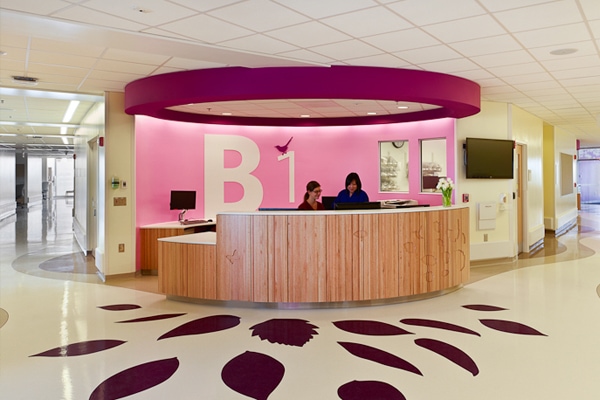
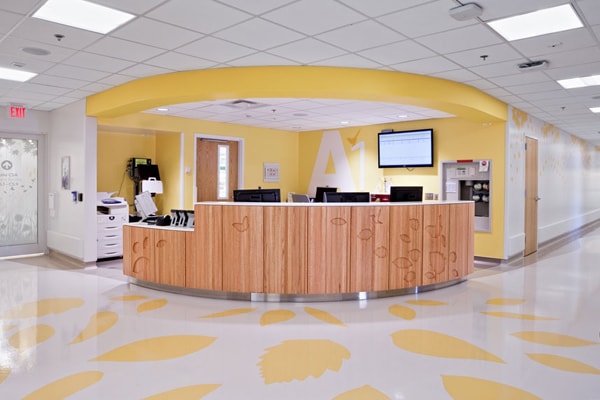
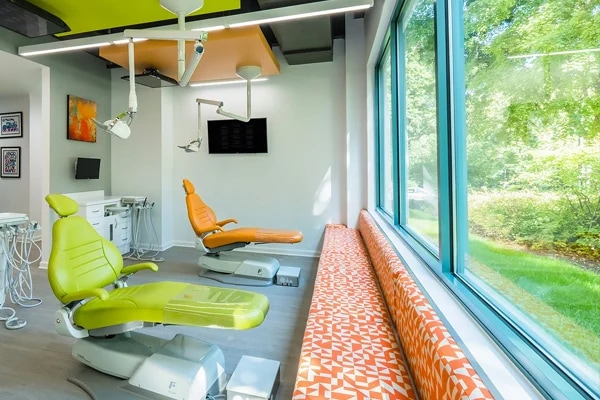
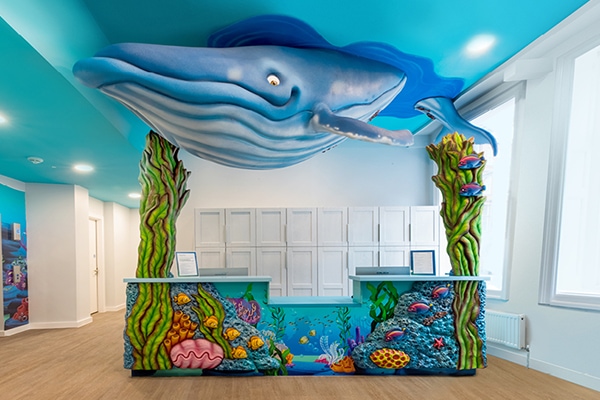
The attention to detail you bring to the vibe of your entry space will help your patients feel more in control. A welcoming, inviting, and comfortable tone puts patients at ease and more likely to begin establishing a long-term relationship with your practice. Interior design and decor is important for setting a mood in your dental office.

  • Design your reception area to create an inclusive feel for your patients.
  • Reduce the impersonal barriers to provide somewhat seamless access to the front desk team.
  • Designate a team member as the “host” for all arriving patients.
  • Provide patients with comfortable “distractions” like reading materials, free (guest) wi-fi, a dedicated workspace, and themed decor that reflects local points of interest, etc.
  • Use natural features such as plants (non-allergenic), outdoor views, and skylights that utilize natural lighting effects.
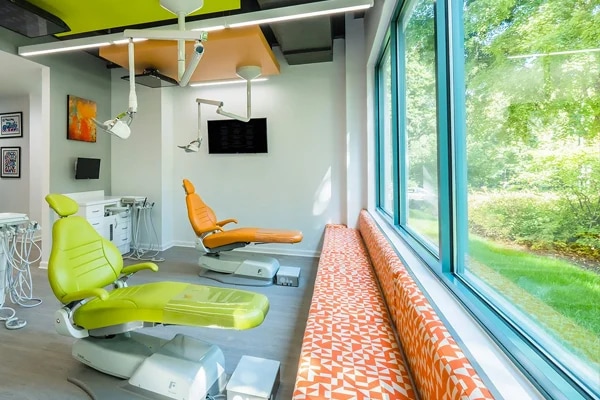
These tips might seem irrelevant to patient acquisition. Yet, realize it’s the vibe you create that helps patients feel more engaged and in control of their relationship with you as their care provider.


Relationship Development Details

Not all relationships start at a good place. In fact, for many healthcare appointments, there might already be a strike against you.

It’s nothing personal, it’s more of perception. Do the hard work of creating the right environment and match that with good relational skills to help dissolve some of the patients’ natural existing anxieties.


Pay Attention

Every patient interaction or conversation provides you an opportunity to deepen your relationship with them.

Your top relational skill: listening!

It helps (beyond a phone conversation) to rely on your office design flow for enhanced listening. Meaning, it’s a good idea to have patient conversations in a designated, comfortable consult area or room.

Patients will feel more at ease and you/your team members will be better equipped to truly listen to what your patients share with you.


Leverage Your Knowledge for Their Benefit

Patients know it’s a good idea to take care of their physical or oral health. But they’re often lacking the “why” behind it.

Patients who feel informed are more likely to have a positive experience. And that positive experience leads to an increase in your patient acquisition success.

  • Listen to their specific questions/concerns and provide the answers/solutions they need.
  • Allow them to ask questions about your standard of care, technology, treatment outcomes, financials, and more. Freedom to ask questions enhances the relationship.


Schedule the “Next”

Relationships require consistency. The same applies to maintaining health. Your intentional efforts to set a patient’s next appointment confirms healthcare as a priority.

They stay connected to you/your office and their health maintains essential consistency. Those levels of consistency confirm that you’re on the path to increasing your patient acquisition percentages.

Keep in mind that acquiring patients is fundamentally a two-fold process. It’s one part environment and one part relational.

Optimize your office around each and you’ll increase your patient acquisition success.


Check out these related resources on these strategies that lead to an increase in patient acquisition:

6 Dental Office Images That Show How Intentional Design Impacts Patient Experience

What is Patient Experience and Why Does It Matter?

Key Strategies to Jump-Start Your Dental Marketing

A Practical Guide to Creating an Exceptional Patient Experience

Contact Imagination Design Studios (IDS) to get started transforming your office from a mundane to magical patient experience.


FOUND THIS ARTICLE HELPFUL?

SHARE THE LOVE!

  • envelope

RELATED POSTS

Explore the Best Children’s Murals for Walls to Transform Any Room

14 Aquatic Center Design Ideas to Make Your Swim Facility More Memorable

Pediatric Dental Office Design: Why Every Practice Needs a Fun Brushing Station

5 Ways to Improve Pediatric Patient Experience in Your Medical Clinic

Children aren’t much different from adults in their hopes for experiences — both new and familiar. They seek comfort and a feeling of safety in most situations. Medical care is no exception. More reason than ever to improve the pediatric patient experience in your clinic.

Office environments, when designed with intention, can help to ease any fear, anxiety, or distrust of doctors a child may bring to an appointment. This helps to make sometimes difficult to treat patients more relaxed and easier to work with.

What are the most common barriers against improving pediatric patient experience?

Two challenges clinic’s must address with their patient experience:

  • Behavior
  • Fear

How pediatric patients act within your clinic can range from uncooperative in moments of discomfort, to a bad day, to consistently tough to deal with. This is often because fear and anxiety accompany many pediatric patients when it comes to appointments. These things are not always so much about your medical clinic, or even bedside manner, as they are about the overall anticipated experience, their previous experiences, and their perception of the environment.

Every time you meet these challenges with a heightened sensitivity to their experience, combined with a pediatric-centric environment, your clinic will grow — becoming a top tier provider in the minds of patients and parents. But how do you get there?


FIVE WAYS TO IMPROVE PEDIATRIC PATIENT EXPERIENCE IN YOUR CLINIC


1. Make it Personal

Young patients come to your clinic thinking about pinching, prodding, and often needles (a top trigger of fear). While none of those anticipations are completely inaccurate, there’s a lot more to their overall health than those brief moments of discomfort.

You can put them at ease by redirecting their attention away from their reason for being there during the first few minutes of your appointment with them.

  • Notice something about them and start your conversation/relationship there (e.g. shoes, color or type of clothing, etc).
  • Make the child comfortable by engaging with their parent or whoever accompanied them to the appointment and they will follow their guardian’s lead.

Essentially, shift the focus to their interests first and build rapport as a person they know. The result of this is likely to be a happier, and more compliant, young patient.


2. Familiarize Them with Your Tools and Equipment

Imagine what all the equipment in your treatment room looks like to a child. Otoscopes, swabs, and sphygmomanometers are often scary for an adult let alone a child, so it’s no wonder children have some hesitancy too.

Take a few minutes to introduce your young patients to the specific tools and technology you’ll be using for their appointment. Demonstrate it on yourself or on their parent first. Removing the unknown will help them to relax and make the process seem more normal.

  • Give your equipment “fun” names that will help lighten the mood before use.
  • Allow your patients to ask questions about a particular tool or technology.


3. Create Trust with Step-by-step Communication

Clearly explaining what you intend to do before you do it can help you earn trust from your pediatric patients. Think of it like a “show-and-tell” session at school.

  • Demonstrate to them (within reason based on their age and the procedure) what each tool does. Let them see the ear scope, the stethoscope, etc.
  • “Tell” them what’s about to happen next using friendly, non-threatening language.


4. Feature Child-friendly Themes and Distractions

A kid-centric environment sets the tone from when a family first arrives to when they get ready to leave. Paying special attention to details such as theming and hands-on amenities will pay dividends in keeping patients and families relaxed throughout their time in your clinic.

Update your waiting area with kid-friendly technology. Games, images, streaming video, etc. help them relax and feel at home in your reception area.

Don’t want to disturb other adult patients? Utilize low-tech options like coloring sheets, books, and kid’s magazines.


5. Think Like a Counsellor

Your practice might be medicine, but learning some behavior-management skills can help you handle challenging situations and create positive outcomes.

Good communication skills, patience, and some good old-fashioned adult figure presence can improve how your patients react.

  • Speak with your pediatric patients eye-to-eye. Get on their level and speak in ways that they can understand.
  • Use stories, a friendly tone, and any other ways to make your communication more kid-friendly. This helps your patients feel comfortable and at ease.
  • Ask about their life, their interests, sports, school, etc.


In conclusion, enhancing the pediatric patient experience in your clinic is not just a noble endeavor but a necessary one. Children, like adults, seek comfort and reassurance, and by addressing the barriers of behavior and fear, your clinic can become a top-tier provider in the eyes of both patients and parents. Implementing the five strategies outlined above – making it personal, familiarizing them with your tools, creating trust through step-by-step communication, incorporating child-friendly themes and distractions, and thinking like a counselor – can transform the way young patients perceive medical appointments. By creating a welcoming and supportive environment, you not only ease their anxiety but also build lasting relationships built on trust and compassion. Ultimately, investing in the well-being and comfort of pediatric patients will not only improve their experience but also contribute to their overall health and well-being.


IMPROVE YOUR PEDIATRIC PATIENT EXPERIENCE BY CREATING AN IDEAL ENVIRONMENT

Outstanding patient experience for children and families begins with a kid-centric mindset and environment. In essence, it’s an investment decision.

Invest in Your Patients

Valuing your patients and their families sets them up for a lifetime of positive health outcomes. The environment that you create directly helps patients have a more positive experience, encouraging them to think positively of medicine for years to come.

  • Reduce patient anxiety and enhance their relaxation.
  • Prime patients and families for their appointments.
  • Create positive health care experiences.

 Invest in Your Business

The medical space is more crowded than ever. Attention to details in your space can create an environment that sets you apart — something more important than ever with pediatric patients.

  • Generate interest in your community
  • Increase patient referrals
  • Incite positive reviews online


Interested to learn more? Check out these related resources for upgrading, renewing, and improving patient experience:

What is Patient Experience and Why Does It Matter?

How Theming Creates the Ultimate Brand for Your Business

Contact Imagination Design Studios (IDS) to get started transforming your office from a mundane to magical patient experience.

FOUND THIS ARTICLE HELPFUL?

SHARE THE LOVE!

  • envelope

RELATED POSTS

14 Aquatic Center Design Ideas to Make Your Swim Facility More Memorable

Child-First Design for Pediatric Dental and Medical Spaces

Creating the Best Therapy Playroom for Effective Child Healing

What is the Future of Pediatric Medical Office Design?

Design inspiration is about more than creativity. That’s especially true for the future of pediatric medical office design.

Young patients and their families require design considerations that create:

  • Confidence in the care environment.
  • Playfulness that engages their emotions.
  • Hope for positive outcomes.

Those elements function best when they work together in a flexible, high-performance environment. That said, the pediatric patient experience relies on medical care excellence, technology, and interactive patient engagement for comforting care desired by children and families.


What’s Driving the Future of Pediatric Medical Office Design?

Pediatric patients are presenting with increasingly complex care cases. Teams with multidisciplinary care plans are equipped to treat young patients these days.

Those realities are impacting how the pediatric care environment is designed. Spaces are required to adapt for the sake of the pediatric patient care protocols, their families, and the teams who treat them.

It makes sense also that spaces are being designed to accommodate a cross-section of specialists in one location. This keeps the family’s care accessible without emotionally upsetting delays.

Think about it this way:

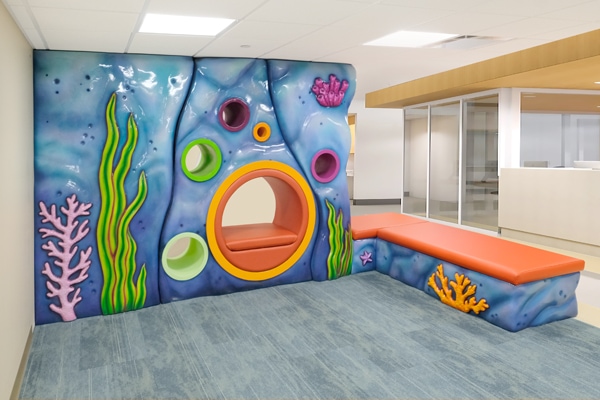
A cozy waiting area.

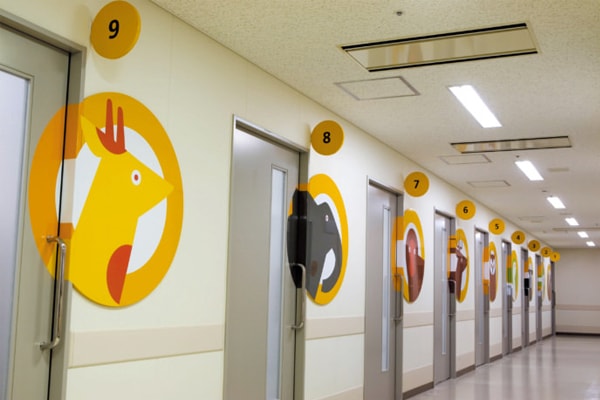
A fun way to create wayfinding for children.

Basically, intentional design adapts to the emotional journey that the need for care creates.

WHAT THE FUTURE OF THE PEDIATRIC MEDICAL OFFICE DESIGN LOOKS LIKE

Growing pediatric practices share some common best-practice design benefits. These are somewhat fundamental to how you can intentionally design or re-design your practice.


Positive Patient and Family Engagement Features Throughout the Facility

The idea of distraction is more about creating a relaxing, non-aversive response the moment a child/family arrives. It involves maximizing the availability of age-appropriate experiences and activities.

Keep in mind that some pediatric patients range from very young (toddlers and preschoolers) to elementary-aged children to teenagers. Make sure your design encompasses each age range or demographic or that it provides spaces that would appeal accordingly.

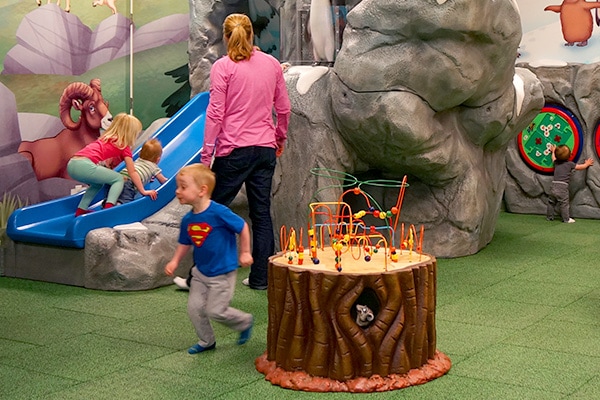
Hands-on bead tables, play boards like KeeBees, and slides are great ways to keep younger patients occupied and entertained.


Form and function design can be tailored to the varying scope of children and families served.

  • Interactive, tactile walls, playrooms, and spaces dedicated to young patients and their parent(s)/family members.
  • High-tech spaces with age-appropriate technology for teenagers.
  • Colors and textures that create a relaxing, at-home feel.


Family-centric Design That Encourages Partnership in Care

Caregiver identities can vary. Whoever arrives at your facility the core value should be optimum care for the child/children.

Your design can, and should, also support the supportive caregiver role. Space can be created to highlight and practically nurture this vital adult-provider relationship on behalf of pediatric patients.

  • Long-term care provisions can include family sleeping pods, kitchenettes, laundry facilities, and more.
  • Onsite technology capable zones can assist short- and long-term patient families with remote working, schooling, or other routine functions.

The common denominator of your family-centric design is comfort and familiarity. Your attention to detail can help families and their child/children adapt to the upheaval that a medical appointment or a required stay can produce.


Think of this as an emotionally sensitive “traffic-flow” feature. In some ways, it’s more than the traditional, linear layout you might associate with a hotel – a long interior hallway of exam, treatment, or inpatient rooms.

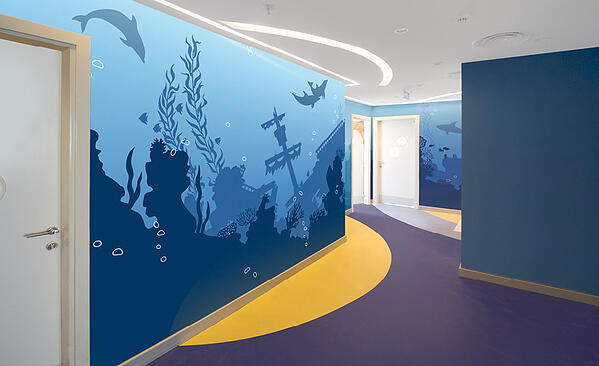
A useful (and better) image is that of a “neighborhood.” Each “block” or “zone” has its own unique identity appropriate to the patient’s age, etc. This idea helps reduce the stress associated with the common, traditional layout.

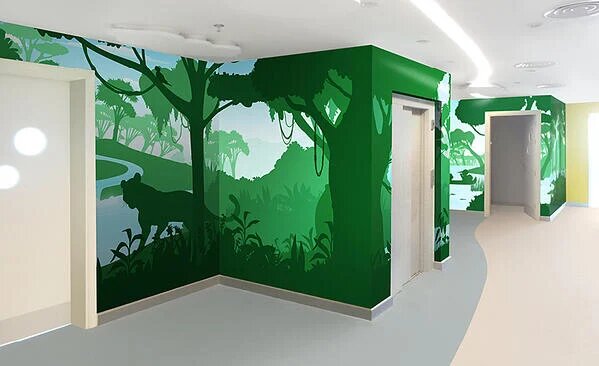
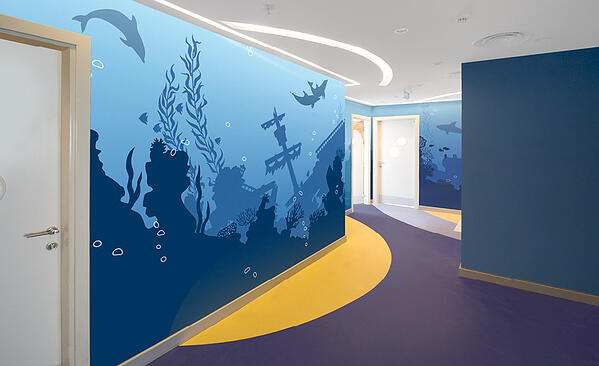
Jungle and Undersea themed murals installed on different floors of a children’s hospital.

Via Cory Klein Photography – Different colors are used to represent different wards.


Patients, parents, and caregivers feel more at home physically and emotionally. Plus, any built-in theming provides a positive distraction that also inspires trust and a sense of calm.


Enhance Standard of Care Essentials Through Design

Care that’s efficient, safe, and secure is expected. Even so, these essentials must be prioritized throughout the design process.

The healing environment mindset helps guide design strategies that enhance patient safety, security, and care efficiency.

  • Waiting rooms, treatment rooms, and follow-up care areas can be designed to reduce provider stress for safer, more predictable care outcomes.
  • Filter all design features through a safety-security grid that considers all points of contact, infection-prevention and control, and provider/team workflows.

And speaking of the previously mentioned “healing environment”…


Evaluate Your Design Around the Healing Results Desired for Each Patient Experience

Design should embrace the human element. Keep this related thought in mind:

”Understand the human impact of design. Consider daylighting, noise control and acoustics, air quality, privacy, social support and positive distractions in designing a healing environment.” [1]

This insight affirms the idea that the patient space can be compartmentalized by design.

  • Keep treatment space separate physically (and emotionally) from inpatient spaces.
  • Design with special needs in mind including those with autism and who require low or significantly reduced stimulation.
  • Provide connection to nature when possible. Outdoor venues can be included in your design for specific therapies and/or to create a healing, calming, stress-free environment to support care.

Natural views help patients feel calm.


These design prompts are only the beginning of what the future of pediatric medical practice design could include. Let your design plans be shaped by these or use them as seeds to grow your layout.


Create an environment that embraces the future of pediatric medical office design.

Check out these related resources to upgrade or renew your patient experience:

New Children’s Hospital Gets a Little IDS Magic

Case Study – Adding Theming to Increase Profitability and Patient Satisfaction

A Practical Guide to Creating an Exceptional Patient Experience

Create a Memorable Patient Experience Through Dental Office Interior Design and Decor

An outstanding patient experience for children and families begins with a kid-centric mindset and intentionally designed environment.

  • Reduce patient/family/caregiver anxiety and enhance their relaxation through age-appropriate design features
  • Prime patients/families for their appointments, procedures, follow-up, and potential stays
  • Create positive experiences for outpatient and inpatient care


Contact Imagination Design Studios (IDS) to get started transforming your pediatric medical office to embrace the future of design effectiveness.

FOUND THIS ARTICLE HELPFUL?

SHARE THE LOVE!

  • envelope

RELATED POSTS

Explore the Best Children’s Murals for Walls to Transform Any Room

14 Aquatic Center Design Ideas to Make Your Swim Facility More Memorable

Pediatric Dental Office Design: Why Every Practice Needs a Fun Brushing Station

Increase Traffic by Setting Up a Google Business Profile

In an effort to gain more visibility on Google, it is important to create a Google business listing, known officially as a Business Profile.

It’s important the information about your business that shows up when people search Google is as accurate, complete, and optimized as possible.

It is also a great place where you can interact with your clients and respond to positive and negative reviews. This helps you build trust with potential customers who are reading your reviews.

According to one report, businesses that verify their information via Google Business are twice as likely to have customers view them as reputable and trustworthy. So completing your official business profile reduces uncertainty about your business and encourages people to pick up the phone and engage with your business.

For reference, here is what the IDS profile looks like when you search us in Google:

HOW TO CREATE YOUR GOOGLE BUSINESS LISTING FOR YOUR DENTAL OR MEDICAL OFFICE:

1. Log into the Google Account you want associated with your business (or create a Google Account if you don’t already have one).

2. Go to google.com/business and select “Start now” in the top right-hand corner.

3. Enter your business name. 

4. Enter your business address.

5. Choose your business category.

6. Add your business phone number and website.

7. Choose a verification option. Phone or email is the easiest.

Once you’ve verified your business, you need to add as much detail as possible to your profile. Go to the Google My Business dashboard, click the listing you’d like to work on, select “Info,” and then choose a section to fill out or update.

Add additional information such as your logo, photos of your office, your operating hours, and any other information you have available. According to Google, businesses with photos see 35% more clicks to their website and 42% higher requests for driving directions in Google Maps, so make sure you show off your unique office!

You can get more detailed instructions straight from Google.


Check out these related resources for great marketing tips for your office:

Add a Cool Google Office Tour to Make Your Business Page Stand Out

6 Tips to Help You Take Great Photos of Your New Themed Office

Key Strategies to Jump-Start Your Dental Marketing

Contact Imagination Design Studios (IDS) to get started transforming your office from a mundane to magical patient experience.

Want more tips for marketing your office? Download the free guide to learn about branding basics, social media tips, ways to improve your online efforts, plus event and promotional ideas.

FOUND THIS ARTICLE HELPFUL?

SHARE THE LOVE!

  • envelope

RELATED POSTS

Threading a Theme Through Your Digital Space

How Theming Creates the Ultimate Brand for Your Business

10 Website SEO Tips for Beginners

New Children’s Hospital Gets a Little IDS Magic

We’re taking a peek inside the Andalusia Clinics For Kids Wellness, a beautiful multi-level children’s hospital with IDS theming from top to bottom.

Andalusia Clinics For Kids Wellness is a facility for kids offering specialized pediatric clinics offering both dental and medical services, the Autism Wellness Center, education, and fun.


New Children’s Hospital Gets a Little IDS Magic

IDS had the pleasure of theming all four floors of the clinic, creating two play areas, reception areas, extensive murals on every floor, plus decor for the dining hall and mezzanine.

– Mahwish Baber, Operations Director

“We fell in love with the work IDS does the first time we saw it and knew it was perfect for our mission. Our clinic is dedicated to the health and developmental needs of kids. The facility is themed to attract kids and create a sense of well-being from the moment they walk through the doors.”


Hippo mascot at the 1st floor reception desk.


Play area in a waiting area.


How Theming Has Helped This Clinic

“The theming has helped in every aspect of the clinic. Hiring pediatricians is no longer a challenge – once they set foot in the facility they want to work here because the decor speaks to our philosophy and dedication to helping kids. In terms of marketing, everything we do revolves around the theming. We’ve turned the 3D characters into mascots and even print them on the lab coats to make them look less ‘clinical’. All the photo ops have hashtags. Our promotional videos are so colorful. Not to mention what it has done for the kids.”

“The kids love the theming. The kids that visit us have started referring to the clinic as “The Fun Center” cementing our desire to make this a place of wellness and development, not a place they are forced to visit.”


What Issues Did Theming Solve in This Clinic

“My work on the clinic included research asking parents of children with different needs what was missing in their care to make our clinic more welcoming. After learning that members of the IDS team also have children with varying abilities I knew that they too had insight into what could make the clinic better. Their suggestions were invaluable, such as using silhouette murals within our autism ward, so that children who are uncomfortable with eye contact aren’t surrounded by characters.

“I really connected with my account manager Elizabeth as it was all about the kids, not trying to make a sale. We had the same goal in mind – to create a sense of well-being.”

Get a great tour of the office in their promotional video.


Mahwish Baber is the Operations Director for the Andalusia Clinic for Kid’s Wellness in Saudi Arabia.

Check out the photo gallery of this amazing Children’s hospital in the IDS photo tour gallery. 


Interested in learning more about themed environments? Check out these related resources on IDS customers:

See more examples of safari theming here.

See more examples of jungle theming here.

See more examples of underwater theming here.

Hear more great stories of happy IDS customers here.

Contact Imagination Design Studios (IDS) to get started transforming your office from a mundane to magical patient experience. Or download our inspiring look book and start imagining the possibilities in your office.

FOUND THIS ARTICLE HELPFUL?

SHARE THE LOVE!

  • envelope

RELATED POSTS

Child-First Design for Pediatric Dental and Medical Spaces

Creating the Best Therapy Playroom for Effective Child Healing

Five Key Factors to an Effective Exam Room Design: Creating a Stress-Free Haven for Kids

6 Calming Strategies for Kids Nervous About Healthcare Appointments

Does anyone blame a child for their anxiety about health-related appointments? It’s understandable if you recall your own childhood fears. And it’s all the more reason to find and implement calming strategies for kids to help them cope with their visit to a physician or dentist.

Seeing the world through a child’s eyes perhaps prompts some childhood memories of your own. Remembering your own experiences helps you get on their level about the potential for anxiety.

  • Children worry about separation from their parent(s) and being in the presence of a relative stranger.
  • Children fear procedures (e.g. shots, etc.).
  • Children can experience confusion about necessary physical contact required from a healthcare provider on occasion.
  • Children’s anxiety can be heightened by a well-intentioned adult or parental conversation about medical or dental appointments.

These and more create a “perfect-storm” of sorts regarding a child’s nervousness and anxiety about a medical or dental visit. Setting them up for a lifetime of confidence about their healthcare starts early, by giving them the calming strategies to use when they feel anxious.

SIX CALMING STRATEGIES FOR KIDS EXPERIENCING ANXIETY ABOUT MEDICAL AND DENTAL APPOINTMENTS

1. Help Them Make-Friends with Their Feelings and Emotions

It’s natural to want to keep fear at arm’s length. What’s perceived as a threat or potentially painful is best avoided – in a child’s mind.

Kids aren’t wired to handle fear, anxiety, or whatever they believe to be harmful to them. So it’s best to help them accept fear as a normal reaction rather than giving the impression that it’s not real.

  • Allow them to express their feelings about the approaching appointment or present situation.
  • Avoid rescuing them and instead stand alongside them and together process their emotional response(s).
  • Affirm your confidence in them but don’t “sugar-coat” their upcoming experience.
  • Ask questions without fueling anxiety. Asking, ”How are you feeling about visiting the doctor/dentist?” is a better question than, ”Are you nervous about visiting the doctor/dentist?”


2. Lift (Rather than Lower) Their Expectations with Advanced Preparation


A brief explanation about what it’s like to visit the doctor or dentist helps frame a satisfying experience for a child and their family. It’s important that you avoid creating unrealistic scenarios that lowers their expectations to a negative level.

For example, promising that a doctor visit is “no-big-deal…” or that it won’t be painful is a promise that might be easily broken – and with it their trust.

  • Frame possible scenarios. A useful phrase could be, “I’m not sure if you’ll get a shot this time…but if you do, it will be over quickly and feel like a ‘pinch.’”
  • Reward their bravery after an appointment in a way that’s meaningful to the child.


3. Maintain Consistency with a Trusted Physician/Dentist


Overtime a child who sees the same professional will begin to trust them. And make sure your trust in your chosen physician/dentist is evident to your child.

Announcing an upcoming medical/dental visit will be less discouraging when a child can put-a-face with who they’ll see. The more personal your doctor/dentist relationship the better – for you and your child.


4. Use At-Home Role Play

Many kids play “doctor” on occasion. Role-play scenarios can help take the edge off of upcoming medical/dental appointments.

  • Use play instruments to listen to your child’s heart, look into their ears, check their teeth, etc.
  • Encourage your child to give a doll or toy an “exam.”

Playful routines can normalize what might be an anxiety producing experience.


5. Help Your Physician/Dentist Find Common Ground with Your Child

Provide your care provider as much information about your child as possible. What they enjoy doing, playing with, watching on TV, the sports they’re involved in, their hobbies, favorite foods/snacks, etc.

This information provides an opportunity to lighten the mood and establish a friendly relationship during an appointment.


6. Model Calm and Patience


Remember that anxiety or fear can be contagious. The opposite is true as well – if you’re calm, cool, and collected it’s more likely your child will be.

  • Set a positive mood for their approaching medical/dental appointment. Again, be realistic rather than reactionary.
  • Help your child relax with breathing techniques and the reassurance that helps take their mind off of their fear or anxiety.
  • Know that some emotion is normal (e.g. crying, etc) and that time and trust are on your side as your child matures and grows.


Calming strategies for kids are supported by an equally calming environment that helps them overcome anxiety and have a positive experience with their care providers.

Outstanding patient experience for children and families begins with a kid-centric mindset and environment. Check out the following resources for providing anxiety-free medical/dental visits:

How (and Why) to Help Kids with Anxiety About the Dentist

A Practical Guide to Creating an Exceptional Patient Experience

Our Top 5 Hands-Free Waiting Room Ideas to Engage and Entertain Patients

And…

Download Our White Paper: Alleviating Patient Anxiety Through Office Theming

Valuing your patients and their families sets them up for a lifetime of positive health outcomes. And the environment you create can help you achieve a better patient experience.

  • Reduce patient anxiety and enhance their relaxation
  • Prime patients and families for their appointments
  • Create positive medical and/or dental care experiences

Contact Imagination Design Studios (IDS) to get started transforming your office into an anxiety-free patient experience.

FOUND THIS ARTICLE HELPFUL?

SHARE THE LOVE!

  • envelope

RELATED POSTS

14 Aquatic Center Design Ideas to Make Your Swim Facility More Memorable

Pediatric Dental Office Design: Why Every Practice Needs a Fun Brushing Station

Child-First Design for Pediatric Dental and Medical Spaces

5 Dental Marketing Strategies for Increased Patient Recall

Marketing is more than a one-and-done activity. In fact, as it relates to dental marketing ideas for increased patient recall it requires a more strategic, ongoing approach.

Why specifically recall?

Mastering the recall process keeps dentistry front-of-mind for your patients. That’s important because it creates a lifetime care focus in their mind rather than a reactive, problem-centric approach.


It’s Time to Move Beyond “Problem-centric” Dentistry.


Perhaps you’re not consistently guilty. But on occasion you might be tempted to say something to a patient such as,

“Well, everything looks good today…didn’t see any problems…”

While well intentioned, that narrative communicates something that could be harming your recall success.

Hearing “no problems” (although a good result) takes away from the lifetime value of dental care. And the lifetime perspective can make a huge difference in your recall success and overall dental marketing strategy.


WHAT PATIENT RECALL SUCCESS LOOKS LIKE AS DENTAL MARKETING STRATEGY

Recall Success Maintains an “Audience” (Patient) Connection

Much of your dental marketing and recall effectiveness comes down to communication. But keep in mind that how your patients communicate is ever evolving. It helps to “think” like they do. One recall strategy might not be effective for every demographic of your patient base.

Mailing a postcard to a patient in their 20’s or 30’s will likely be ignored. In the same way a text or email might be overlooked by a senior aged patient.

There are exceptions as technology and mail strategies are concerned. But a more patient-sensitive recall strategy will allow you to tailor it to each segment of your database.

It’s particularly useful to ask your patients what mode of communication they prefer.


Recall Success is a Well-timed Process

Timing can vary from patient to patient. Yet generally speaking there are better days and times to assure you’re getting their attention.

For example, a Monday phone call, voice message, email, or text message is likely to be a wasted effort. Most return from a weekend of less related interaction to a full inbox or media stream.

The following are recommended communication “sweet-spots.”

  • Phone calls: studies reveal greater success on Wednesday or Thursday afternoons.
  • Emails: send midweek around 10 a.m. according to email marketing strategists.
  • Text (SMS) messages: send daily between morning and evening “rush” hours.


Recall Success is a “Rinse-and-Repeat” Process

Repetition, repetition, repetition! Repeating your message is key to compelling your patients to reschedule.

It’s important that you vary your message and take a scatter approach to how you communicate with your patient base.

And speaking of “how” you communicate…innovate around these five dental marketing ideas for recalls.


FIVE DENTAL MARKETING IDEAS FOR INCREASED PATIENT RECALL SUCCESS


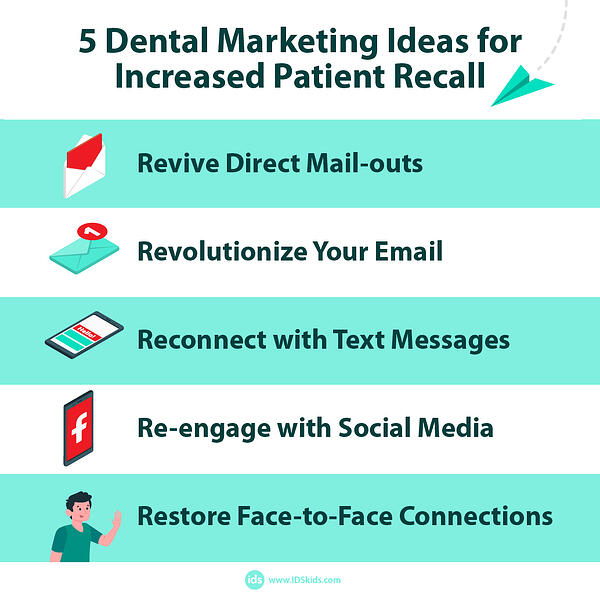
1. Revive Direct Mail

Again, a specific demographic within your patient base will respond to a compelling direct mail strategy. But the key to reviving its effectiveness is assuring it’s compelling – whomever the recipient is!

  • Send useful content via newsletters, postcard appointment reminders, and engaging (on-topic) brochures.
  • Build relational momentum on a well-timed delivery schedule. Recall mailers work best on an every three months timeline and postcard reminders three weeks before an appointment.


2. Revolutionize Email

You can keep your dental marketing costs lower by utilizing email. But that’s not the only reason to use it as a recall strategy.

Email is perceived as less invasive. Even so, it’s vital that you respect your patient’s time and inbox by making sure your email strategy delivers value.

  • Deliver routine (monthly or quarterly) e-newsletters, personalized promotions, and ongoing appointment reminders.
  • Stay connected with your patients via useful newsletter content and timely recall reminders (every six months).
  • Follow delivery frequencies that align with appointment follow-up and scheduling timelines.


3. Reconnect with Text (SMS) Messages

SMS (text) messaging can be used as an effective dental marketing tool. The reason has a lot to do with how we’ve come to use texting as a fluid communication channel.

That said, it’s essential that you respect the medium as you use it for recalls and other marketing strategies.

  • Text appointment reminders, available/last-minute schedule openings, and limited time promotions.
  • Compel a response by using a clear call-to-action that provides useful and/or immediate value.
  • Keep promotional content to a minimum via SMS. You don’t want to be, or sound, “spammy”.


4. Re-engage with Social Media Content

Social media channels enable you to stay connected to your patients via a wide variety of content. And you can engage them without direct communication by appearing in their newsfeed(s).

  • Curate and share useful dental themed content to stay front-of-mind and prompt a scheduling reminder.
  • Share your own blog content (linked to your practice website) to provide oral health tips.
  • Post patient testimonials (with permission), reminders about essential dental care (e.g. teeth cleanings, etc), promotions, team and practice photos, and targeted (paid) ads with a clear CTA (call-to-action)..
  • Share content on an appropriate schedule and maintain a balance of useful (themed) content to promotional (reminder) based content.


5. Restore Face-to-Face Connections

It’s fundamental to your dental marketing strategy that you relate personally to your patients. Access to technology and content delivery channels should align with and support good old-fashioned face-to-face communication.

  • Maintain a “marketing-mindset” that maximizes every patient conversation as an opportunity to encourage consistent oral health care.
  • Remind patients personally (as they depart each appointment) to engage with you on social media, to refer your practice to family, friends, and co-workers, and to leave a review about their experience.
  • Get out into your community. Be a recognized authority for general and oral health through community events and promotional opportunities.


Maximize your dental marketing ideas and increase your patient recall success!

Effective systems start at the idea level. And turning those ideas into a system for increasing your recall success can lead to healthier patients and more production.


Check out these related resources to generate dental marketing ideas and create a more sustainable recall system:

How to Get More Patients in Your Dental Office (And Create Long-Term Loyalty)

Key Strategies to Jump-Start Your Dental Marketing

The 3 Social Media Sites You Should Be Promoting Your Business On and Why

Download Our White Paper: Alleviating Patient Anxiety Through Office Theming

Contact Imagination Design Studios (IDS) to get started transforming your office from a mundane to magical patient experience.

Want more tips for marketing your office? Download the free guide.

FOUND THIS ARTICLE HELPFUL?

SHARE THE LOVE!

  • envelope

RELATED POSTS

Pediatric Dental Office Design: Why Every Practice Needs a Fun Brushing Station

Child-First Design for Pediatric Dental and Medical Spaces

Threading a Theme Through Your Digital Space

Our Top 5 Hands-Free Waiting Room Ideas to Engage and Entertain Patients

Between the social distancing policies, masks, extra PPE, and barred-off areas, your waiting room might be feeling a bit cold, unfriendly, or even a little scary to your patients these days.

Or maybe you’ve looked around your empty waiting room while patients wait in their cars and thought it looked dull or lonely. If that sounds like you, then now might just be the perfect time to make some upgrades to welcome patients back into your office with a fun, new look. 

Since the arrival of COVID, one of the most common questions we’ve received is how to engage and entertain younger patients before their appointments without adding shared touch points (and therefore more cleaning time to your staffs’ plates). Read on for our top 5 hands-free recommendations!


1. I Spy Wall Murals

I Spy Wall Murals have always offered an incredible value due to their multi-purpose use as colorful decor and a fun waiting room activity. This is especially true in today’s world when you consider that it keeps kids entertained without resorting to screen time or the need for hands-on games. Another added bonus? I Spy pictures games can boost kids’ memory and visual learning, which parents will definitely appreciate.

Another great perk is the companion activity sheets that you can easily print at your office. They can search for all the items listed on the scavenger hunt list, where dozens of items are hidden within the illustration. It’s like a Where’s Waldo book, but as decor for your office wall!

Would you like to see a sample of an I Spy Wall Mural?

Enter your info below to receive a PDF with a jungle and underwater sample. Grab your kids (or do it yourself) and see how many objects you can find.


Download a sample of an underwater and jungle I Spy Wall Mural from IDS:

Speaking of activity sheets….

2. Coloring Pages or Activity Sheets

While your patients are checking in for their appointments, you can offer them various coloring pages and activity sheets to work on while they wait. You can also give them a set of disposable crayons, so there’s no need to share with other patients throughout the day. Or, if you send out appointment reminder emails, you can always attach some to the email and let them know they can print them off to bring along while they wait.

There are some great free coloring pages online that you can find. We also have a selection of free downloadable coloring pages and activity sheets, as well as drawing lessons, available on our Kids Club page.

Patients have fun, parents can relax while their kids are occupied, and staff have an effective time-management tool that does not require any extra cleaning. Everybody wins!


3. Suspended 3D Decor

If your priority is to keep decor out of reach or to not increase the amount of sanitizing in your office, suspended 3D decor can make the environment fun for all ages. It can even serve as your smiling welcoming committee – no masks required here! 

Wayfinding signage in a clinic.
Waving character above the treatment chair in a private exam room.

Hanging decor like this is great for treatment rooms where patients will be spending most of their time laying back in a treatment chair looking up. In waiting rooms this type of a decor does not take the place of seating areas. 


4. Interactive Floor Projectors

This technology combines a high-quality projector with optical sensors to create a virtual playground. Kids can explore, make art, and play games by simply moving in the projection area – no hands-on contact required!

There are a few options out there, but the hands-down (or hands-off) winner is BEAM

Woodland themed waiting room with contemporary wall murals and a 3D photo op bear.

As pioneers of the technology, they have the best gear and a game library of over 200 titles. IDS is proudly a distribution partner, so if you’d like more info, reach out and we can make some recommendations for how to best integrate it into your space!


5. Put On a Good Movie

There’s no shame in simply putting on a good movie to keep the kids occupied before their appointment. There’s really no right or wrong when it comes to keeping kids entertained, so pop in a head bopper like Frozen, Moana, or Coco. You might feel a “Un Poco Loco” after listening to “Let it Go” all day, but you might be surprised how far it goes with the kids’ mood before heading back for their treatment.

These are just a few of our favorite solutions when it comes to hands-free waiting room entertainment.

Check out these great resources for more ideas for your practice, during COVID times or not.


Check out these related resources for keeping your office safe:

FAQ about Covid-19 and Keeping Your Theming Clean

Our Top 5 Hands-Free Waiting Room Ideas to Engage and Entertain Patients

Using TV as a Positive Distraction for Kids

Download an I Spy Mural Sample

Contact Imagination Design Studios (IDS) to get started transforming your office from a mundane to magical patient experience.

FOUND THIS ARTICLE HELPFUL?

SHARE THE LOVE!

  • envelope

RELATED POSTS

Explore the Best Children’s Murals for Walls to Transform Any Room

14 Aquatic Center Design Ideas to Make Your Swim Facility More Memorable

Pediatric Dental Office Design: Why Every Practice Needs a Fun Brushing Station

How to Improve Patient Satisfaction in 7 Steps

Every practitioner wants their patients to leave happy, but what exactly does that mean and why does it matter? Well, when “happiness” is measured by how to improve patient satisfaction it’s worth investing your energy.

Patient satisfaction also presents something of a paradox. What makes a patient happy may or may not ultimately be in the best interest of their health.

Overall, the goal of patient satisfaction has to do with creating an experience where decisions can be made that benefit the patient and their ongoing health.


Why Even Think About How to Improve Patient Satisfaction?

Like it or not, your patient and their family are “customers.” A consumer mindset drives most “buying” decisions today – your services are no exception.

Expectations are high and opinions matter.

  • Social media gives patients/families an opportunity to post their satisfaction…or their dissatisfaction
  • Online reviews provide patients/families a positive or negative forum to express their opinions about your service

The result of improving patient satisfaction is long-term patient loyalty. A satisfied patient and family become immune (in many ways) to a competitor’s marketing efforts.

The loyalty earned from patient satisfaction can naturally lead to an increase in revenue. And satisfied patients/families create positive reviews that generate vital word-of-mouth marketing.


HOW TO IMPROVE PATIENT SATISFACTION IN 7 STEPS


1. Make an Engaging First Impression Online

An initial phone call or a facility drive-by was once the first perspective someone formed of your practice.

Times have changed.

These days your online presence is often the first impression a patient/family has of your practice. Realize that your front-door is now your digital platform.

  • Evaluate your current website. Confirm that it’s easy to navigate, has a conversational tone, is clear, and compels action.
  • Digitize your patient’s interaction with your practice. Provide digital options for your patients/families to contact you, schedule an appointment, and securely access and complete all necessary forms ahead of their appointment.


2. Communicate Comfort with Reassuring Tone

Every conversation carries a tone. That tone – positive or otherwise – creates an environment that helps put your patients at ease.

Many patient interactions begin with a question or two. How you answer can help determine the next step a patient takes with treatment.

  • Maintain eye-contact. Make the patient/family member in front of you the center of that moment’s attention.
  • Speak in a reassuring tone throughout each patient interaction. This helps restless patients and/or family members feel more comfortable.

3. Be Accommodating with Your Appointment Schedule Availability

Your patients/families have time and schedule challenges. School, work, and recreation can impact how and when they schedule their oral health care.

How to improve patient satisfaction is often a matter of adapting to their schedule and time constraints.

  • Update your appointment options. Consider early morning, early evening, or weekend availability so patients have more opportunity to schedule.
  • Provide virtual solutions such as teledentistry. Remote consultations help maximize time.


4. Shorten the Perception of Wait Times with Positive Experiences

You might not be able to completely eliminate appointment “wait-times.” But you can creatively help your patients/families by decreasing those perceived wait-time moments. Free WIFI, books, activities for kids, photo ops, and refreshments all help create a positive experience.

A relevant study found…

”…satisfaction to more than double when the waiting room was viewed as ‘comfortable and pleasant’ by patients with the same perceived length of wait.” [1]

And speaking of “comfortable and pleasant” wait-times…


5. Upgrade Your Practice Atmosphere with Welcoming Decor

What you see and experience daily can differ from what your patients experience and see. Familiarity can lead to complacency especially when you’re onsite every day.

Though your patients/families will perhaps form a first impression online (as earlier mentioned) that impression will be further validated when they arrive at your practice.

  • Update your waiting room with simple improvements. New, modern, themed furniture or a redesigned layout can set a fresh tone throughout your practice.
  • Upgrade your practice on-theme. A themed environment – especially for pediatric practices – will help put kids and their families at ease prior to and during an appointment.


6. Empower Your Patients Through Educational Resources

Your patients/families value their oral health. But they might not be aware of what produces it. Their satisfaction will increase when they leave your practice feeling empowered rather than overwhelmed about their health and related choices.

7. Cultivate Patient Engagement and Create Long-term Relationships

Think long-term relationships. The key is engaging each patient/family individually.

Daily production goals can easily take precedence over the patient/family that’s right in front of you. More detrimental to a positive patient experience is that they can sense the somewhat impersonal connection.

  • Know your patients/families personally. Recognition of birthdays, personal milestones, loss, or challenges, and more help build long-term relationships.
  • Follow-up calls or messages help patients/families feel like their recent treatment is a priority.


Take Strategic Steps to Improve Your Patient Satisfaction Level

Set your environment up for success from the very first impression. Patient satisfaction for children and families begins with a kid-centric mindset and environment. In essence, it’s an investment decision.


Invest in Your Patients

Valuing your patients and their families sets them up for a lifetime of positive health outcomes. And the environment you create can help you achieve a better patient experience.

  • Reduce patient anxiety and enhance their relaxation
  • Prime patients and families for their appointments
  • Create positive dental care experiences


Invest in Your Business

Maintain your edge in the crowded dental service space. Attention to details in your niche can transform your environment and overall patient satisfaction…especially in a pediatric practice.

  • Create “buzz” in the community you serve
  • Accelerate patient referrals
  • Generate positive online reviews


Check out these related resources for upgrading, renewing, and improving patient experience:

5 Goals for Improving Patient Experience in Your Pediatric Dental Practice

The Importance of a Website for Promoting Your Dental Practice

Why You Should Have a Blog on Your Dental Website

A Practical Guide to Creating an Exceptional Patient Experience

Contact Imagination Design Studios (IDS) to get started transforming your office from a mundane to magical patient experience.

[1]  Five Evidence Based Ways to Increase Patient Satisfaction

FOUND THIS ARTICLE HELPFUL?

SHARE THE LOVE!

  • envelope

RELATED POSTS

14 Aquatic Center Design Ideas to Make Your Swim Facility More Memorable

Pediatric Dental Office Design: Why Every Practice Needs a Fun Brushing Station

Child-First Design for Pediatric Dental and Medical Spaces

How Patient Experience in Healthcare Impacts Revenue Growth

It might seem strange to put a dollar-value on a conversation, but it actually makes perfect sense. Why? Because patient experience in healthcare really impacts revenue growth.

First, ask yourself – are you treating each patient encounter as if it could positively or negatively affect your bottom-line? It’s not about prioritizing the financial gain…it’s about your commitment to creating a practice culture where patient experience is a top priority.


Why There’s Value in Putting a Price on the Patient Experience and Tracking Results

Every patient interaction has value (financial or otherwise). Consider the phases each patient moves through even before treatment occurs.

  • An initial phone or online conversation
  • A waiting room and/or front-desk interaction
  • The hand-off to a clinical team member
  • The interaction with you – the provider
  • The transition from clinical to front-office
  • Post-treatment or post-appointment follow-up

No interaction is too small or insignificant. Each has value to the patient experience.

Organizations providing “superior” patient experience achieve net margins 50 percent higher than those providing “average” patient experience. This makes it vital for organizations to evaluate the entire continuum of the patient experience.” [1]

Loyalty leads to revenue growth. It follows that where patients feel valued, they will more likely invest their healthcare dollars.


How to Create a Patient Experience That Impacts Revenue Growth


Design Your Entire Culture Around the Patient Experience

What you monitor and measure can have a substantial impact on your revenue. Basically, it’s a cultural balance between available data and a patient.

It might seem a bit offbeat to analyze patient interactions, but it should become second nature. Doing so will help ensure that your culture reflects compassion, patient service, and overall transparency.

Think of being transparent as openness to what the data reveals. Share those discoveries with your team and seek patient input via surveys.

  • Set performance benchmarks for maintaining and improving your patient experience
  • Give your team the tools to sharpen their communication skills
  • Implement standard-of-care best practices and routinely train your team around them
  • Ask for feedback and pivot your service around the data

Be Open to Change and the Tools That Encourage It

Healthcare trends evolve. And your patient experience and related revenue growth depend on how well you stay current.

Patient needs can be discovered using available and new technology. It’s essential to think beyond the traditional care models and embrace the changing patient care relationship.

  • Use online surveys to tap into patient opinion and thinking
  • Analyze survey feedback and use the insights to immediately improve your patient experience
  • Look for keywords and phrases within the feedback you receive on your social media channels, via email replies, on contact forms, in patient conversations during appointments and on phone calls

Online surveys get you immediate feedback allowing you to make positive changes quickly.

Listen Intuitively and Engage Your Patients Through Your Responses

Listening increases awareness of your patient’s healthcare goals and concerns. Engagement is the fundamental relationship you have with each patient that produces loyalty and referrals.

Positive (and even negative) reviews are a “gold-mine” of useful patient information. Keep in mind that a negative review holds truth that can help you reshape your future patient experience.

Stay aware of what your patients say online. Within their voiced concerns or critique of your services are the seeds for improvement that can impact your revenue cycle.

  • Turn negative feedback into team assets for attracting and retaining patients
  • Use patient review data to improve your communication strategies and daily operations
  • Keep your team informed about patient feedback – the good and the bad – to help them pivot around the useful insights gained from it

Leverage Patient Feedback in Your Acquisition Strategies

Like consumers, patients are more likely to engage with you if you’re transparent about positive and negative feedback. Sharing only positive input can give the impression that you’re hiding something or not obtaining valid information.

Openly posting all information (positive and negative) builds your credibility. And the trust that results can help improve your patient experience and increase revenue.

Full disclosure…

  • Says you welcome and value feedback
  • Reveals you’re willing to improve your patient experience
  • Helps increase your SEO ranking and drives more traffic to your website


It’s a Good Time to Improve Your Patient Experience and Increase Revenue


Stand-out from other service providers by investing in…

Your Patients

Valuing your patients and their families sets them up for a lifetime of positive health outcomes. The environment you set can help you achieve a better patient experience.

  • Reduce patient anxiety and enhance their relaxation
  • Prime patients and families for their appointments
  • Create positive dental care experiences

Your Business

Maintain your edge in the crowded dental service space. Attention to details in your space can transform your environment and the overall patient experience.

  • Create “buzz” in the community you serve
  • Accelerate patient referrals
  • Generate positive online reviews


Check out these related resources to upgrade or renew your patient experience:

What is Patient Experience and Why Does It Matter?

5 Tips for Creating the Experience Parents Really Want While in the Waiting Room (But Won’t Tell You!)

How to Get Online Reviews for Your Dental Office and Respond to Negative Ones

A Practical Guide to Creating an Exceptional Patient Experience

Contact Imagination Design Studios (IDS) to get started transforming your office from a mundane to magical patient experience.
FOUND THIS ARTICLE HELPFUL?

SHARE THE LOVE!

  • envelope

RELATED POSTS

14 Aquatic Center Design Ideas to Make Your Swim Facility More Memorable

Child-First Design for Pediatric Dental and Medical Spaces

Creating the Best Therapy Playroom for Effective Child Healing

CONNECT WITH A CREATIVE CONSULTANT

GET STARTED TODAY

blue-heart

Add a note to this photo: